I Adopted Twins I Found Abandoned on a Plane – Their Mother Showed Up 18 Years Later and Handed Them a Document

I adopted twin babies I found abandoned on a plane 18 years ago. They pulled me out of a grief so deep I wasn’t sure I’d survive it. Last week, a stranger showed up at my door claiming to be their mother. The papers she pushed at my children made it clear she’d only come back for one reason—and it wasn’t love.
My name is Margaret. I’m 73, and this all started the day I flew home to bury my daughter.
Eighteen years ago, I was sitting on a crowded flight, fingers knotted around a damp tissue, staring at nothing. My daughter and my little grandson had died in a car accident while I was away visiting friends. I was heading back for their funeral, and it felt like someone had scooped out my insides and left my body behind out of habit.
At first, I barely noticed the noise three rows ahead. Just background crying. Planes are full of it. But it got louder. More desperate. It didn’t stop.
When I finally looked up, I saw them.
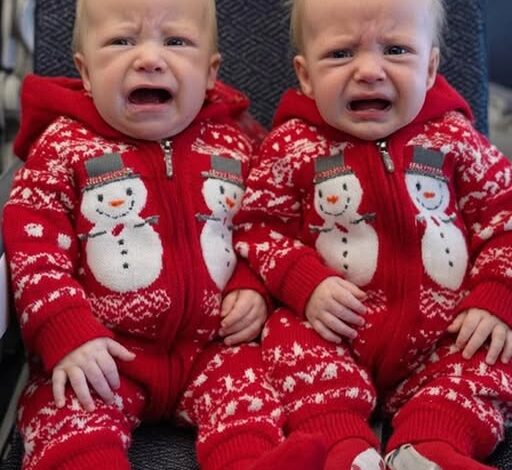
Two babies sat in the aisle seats, completely alone. A boy and a girl, maybe six months old, both strapped in, faces blotchy from screaming, their tiny fists shaking in the air like they didn’t know what else to do.
The comments around me made my blood boil.
“Can’t someone just shut those kids up?” a woman in a fitted business suit hissed.
“They’re disgusting,” a man muttered as he squeezed past them.
Flight attendants kept walking by with those tight, professional smiles that say, “This is a problem, but we don’t know how to fix it.” Every time anyone stepped near, the babies flinched, as if they were bracing to be hit or pushed away.
The young woman sitting beside me touched my arm gently.
“Someone has to do something,” she whispered. “They’re terrified.”
I looked at those two little faces—now only whimpering, as if they’d already decided no one would help them. Something inside me snapped back into place. It didn’t feel like a decision so much as instinct.
I stood up before fear or doubt could talk me out of it.
The moment I picked them up, everything shifted. The boy burrowed his face into my shoulder, trembling like a leaf in a storm. The girl pressed her cheek against mine, her tiny fingers gripping my collar with surprising strength.
They stopped crying instantly. The entire cabin fell quiet, like someone had turned down the volume on the world.
“Is there a mother on this plane?” I called, my voice shaking. “Please, if these are your children, come forward.”
Silence. Not a rustle. Not a word. No one stood up.
The woman next to me gave me a sad little smile.
“You just saved them,” she murmured. “You should keep them.”
I sat down, one baby in each arm, and started talking to her because if I didn’t say something, I was going to dissolve. I told her about my daughter. About my grandson. About how I was flying home to bury them both. About how I dreaded walking into a house that would be too quiet and too full of memories.
She asked where I lived, and I told her—“the bright yellow house with the oak tree on the porch; everyone knows it.”
I didn’t realize how important that small detail would become.
When we landed, I knew it would sound insane, but I couldn’t just hand those babies over and walk away. Still, I did what I was supposed to do. I took them straight to airport security, explained what had happened, showed my ID, gave them my address, answered every question they had. Social services were called. Statements were written. They searched the entire airport and checked with the airline.
No one came forward. No one asked. Nobody claimed them.
So social services took the twins, and I went home and watched the caskets of my daughter and grandson disappear into the ground.
After the funeral—after the prayers, the murmured condolences, the empty house—I couldn’t stop thinking about those babies. The way their little hands had clung to me. How quickly they’d gone quiet in my arms, as if their tiny bodies had finally found something that felt safe.
The next morning, I walked into the social services office with my heart pounding and said, “I want to adopt the twins from the airport.”
They looked at me like I’d lost my mind. A 55-year-old widow, freshly grieving, asking to take on two infants. They checked everything. My finances. My house. My health. They talked to neighbors, asked a hundred times if I was absolutely sure.
I was. Grief had emptied my life; these babies offered me a reason to fill it again.
Three months later, I signed the papers and walked out as the legal mother of two beautiful children. I named them Ethan and Sophie.
From that day on, every breath I took had a purpose again.
I poured myself into motherhood. Late-night feedings, diaper changes, first steps. School lunches, parent-teacher conferences, scraped knees, and teenage eye-rolls. They grew into compassionate, intelligent, stubborn young adults.
Ethan became the kid who spoke up when someone was bullied, who joined every club that helped people with fewer chances than he’d had. Sophie grew into a sharp, thoughtful young woman whose kindness reminded me so much of my daughter that sometimes it made my chest ache in the best way.
We were a family. Imperfect, patched together by chance and choice, but real. Family games
And then, last week, the past knocked on my door.
The knock was sharp, almost aggressive. When I opened it, a woman stood there in an expensive coat, makeup flawless, perfume so strong it almost made my eyes water. She smiled like we were old friends.
“Hello, Margaret,” she said smoothly. “I’m Alicia. We met on a plane eighteen years ago.”
It took me a moment, but then I saw it—the younger woman from that flight, the one who’d urged me to help the twins. My stomach dropped.
“You were sitting next to me,” I said slowly.
“I was,” she replied, already stepping past me into my living room as if she owned the place. Her heels clicked across the hardwood as she scanned the photos on the wall—birthday parties, graduations, Christmas mornings. Ethan and Sophie laughing through every stage of their lives.
Then she turned back to me and dropped the kind of sentence that makes the world tilt.
“I’m also the mother of those twins you took from the plane,” she said lightly. “I’ve come to see my children.”
Ethan and Sophie had just come down the stairs for breakfast. They stopped dead halfway down, eyes wide, bodies tense.
My heart hammered in my chest. I moved a little closer to them without thinking.
“You abandoned them,” I said, more sharply than I intended. “You left two babies alone on a plane.”
Alicia didn’t flinch. “I was twenty-three,” she said, almost bored. “I’d just gotten a career opportunity that could change everything. I had twins I never wanted, and I was drowning. I saw you, a woman shattered by grief, and I thought: maybe this is how everyone gets what they need.”
You didn’t give them up, I thought. You staged it.
“You manipulated me,” I whispered. “You set this up.”
“I gave them a better life than I could have back then,” she replied, shrugging. “You’re welcome.”
She reached into her designer handbag and pulled out a thick envelope.
Ethan instinctively stepped in front of Sophie.
“I hear my children are doing well,” she said. “Scholarships, good grades, impressive future prospects. I’m proud, really. But we have… a financial matter to settle. I need you both to sign something.”
“Why are you really here?” Sophie asked, voice steady but eyes shining with confusion and anger.
Alicia held out the envelope as if she were presenting a gift.
“My father died last month,” she began. “Before he passed, he decided to punish me for what happened on that plane. He left his entire estate to my children.”
My blood ran cold.
“So you suddenly remembered you had kids,” I said quietly, “because there’s money involved.”
“The inheritance is complicated,” she replied coolly. “All you need to do”—she looked at Ethan and Sophie now—“is sign acknowledging me as your legal mother, and the estate becomes accessible. It’s a formality. Then you get more money than you could ever dream of.”
“And if we don’t?” Sophie asked.
A muscle in Alicia’s jaw twitched. “Then the estate goes to charity. You lose. I lose. Everyone loses.”
I’d heard enough.
“Get out of my house,” I said.
“This isn’t about you, Margaret,” she snapped. “They’re adults. They can decide if they want to stay here playing pretend family with the old woman who picked them up out of pity—or accept their real mother and everything that comes with her.”
Ethan’s voice was low and dangerous. “She didn’t pick us up out of pity. She loved us when you left us like trash.”
“I made a hard choice in an impossible situation,” Alicia shot back.
I walked to the phone and dialed a number I hadn’t used in a long time.
Within an hour, Caroline—my lawyer from the adoption years ago—was sitting in my living room with a legal pad and her reading glasses, looking at Alicia like something she’d scrape off her shoe.
“Let me see the documents,” she said.
Alicia handed over the envelope with that same smug expression.
Caroline read every page slowly, her frown deepening. Finally, she looked up.
“This is coercion,” she said flatly. “You’re attempting to pressure these young adults into legally disowning the only parent who has actually raised them, in exchange for money.”
“It’s my father’s will,” Alicia insisted. “He tied it to them. I’m just trying to manage it.”
“Your father left his money to his grandchildren, not you,” Caroline replied. “You have no authority to dictate conditions.”
She turned to Ethan and Sophie.
“You don’t have to sign anything,” she said gently. “The estate is already left to you. She can’t block it. She can’t redirect it. She’s trying to insert herself to gain control over something that isn’t hers.”
Sophie stared at Alicia, anger overtaking the shock.
“You didn’t show up because you missed us,” she said. “You came because you want money that doesn’t belong to you.”
Ethan nodded. “Margaret is our mother. She’s the one who stayed up all night when we were sick. Who taught us to drive. Who cried at our graduations. You’re just the stranger who walked away and then came back when there was a check involved.”
Alicia’s composure cracked. “Fine. Throw away a fortune because you’re sentimental. When you’re drowning in debt, don’t say I didn’t try to help.”
“We’d rather struggle with dignity than sign ourselves over to someone who only remembers us when it’s profitable,” Sophie said quietly.
Caroline’s voice turned ice-cold. “Before you leave, Alicia, you should know that abandoning infants on a plane is not something the law takes lightly. You didn’t go through formal channels to give them up. You left them in danger and manipulated a stranger into taking responsibility. The statute of limitations on certain claims hasn’t expired. My clients may choose to pursue this.”
“You wouldn’t dare,” Alicia said, but her eyes had that wild, trapped look now.
“Try us,” I told her. “You walked away for eighteen years. You don’t get to stroll back in and write a new ending because there’s money on the table.”
Caroline did exactly what she promised. Within two weeks, we’d filed for emotional damages, back child support, and compensation for the cost of raising two children she had effectively abandoned without legal procedure.
The final settlement wiped the smugness off Alicia’s face.
“You’re ordering me to pay them?” she sputtered in court. “I gave them up. I don’t owe them anything.”
“You didn’t give them up,” the judge replied calmly. “You deserted them. You set up a situation where someone else would take responsibility without knowing the truth. The law sees the difference.”
Not only did Ethan and Sophie receive their grandfather’s estate free and clear, but Alicia was ordered to pay a substantial sum. For the first time, money flowed from her to them—not the other way around.
The story hit the internet—someone in the courthouse must’ve talked—and it spread fast. People were furious on the twins’ behalf. Messages came in by the hundreds. People shared their own stories of adoption, abandonment, and the families they chose for themselves.
“Mom, look at this,” Sophie said one evening, holding up her phone. “This woman says our story gave her the courage to tell her birth parents to stop demanding money from her. She says she finally feels like she’s allowed to protect herself.”
Ethan sat beside me, scrolling through comments on his laptop, shaking his head. “Someone called Alicia ‘the poster child for what not to do as a parent.’ They’re not wrong.”
A few days later, the doorbell rang again. This time, Ethan came back with an envelope from a law firm. Inside were the official documents confirming their ownership of the estate. No conditions. No traps. Just their names on the lines that mattered.
Sophie’s hands shook as she held them. “It’s real,” she whispered.
I pulled them both into my arms. “You were always going to be okay,” I said. “With or without this money. You had each other. You had me. That was always enough.”
Ethan hugged tighter. “We know. But now we can make sure you don’t have to work yourself to the bone. We can fix the roof. Pay for school. We can finally give something back.”
My eyes filled, but this time it wasn’t from grief. It was from the strange, aching joy of seeing a life I never planned become something beautiful.
Last night, we sat on the porch watching the sunset bleed into deep purple. Sophie leaned her head on my shoulder. Ethan stretched out on the steps, long legs crossed at the ankles, the same boy I once carried off a plane now looking like a grown man.
“Do you think she regrets it?” Sophie asked quietly. “What she did to us?”
I thought about Alicia, somewhere out there counting what she’d lost and what she’d been forced to pay.
“I think she regrets losing the money more than losing you,” I said finally. “And that tells you everything you need to know.”
Ethan nodded slowly. “You know what’s strange? I’m not even angry anymore. It’s like she’s just… nobody. A stranger who happened to give birth to us.”
“That’s healthy,” I told him.
Sophie squeezed my hand. “Thank you for being our real mom,” she said. “For choosing us when you didn’t have to.”
I squeezed back, my chest so full it almost hurt. “You saved me, too,” I said. “I was drowning when I found you. You gave me something to swim toward.”
Ethan’s voice was gentle. “You’ve been paying us back ever since. Every single day.”
We sat there in peaceful silence, three silhouettes against a fading sky. Somewhere, Alicia was learning to live with the consequences of the choices she’d made. But on that porch, in our slightly shabby house with the old oak tree out front, we had everything that truly mattered.
Blood didn’t make us a family. Showing up did. Staying did. Loving each other when it was hard, when it was messy, when it meant starting over at fifty-five with two abandoned babies in our arms—that’s what made us one. Family games
Alicia abandoned her children twice: once on a plane, and once when she tried to buy them back.
But she will never, ever be remembered as their mother.
That title is mine. And I earned it.