She Chose Her Dream Cruise Over Family… And Lost Everything When She Came Back –

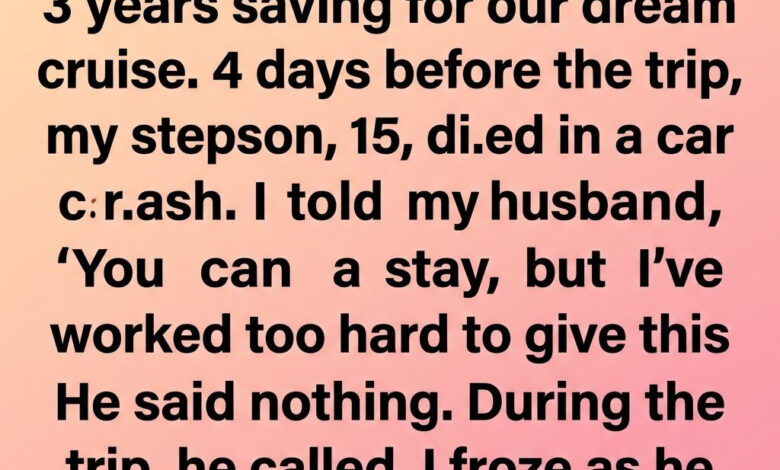
## She Booked the Luxury Cruise of a Lifetime—Then Came Home to a Marriage in Ruins
Some decisions don’t look cruel when you make them. They look *earned*. Logical, even. Like a long-overdue reward after years of doing the responsible thing.
That’s exactly how Sandra saw it.
### A Dream She Paid for in Time, Not Just Money
Sandra wasn’t impulsive. This wasn’t a random splurge or a reckless getaway. It was a carefully planned **dream vacation**—a **luxury cruise** she had pictured for years.
She and her husband had built a life that revolved around obligations: work, bills, family needs, and constant compromise. Sandra was the person who kept everything running. The one who postponed her own wants because “now isn’t the right time.”
So she made a promise to herself: she would finally do something just for her.
And she did it the hard way—**three years of saving**, saying no to smaller treats, putting money aside bit by bit. Not for attention. Not for social media. Just for the feeling of finally breathing again.
### Four Days Before Departure, Tragedy Hit
Then the call came: her husband’s adult son had died.
Grief didn’t enter the house quietly. It came like a storm—shock, denial, anger, and that hollow silence that follows when words stop working.
Almost immediately, the expectation formed around Sandra like a wall:
**Cancel the trip. Stay home. Be there.**
No one had to say it twice.
### The Choice That Split Her in Two
Sandra didn’t argue about the loss. She understood the pain. But inside her, another thought kept rising—one she felt ashamed to even have:
*After everything I’ve sacrificed… do I really give this up too?*
On one side was her husband’s devastation, the weight of family grief, the responsibility to show up and support the people she loved.
On the other side was something she rarely allowed herself to admit mattered: **her own life**, her own dreams, and a chance she might never get again.
She didn’t want to be selfish. She also didn’t want to disappear.
### She Said It Out Loud—and He Went Quiet
When Sandra finally said she still planned to go, her husband didn’t explode. He didn’t beg. He didn’t shout.
He just went silent.
Sandra took that silence as reluctant understanding—maybe even acceptance.
She didn’t realize it was something else entirely.
### The Cruise Didn’t Feel Like Freedom
The ship left port, and Sandra tried to lean into the experience: ocean views, fine dining, excursions, the kind of trip people save for years to afford.
But the enjoyment never fully arrived.
The messages from home were short. The calls felt strained. And every time she tried to relax, guilt sat down beside her like an unwanted passenger.
### The Call That Ended Her Marriage
Halfway through the trip, her phone rang.
Her husband’s voice was flat—controlled in the way people sound when they’ve gone past sadness and into certainty.
He didn’t argue. He didn’t negotiate.
He said, simply:
**“You’re not coming back.”**
At first, Sandra thought he meant it emotionally—that he was angry, that he’d cool down.
But he meant it literally.
### What Was Waiting at Home Was Already in Motion
While Sandra was at sea, her husband wasn’t just grieving. He was re-evaluating everything.
To him, her choice didn’t mean, “I need this for myself.”
It meant, “You’re alone in this.”
And in grief, that kind of message doesn’t fade with time—it hardens.
By the time Sandra returned, the decision had already been made.
He had filed for divorce.
The cruise she had dreamed about for years became a memory she couldn’t enjoy—because it came with a price she never imagined paying.
### The Question That Still Follows Her
Sandra’s mind keeps circling the same thought:
**Was I wrong?**
Some people say she earned that trip. That she spent years sacrificing and deserved something that was hers.
Others say family comes first—especially in mourning—because grief isn’t the moment to prioritize personal fulfillment.
The uncomfortable truth is that both sides make sense.
### Why This Happens More Than People Admit
When people make major decisions under intense stress, they often misread what the moment requires—and underestimate the long-term impact.
Organizations like the **American Psychological Association** have discussed how high-stress choices can shape relationships and lead to lasting regret. And medical experts, including those associated with **Mayo Clinic**, frequently emphasize how grief can require strong support systems—especially from the closest people in someone’s life.
In other words: even a decision that feels “fair” can land like abandonment when someone is in shock and mourning.
### The Lesson Most People Learn Too Late
Balance matters—but timing matters just as much.
Because waiting too long to choose yourself can build resentment.
But choosing yourself at the wrong moment can break trust in a way that doesn’t repair.
Sandra didn’t make a careless choice. She made a human one.
And sometimes, the hardest part of adulthood is realizing that a single decision can permanently change how someone sees you.
### And One Detail Still Makes It Worse
Sandra still thinks about something that happened on the last day of the cruise—something she brushed off at the time, something that seemed small.
But when she got home, it made everything look even worse.
Not because it changed what she did…
but because it changed how it *appeared*.
—
### Closing CTA
What would *you* have done in Sandra’s place—cancel the trip, or go and deal with the fallout later? Share your take in the comments, and if you want more real-life relationship dilemmas like this, follow along for the next story.