40-Acre Woodland, Maine Parcel Listed for $24,900 With Low Property Taxes and Major Access Restrictions

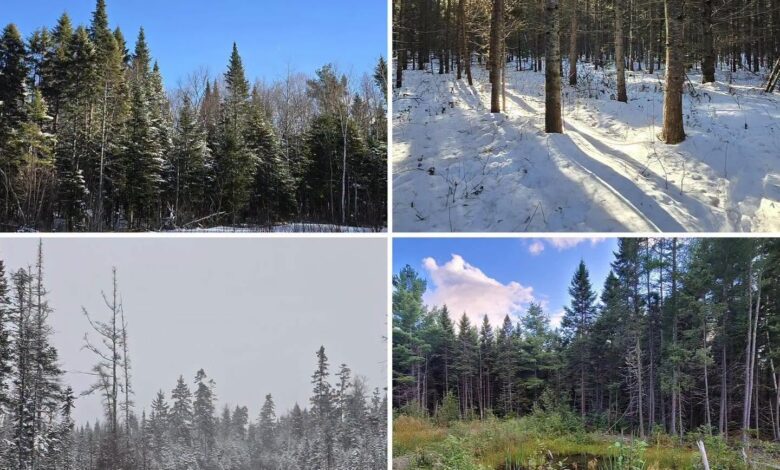
40 Acres of Maine Timberland Listed for $24,900 Despite Major Legal Access Restrictions
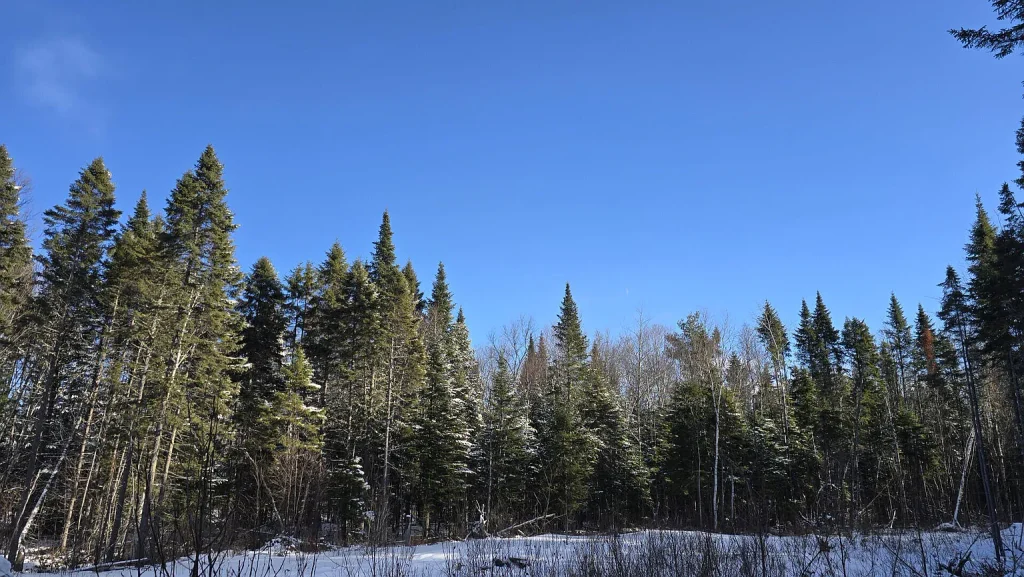
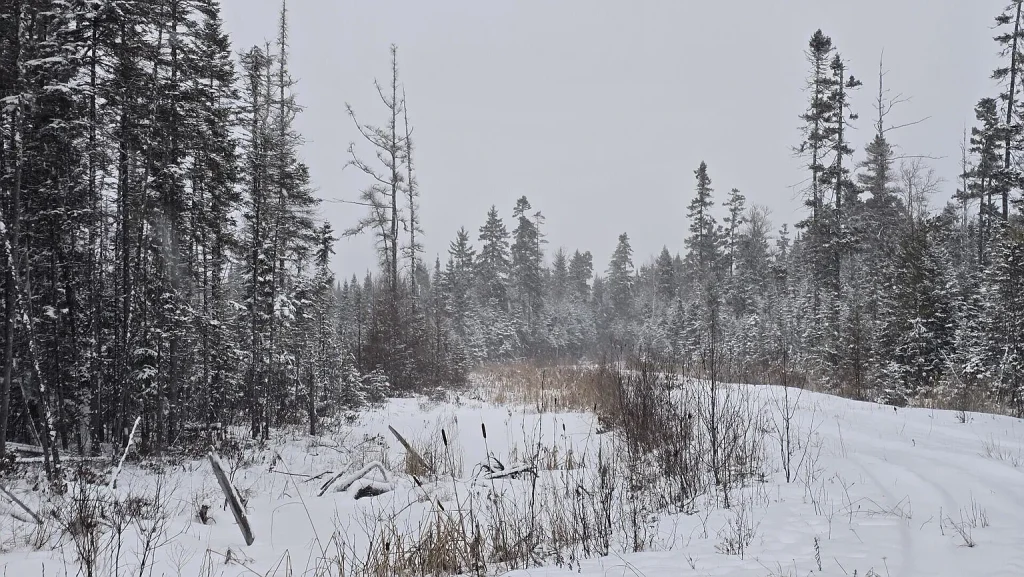
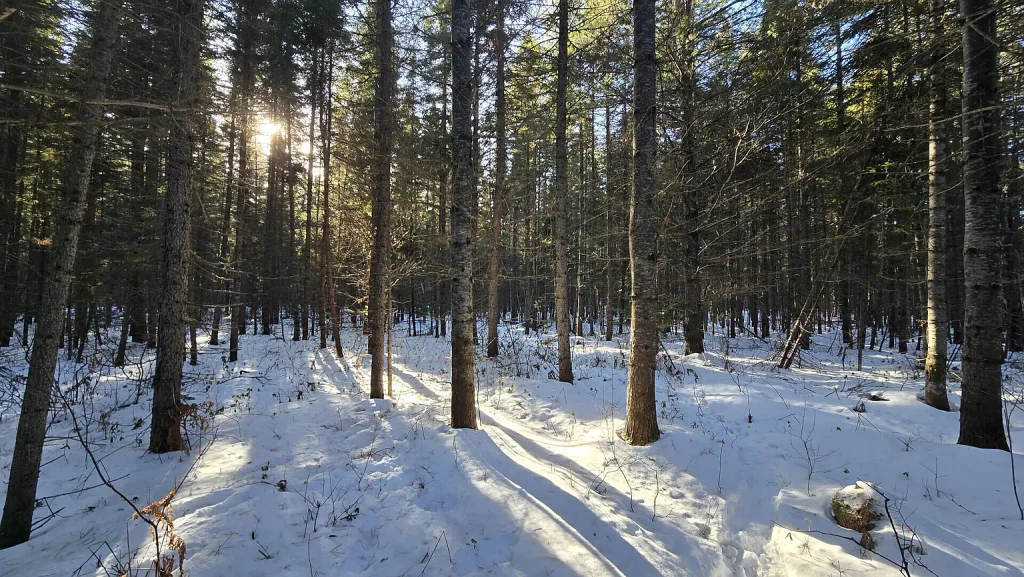
A 40- to 44-acre tract of wooded land in Woodland, Maine, is listed for $24,900, offering a low entry price for buyers interested in timberland, recreational acreage, or expanding an existing property. Located along Thomas Road in Aroostook County, the parcel reportedly features dense spruce forest, rolling terrain, and proximity to a recreational rail-trail corridor.
At the current asking price, the property works out to approximately $622.50 per acre if the acreage is 40 acres, or $565.91 per acre if the total is 44 acres. However, the low price comes with a significant limitation: the listing information states that the parcel has no legal access, no recorded right-of-way easement, and no established driveway.
Approximately 33 acres are also reportedly enrolled in Maine’s Tree Growth Tax Program, which is intended to encourage the management of commercial forestland. While this enrollment may help reduce property taxes, it can also create obligations and potential withdrawal penalties for owners who change the land’s use.
For prospective buyers, the central question is whether the property’s low asking price justifies the legal, surveying, access, and land-management challenges that may come with ownership.
Property Overview: Woodland, Maine
The property is identified as Parcel M15L10A along Thomas Road in Woodland, Maine, ZIP code 04736. It is situated in Aroostook County, in the broader Caribou-area market.
According to the supplied listing details, the tract was initially listed for $29,000 on April 21, 2026, before the asking price was reduced by $4,100 to $24,900 on May 25, 2026.
The property is described as having approximately 40 to 44 acres, although no professional boundary survey has reportedly been completed. This uncertainty is important because the actual acreage affects the calculated price per acre, the extent of the timber resource, and the amount of land available for any intended use.
The reported features include:
- Approximately 80% dense spruce forest cover.
- Rolling, wooded terrain.
- Rural zoning, according to the supplied information.
- Approximately 33 acres enrolled in the Maine Tree Growth Tax Program.
- Reported annual property taxes of $341.
- No established driveway or direct vehicular access.
- No electric, water, or sewer connections.
- No recorded legal right-of-way easement, according to the listing.
These details describe an unimproved rural land parcel rather than a ready-to-build homesite. Buyers should verify the listing disclosures, legal description, tax records, and current status before relying on them.
Asking Price and Per-Acre Calculations
The $24,900 asking price is the property’s most immediately noticeable feature. Based on the two acreage estimates provided, the calculated price varies as follows:
| Property metric | Calculation |
|---|---|
| Asking price | $24,900 |
| Price per acre at 40 acres | $622.50 |
| Price per acre at 44 acres | $565.91 |
| Reported annual property taxes | $341 |
| Average monthly property taxes | $28.42 |
| Reported HOA dues | None |
At 40 acres, the parcel contains approximately 1,742,400 square feet of land, equivalent to about 1.43 cents per square foot at the asking price. This is simply a mathematical comparison and does not establish the property’s market value.
The difference between 40 and 44 acres is substantial enough to warrant attention. A professional survey could help establish the actual boundaries and acreage, although the cost and practical difficulty of surveying heavily wooded land should be considered.
Most importantly, a low price per acre cannot be evaluated in isolation. Legal access, timber quality, terrain, permitted uses, and the costs of obtaining access can all materially affect what a buyer is willing or able to pay.
Listing History and the Previous Sale
The supplied property history shows a significant difference between the earlier asking price and the reported sale price in 2024.
The tract was reportedly listed for $37,500 on July 17, 2024, and entered pending status on August 28. The supplied records indicate that it sold for $19,500 on September 11, 2024.
It was then reportedly relisted for $29,000 on April 21, 2026, before being reduced to $24,900 on May 25, 2026.
Based on these figures, the current asking price is $5,400 above the reported 2024 sale price, a difference of approximately 27.7%. That is an asking-price comparison, not a confirmed investment return. It does not account for transaction costs, taxes, maintenance, or any improvements and expenses incurred since the previous sale.
The reduction from $29,000 to $24,900 represents a price cut of approximately 14.1%. Although this may reflect an effort to attract buyers, the available figures alone do not establish why the reduction occurred or whether the new price represents fair market value.
The lack of legal access is a major factor to investigate when comparing this parcel with other rural land listings. Accessible acreage with a recorded right-of-way may offer a different level of usability, even when its asking price per acre is considerably higher.
The Biggest Concern: No Recorded Legal Access
The most consequential disclosure is the reported absence of legal access to the parcel.
The listing states that the property has no legal access, no recorded easement, and no driveway. Physical entry is reportedly possible from an adjacent rail-to-trail recreational corridor, but that does not automatically establish a legal right to use the corridor as a private road.
There is an important distinction between being able to reach land on foot or through a recreational trail and having an enforceable legal right to drive vehicles, bring in construction equipment, install utilities, or transport harvested timber across neighboring property.
Without a verified access right, buyers could face significant limitations on how the land can be used. Construction, forestry operations, and ordinary vehicle access may be impractical or prohibited unless a lawful access arrangement can be established.
The exact rules governing the nearby trail must also be confirmed with its owner or managing authority. Trail access may be limited by the corridor’s legal status, permitted activities, seasonal rules, and other restrictions.
Could a legal easement be obtained?
One possible route is negotiating directly with an adjoining landowner for a permanent, recorded access easement. Such an agreement would need to specify the location and permitted use of the route, maintenance responsibilities, and any restrictions or compensation.
However, a neighboring owner is not necessarily obligated to grant an easement simply because the parcel is landlocked. Negotiations could be unsuccessful, and any agreement would need appropriate legal review and recording.
Other legal theories, such as an easement by necessity or a prescriptive easement, may sometimes be relevant to land-access disputes. Their availability depends on specific facts, property history, and applicable Maine law. Buyers should not assume that either route will succeed or that a court will grant access.
A Maine real estate attorney can review the chain of title, deeds, historical parcel divisions, and Registry of Deeds records to determine whether any access rights may exist or whether a legal claim could be viable.
Until access is confirmed in writing and through the relevant property records, buyers should evaluate the parcel on the assumption that the access problem may remain unresolved.
Maine’s Tree Growth Tax Program and the Reported $341 Annual Tax Bill
Approximately 33 acres of the parcel are reportedly enrolled in Maine’s Tree Growth Tax Program. This program is designed to encourage the long-term management of qualifying forestland by assessing enrolled land according to its forest productivity rather than simply its potential value for development.
The reported annual property tax bill of $341 is equivalent to about $28.42 per month when averaged over 12 months. This is a relatively modest reported recurring expense, but it should not be treated as the property’s complete cost of ownership.
Tree Growth enrollment comes with conditions. Landowners generally must maintain the required forest management documentation and use the enrolled acreage consistently with program rules. The details of the existing enrollment, management plan, and compliance status should be obtained from the Woodland tax assessor and a qualified Maine forester.
What happens if the land is removed from Tree Growth?
Withdrawing enrolled acreage or changing its use in a way that no longer qualifies can trigger a statutory withdrawal penalty under Maine law. The amount depends on the applicable rules, the land’s assessment and market value, and the length of time the acreage has been enrolled.
The supplied material includes estimates of potential penalties, but the actual liability cannot be established from the asking price or the reported tax bill alone. Buyers should request a property-specific calculation from the municipal assessor before assuming that the cost of withdrawal will fall within any particular range.
This matters especially for anyone considering clearing land for a home, cabin, agricultural use, or another non-forestry purpose. If development is a primary objective, the tax consequences should be investigated before making an offer.
For a buyer intending to maintain the property as qualifying forestland, the program may be compatible with long-term ownership. Even then, the current forest management plan, required updates, and obligations associated with the enrolled acres should be reviewed.
Dense Spruce Forest and Potential Timber Value
The parcel is reportedly covered by dense spruce forest across approximately 80% of its area. If the total acreage is 40 acres, that would equate to about 32 acres of spruce-dominated cover.
Spruce timber can have commercial uses, depending on species, tree size, stand quality, accessibility, and prevailing timber prices. However, the presence of mature-looking trees does not establish the amount of merchantable timber or its value.
A qualified forester would need to assess species composition, tree diameters, stand density, timber volume, health, harvesting conditions, and estimated stumpage value. The actual result could differ considerably from assumptions based on aerial appearance or a general description of the forest.
Access is again a central issue. Commercial logging typically requires equipment and the ability to move timber from the property to a suitable road or loading area. Without a lawful access route or a workable agreement with neighboring owners, even timber with potential commercial value may be difficult or impossible to harvest economically.
Any prospective timber investor should therefore evaluate the legal access question before treating the forest as a readily marketable asset.
Terrain, Rural Setting, and Potential Recreational Use
The listing describes the property as wooded and rolling, with rural zoning. Its forest cover and proximity to a rail-to-trail corridor may appeal to buyers interested in outdoor recreation or maintaining a wooded parcel.
Potential recreational activities would depend on the land’s actual access arrangements, local regulations, and the rules governing the adjacent corridor. Buyers should not assume that they can bring ATVs, snowmobiles, vehicles, or other equipment onto the property simply because the trail is nearby.
Similarly, the reported rural zoning classification does not establish that a residence, cabin, campsite, or other structure can be approved. Applicable municipal rules, building requirements, environmental restrictions, and access standards must be confirmed with the relevant authorities.
The absence of electric service, water, sewer, and a driveway also means that any future development would require substantial planning. Off-grid systems might be possible under certain conditions, but their feasibility depends on local rules, site suitability, and the availability of legal access for installation and maintenance.
For buyers whose primary goal is simply to own additional forestland, the property may be worth investigating. For those expecting a conventional homesite or easy recreational vehicle access, the limitations are much more significant.
What Would It Cost to Make the Property More Usable?
The purchase price is only one component of the potential investment.
The supplied analysis proposes expenses for a boundary survey, legal access negotiations, forest management documentation, and construction of an access track. These are planning estimates rather than verified contractor or professional quotes, and the final costs could vary substantially.
A survey of heavily wooded acreage can require considerable fieldwork. Negotiating an easement may involve legal fees, compensation to an adjoining owner, and survey work. Road construction may require approvals, drainage work, grading, and a lawful route across the relevant land.
The proposed scenario in the supplied material estimates a total of $50,600 after the purchase price and several assumed access-related expenses. That figure should be treated as an illustrative scenario, not a reliable forecast. It assumes that an easement can be secured and that the estimated costs are sufficient, neither of which is guaranteed.
If neighboring owners refuse to grant access, additional spending may not solve the problem. Buyers should establish the feasibility of legal access before committing to a development budget.
A more useful first step is to obtain legal advice and written estimates, then compare the resulting total with the cost of buying a different parcel that already has verified access.
Comparing This Parcel With Accessible Land
The supplied analysis uses a hypothetical 40-acre parcel priced at $65,000 as a comparison. At that price, the accessible property would cost $1,625 per acre.
By contrast, the subject parcel is listed at $24,900, or $622.50 per acre using the 40-acre estimate. The initial price difference is $40,100.
However, the two parcels are not necessarily equivalent. A property with legal road frontage and a surveyed boundary may be more useful to a homeowner, builder, or timber operator than land without recorded access. Conversely, the subject parcel might be suitable for a neighboring owner who can reach it from land they already control.
The hypothetical $65,000 comparison has not been independently verified as a current market benchmark. Buyers should review recent completed sales of similar acreage in the Woodland and wider Aroostook County area, giving particular attention to legal access, timber quality, survey status, and permitted uses.
The meaningful comparison is not simply $622.50 per acre against a higher advertised figure. It is the total cost of acquiring land that can legally and practically serve the buyer’s intended purpose.
Who Might Consider Buying This Property?
The parcel is likely to appeal most to buyers who understand the access restrictions and have a realistic plan for dealing with them.
Adjacent landowners: Someone who owns nearby land may be able to expand an existing holding more easily than a buyer starting from scratch. The actual benefit depends on property boundaries, available access, and whether the additional acreage fits the owner’s goals.
Recreational land buyers: Buyers interested in a remote wooded tract may consider the property, provided they understand the limits of the rail-to-trail corridor and confirm which activities are permitted. Physical proximity to a trail should not be mistaken for a legal right to use it as a private access road.
Forestland owners and timber investors: The reported spruce cover and Tree Growth enrollment may be relevant to long-term forest management. A forester’s assessment and a clear solution to the access problem would be essential before estimating commercial timber value.
Traditional homebuilders and homesteaders: Buyers seeking a conventional homesite face significant uncertainty. Legal access, zoning, building approvals, utility feasibility, and wastewater requirements would need to be addressed before residential development could be considered realistic.
Buyers relying on financing: The lack of recorded legal access may make financing more difficult. Lender requirements vary, so prospective buyers should discuss the exact property with their lender rather than assume that financing is either available or categorically impossible.
Essential Due Diligence Before Making an Offer
Before purchasing the property, buyers should complete several important checks:
- Order a title review. Have a Maine real estate attorney review the chain of title, recorded deeds, easements, and historical parcel divisions to determine whether any legal access rights exist.
- Investigate neighboring ownership. Identify the owners of adjoining parcels and determine whether a permanent access easement is realistically negotiable. Do not assume that an agreement will be granted.
- Confirm trail-corridor rules. Contact the corridor’s owner or managing organization to establish the property’s relationship to the trail and which uses are allowed. Confirm whether any private access rights have been formally granted.
- Obtain a boundary survey estimate. Confirm the legal description and actual acreage, and obtain a written estimate from a licensed Maine land surveyor.
- Review Tree Growth enrollment. Request the current enrollment records, forest management plan, compliance status, and any information needed to estimate a possible withdrawal penalty.
- Consult a professional forester. Assess the timber species, volume, quality, potential harvesting value, and access requirements before assigning a commercial value to the forest.
- Verify zoning and development rules. Contact the appropriate local authority to determine which structures and land uses may be permitted, especially given the reported absence of legal access.
- Confirm taxes and other obligations. Verify the current tax bill and whether any future change in ownership, land use, or enrollment status could affect the property’s assessment or tax liability.
- Obtain professional cost estimates. Before budgeting for a driveway, clearing, utilities, or construction, establish whether the work can be completed legally and what approvals would be required.
Final Thoughts on the $24,900 Maine Land Listing
Parcel M15L10A in Woodland, Maine, stands out for its low asking price and reported acreage. At $24,900, the property works out to approximately $622.50 per acre using the 40-acre estimate, with dense spruce forest and reported annual property taxes of $341.
Yet the lack of legal access is not a minor inconvenience. It affects the practical use of the land, the feasibility of timber harvesting, the ability to bring in equipment, and the prospects for future development. The reported Tree Growth enrollment adds another layer of responsibility for buyers who may want to change how the property is used.
The tract may be worth considering for an adjoining landowner or a buyer comfortable with a highly restricted, long-term forestland holding. Buyers seeking a conventional homesite, easy vehicle access, or a straightforward timber investment should proceed cautiously.
Ultimately, the low asking price needs to be weighed against the possibility that access cannot be secured at an acceptable cost—or at all. Before purchasing, buyers should verify the title, investigate legal access, confirm the actual acreage, review the Tree Growth records, and obtain professional advice about the property’s intended use.
This article is based on the supplied property information, which has not been independently verified. Listing prices, acreage, taxes, access rights, legal requirements, and cost estimates should be confirmed with the appropriate property professionals and local authorities before any purchase decision.
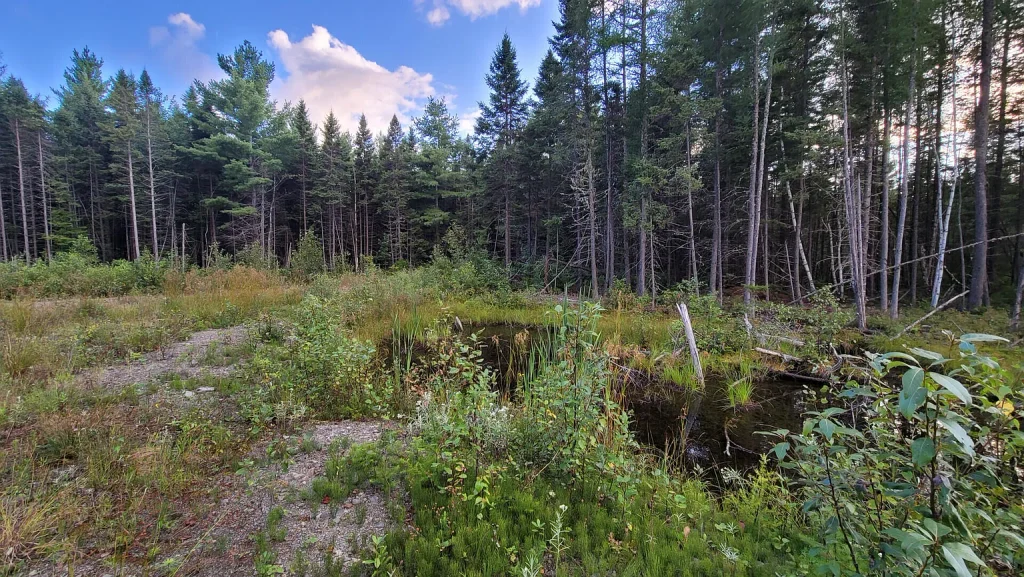
Listed on Zillow