Virginia Off-Grid Property on 16.93 Acres Features Two Cabin Shells, Rainwater Collection and a Greenhouse

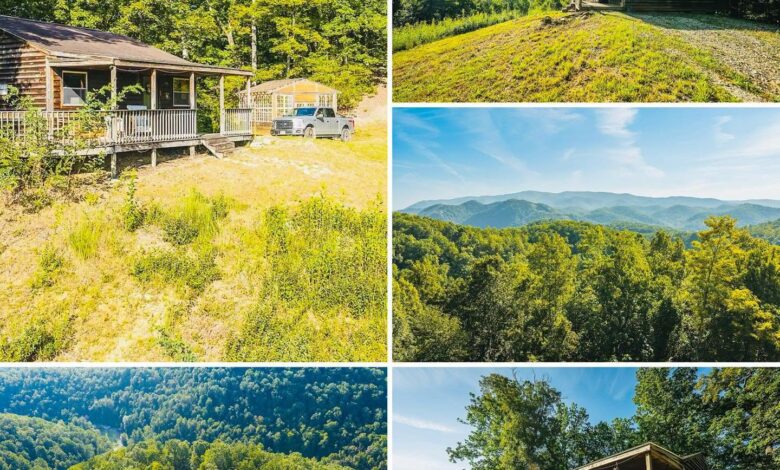
Virginia Mountain Property Offers 16.93 Acres, Two Unfinished Cabins and a Greenhouse at Auction
A 16.93-acre mountain property on Georges Run Road in Shawsville, Virginia, offers a combination of wooded acreage, two unfinished cabins, a greenhouse, and an off-grid water collection setup. The property was presented with an opening auction bid of $62,000, equivalent to approximately $3,662 per acre before any buyer’s premium or additional expenses.
Located in Montgomery County in the New River Valley region, the property is described as approximately 15 minutes from Christiansburg and around 25 minutes from Blacksburg. Its two cabin structures, storage sheds, recently improved gravel driveway, and outdoor shower may appeal to buyers interested in a recreational retreat, a homesteading project, or a privately developed mountain property.
However, the cabins are unfinished, and the site reportedly lacks a drilled well and septic system. Buyers would need to investigate permitting, utility installation, construction costs, and the auction’s financial requirements before determining whether the property fits their plans.
Property Overview: Georges Run Road, Shawsville, Virginia
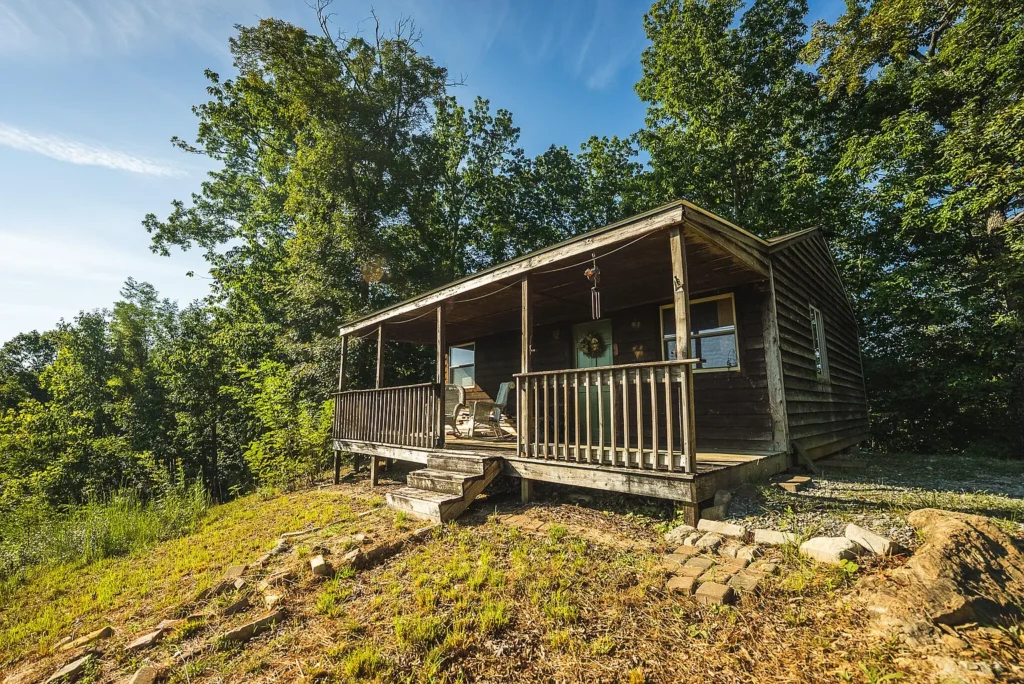
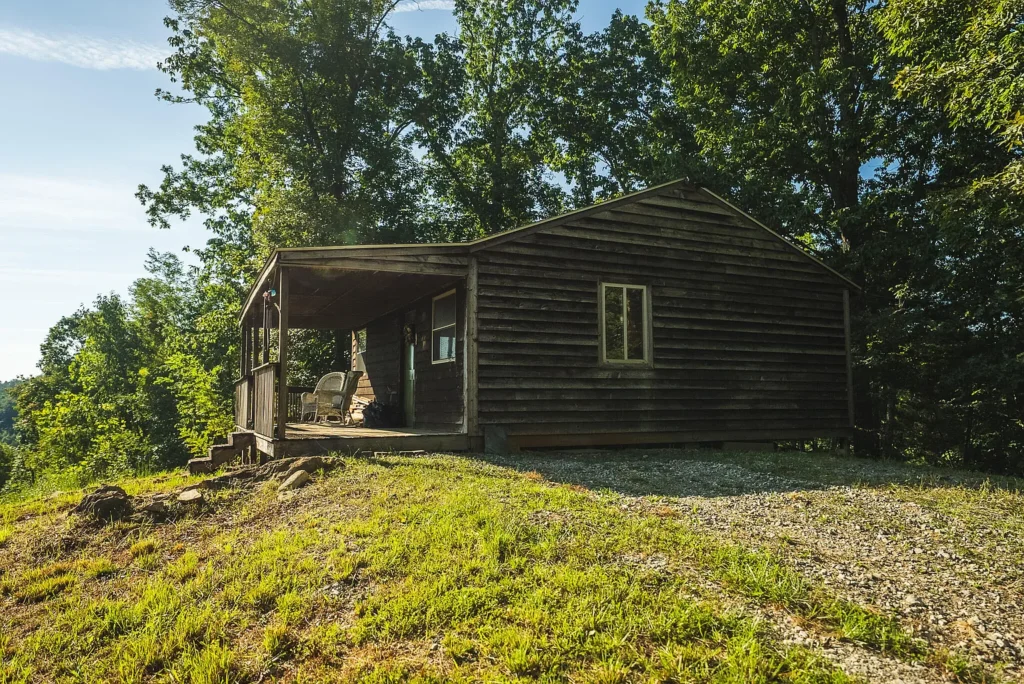
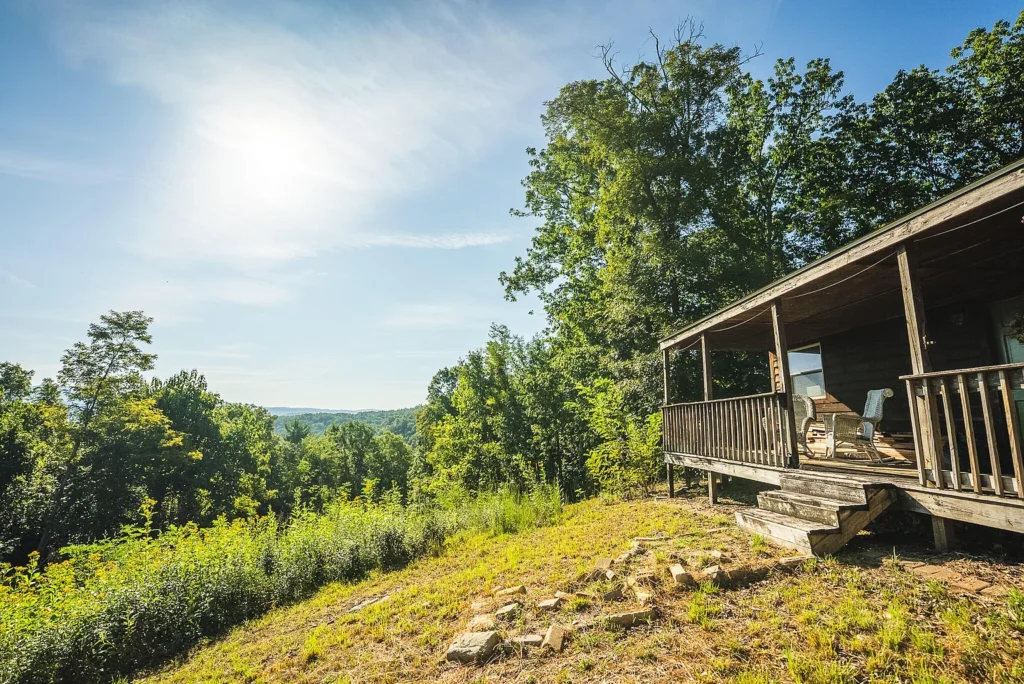
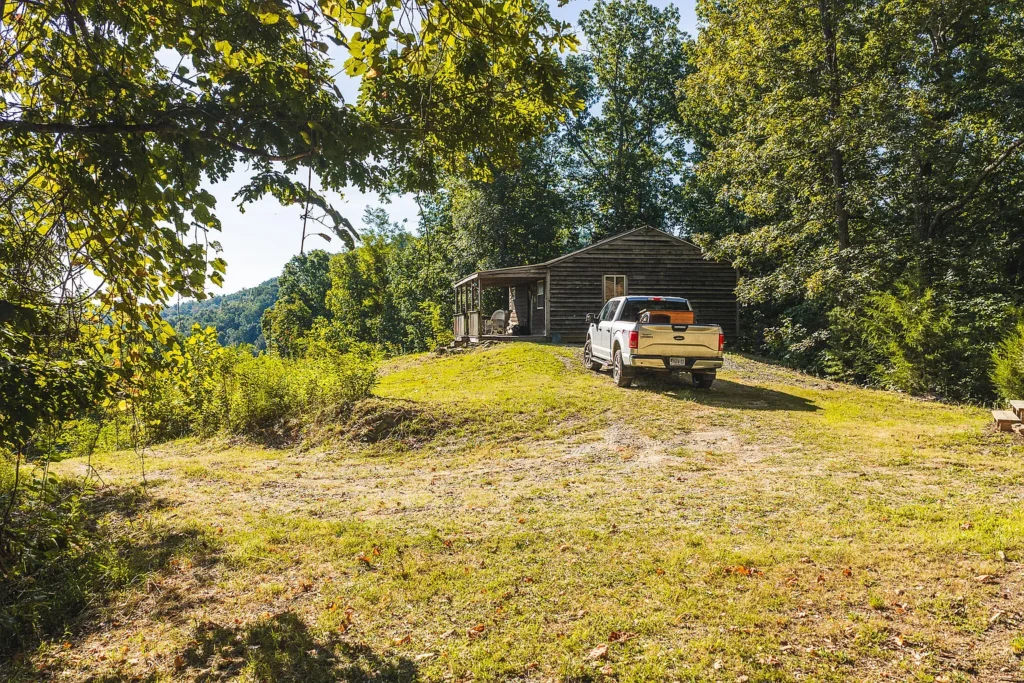
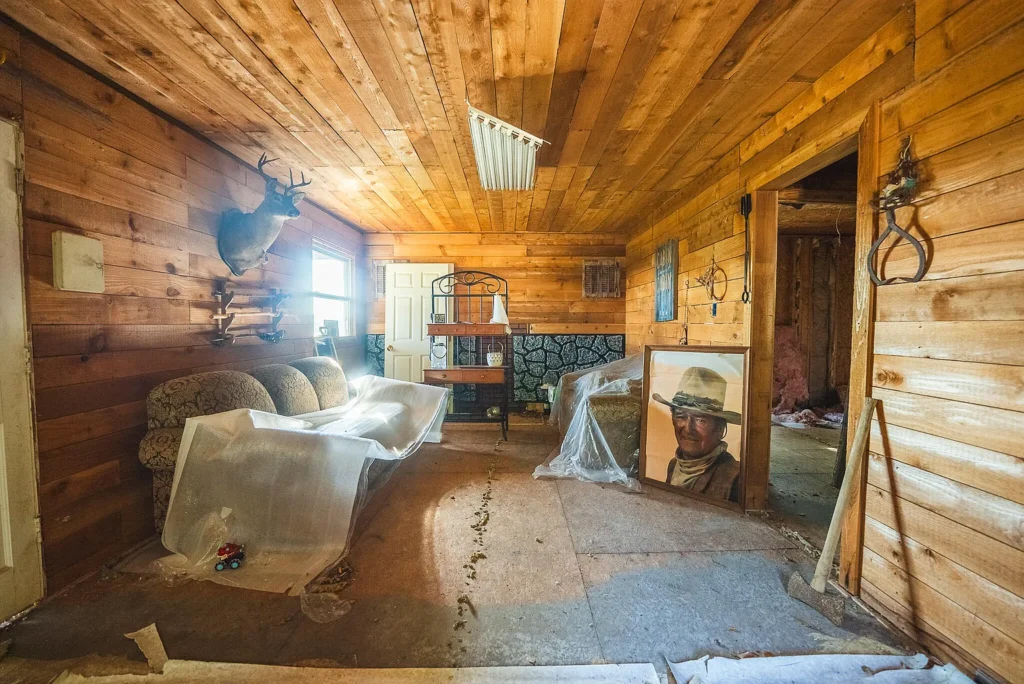
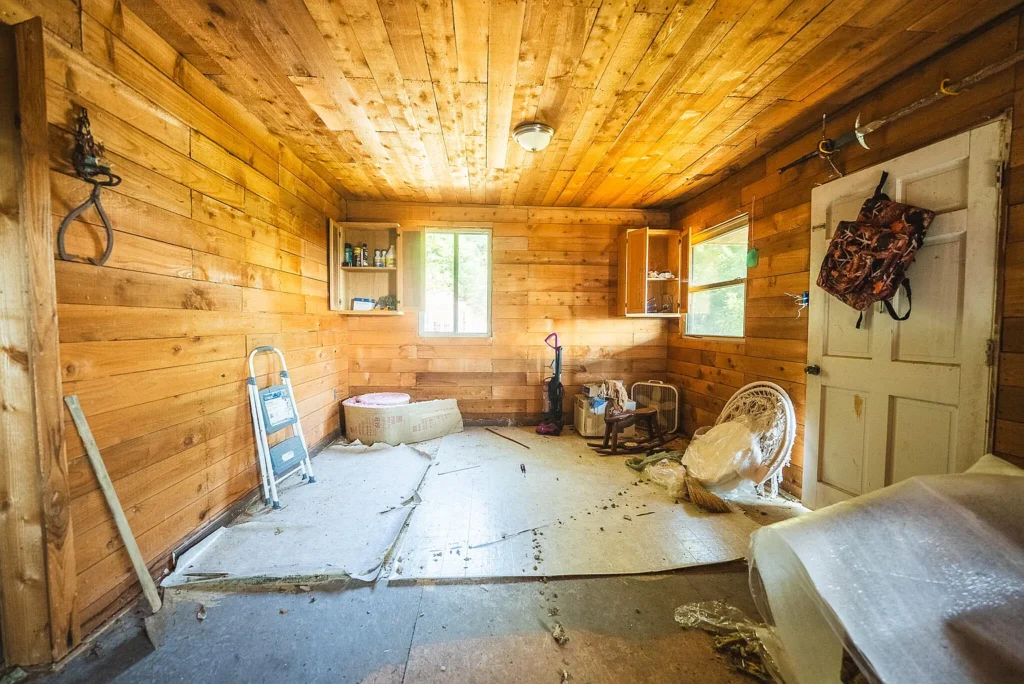
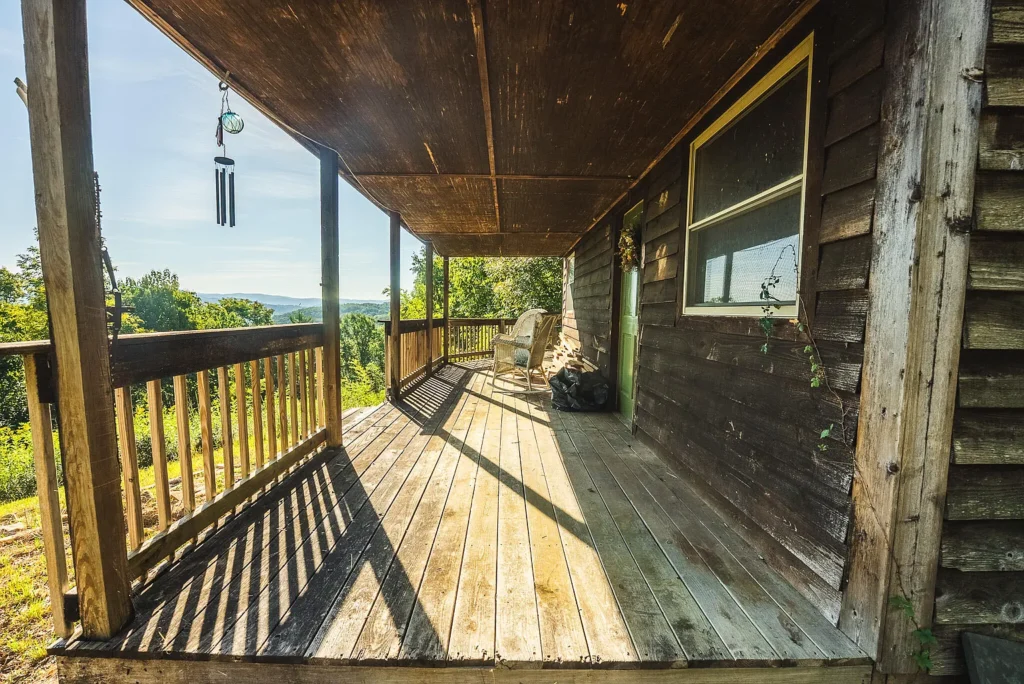
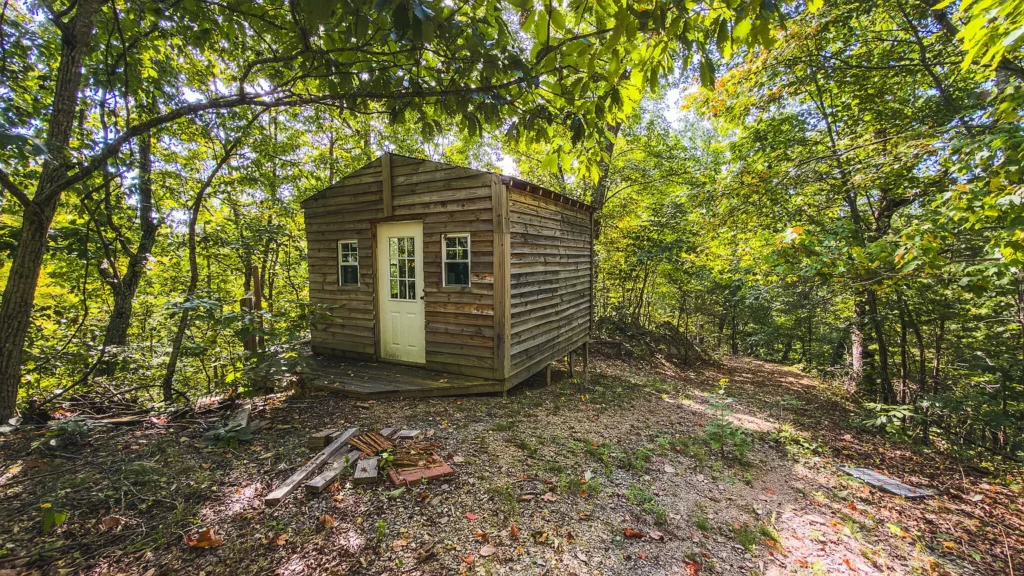
The property includes 16.93 acres of land, with a primary two-bedroom cabin shell and a secondary one-bedroom cabin shell. Both structures require additional work before they can serve as finished residential spaces.
Key details supplied for the property include:
- Opening auction bid: $62,000
- Location: Georges Run Road, Shawsville, VA 24162
- County: Montgomery County
- Land area: 16.93 acres
- Primary structure: Unfinished two-bedroom cabin
- Secondary structure: Unfinished one-bedroom cabin
- Additional features: Greenhouse, storage sheds, rainwater collection system, and outdoor shower
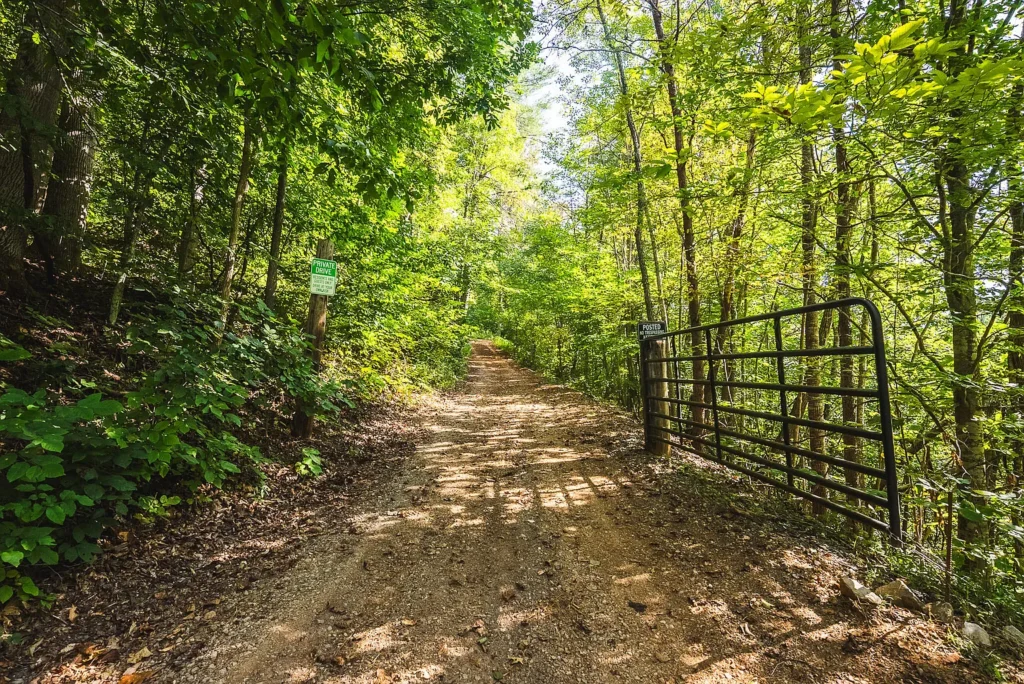
- Driveway: Recently updated gravel access
- Water supply: Rainwater collection; no drilled well reported
- Wastewater: No septic system reported
- Annual property taxes: $475
- Reported HOA fees: None
- Regional access: Approximately 15 minutes to Christiansburg and 25 minutes to Blacksburg, according to the supplied listing details
At the opening bid, the asking figure works out to approximately $3,662 per acre. This calculation is a useful starting point for comparing land listings, but it does not establish market value or account for the unfinished buildings and missing utilities.
The supplied information identifies October 9, 2026, at 3:00 p.m. Eastern Time as the auction deadline. Since that date has passed, prospective buyers should confirm the property’s current status and whether the auction resulted in a sale before making plans.
Two Unfinished Cabins Create Multiple Possibilities
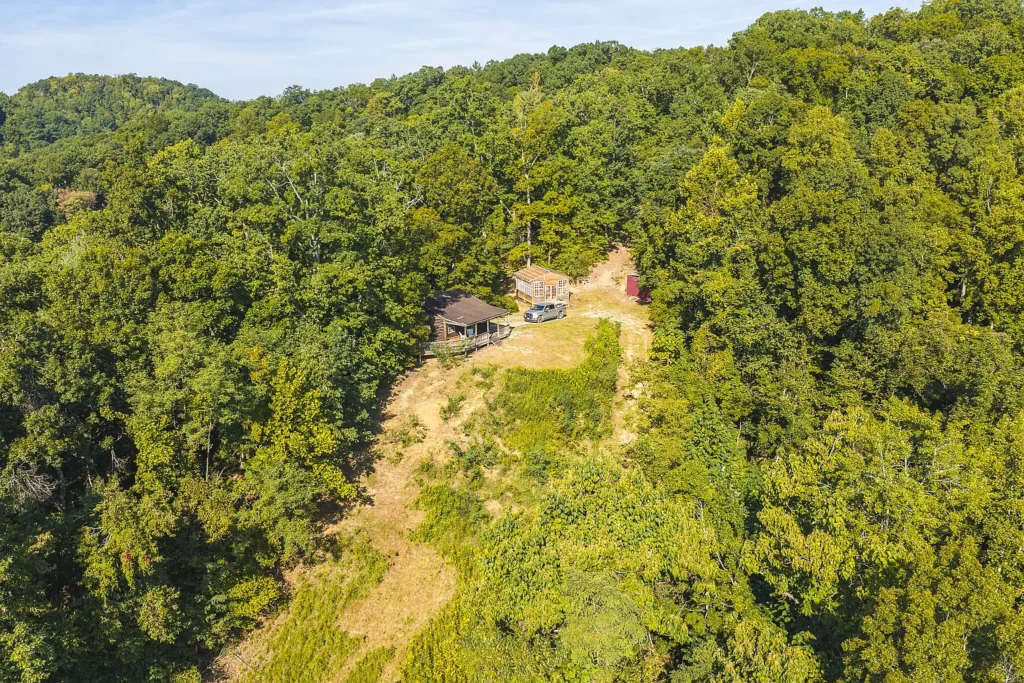
One of the property’s distinguishing features is the presence of two separate cabin structures on the same parcel.
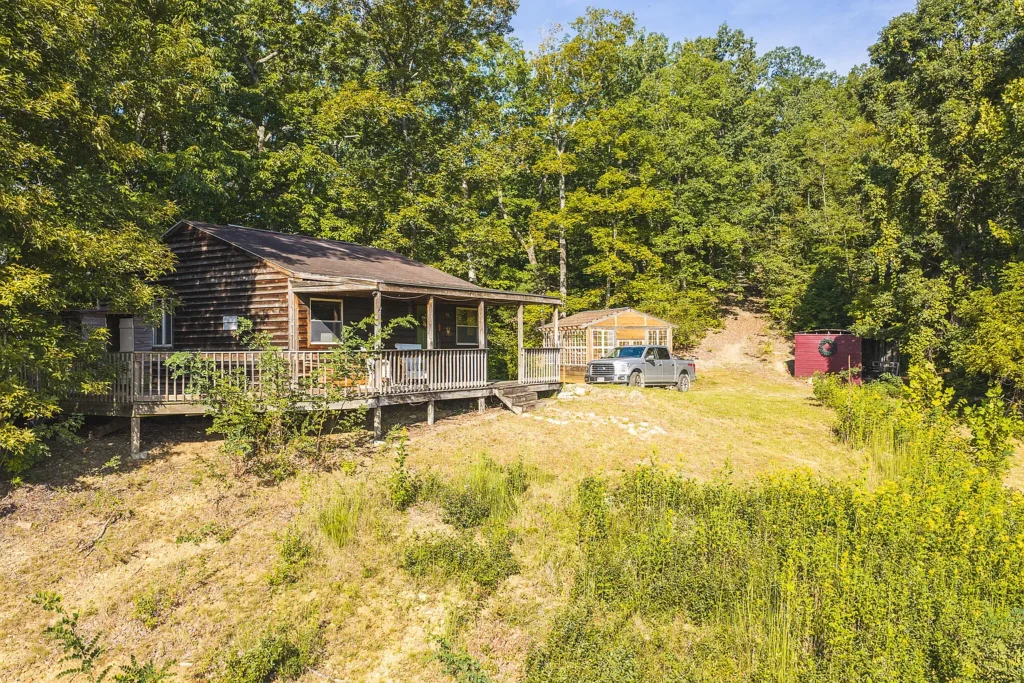
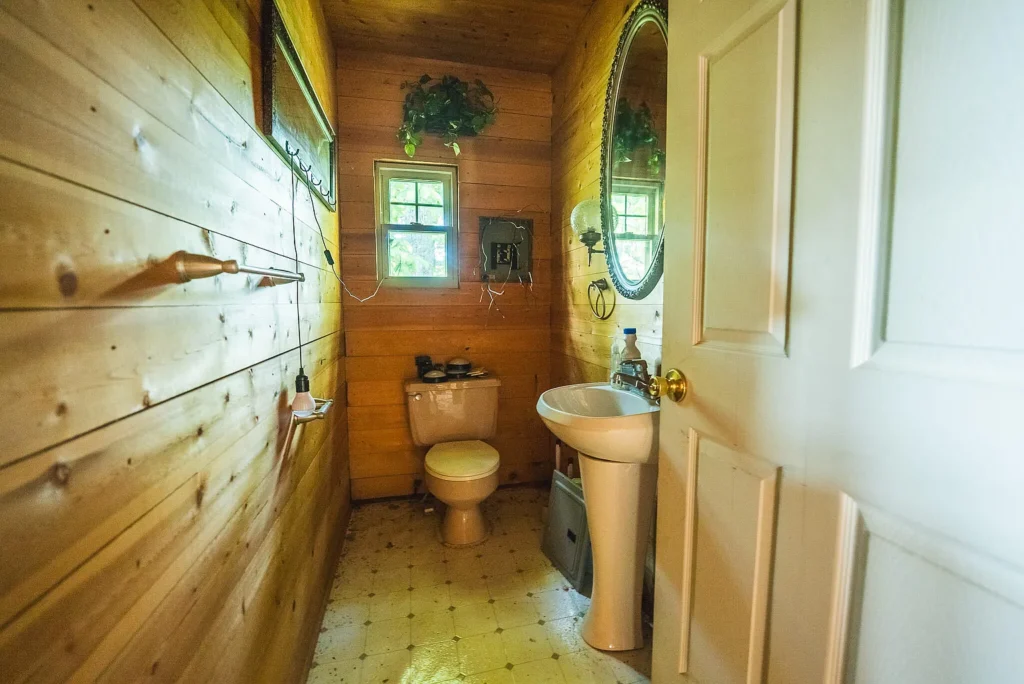
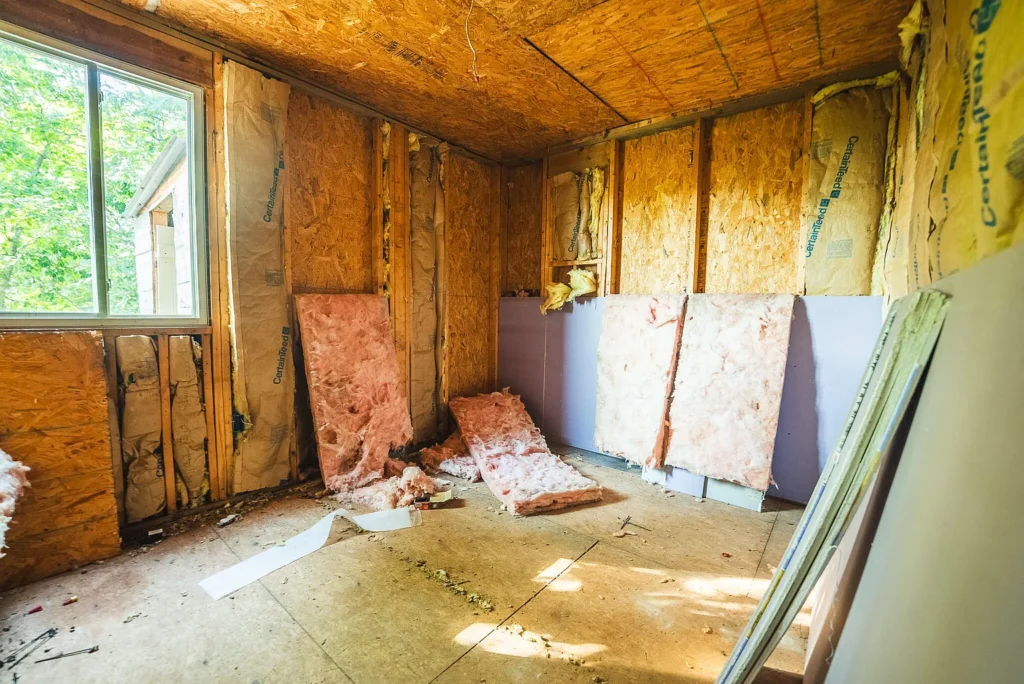
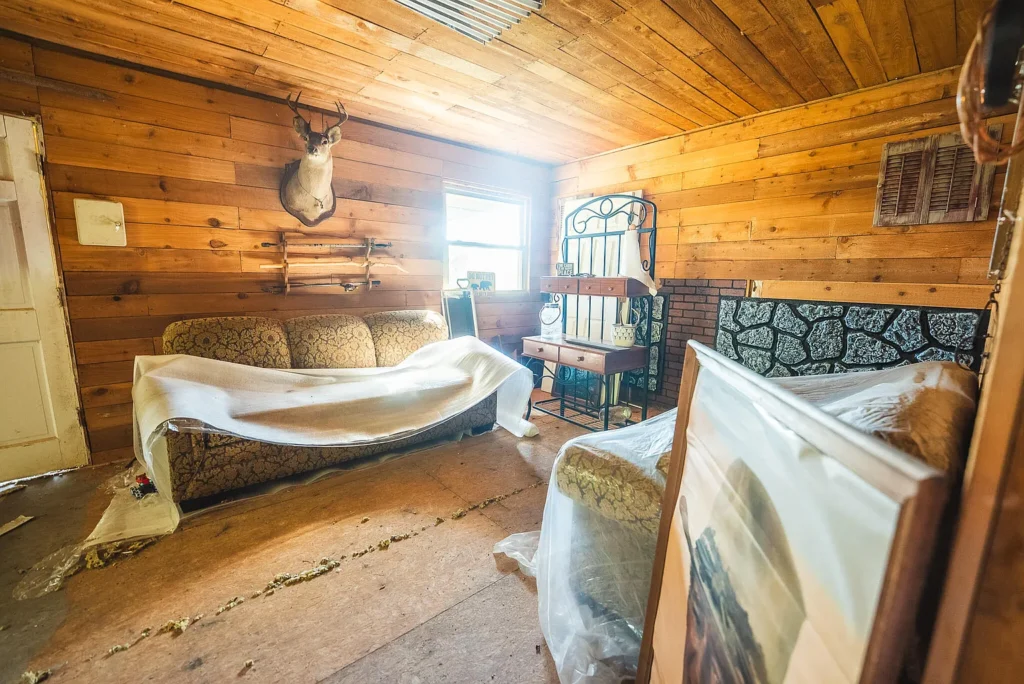
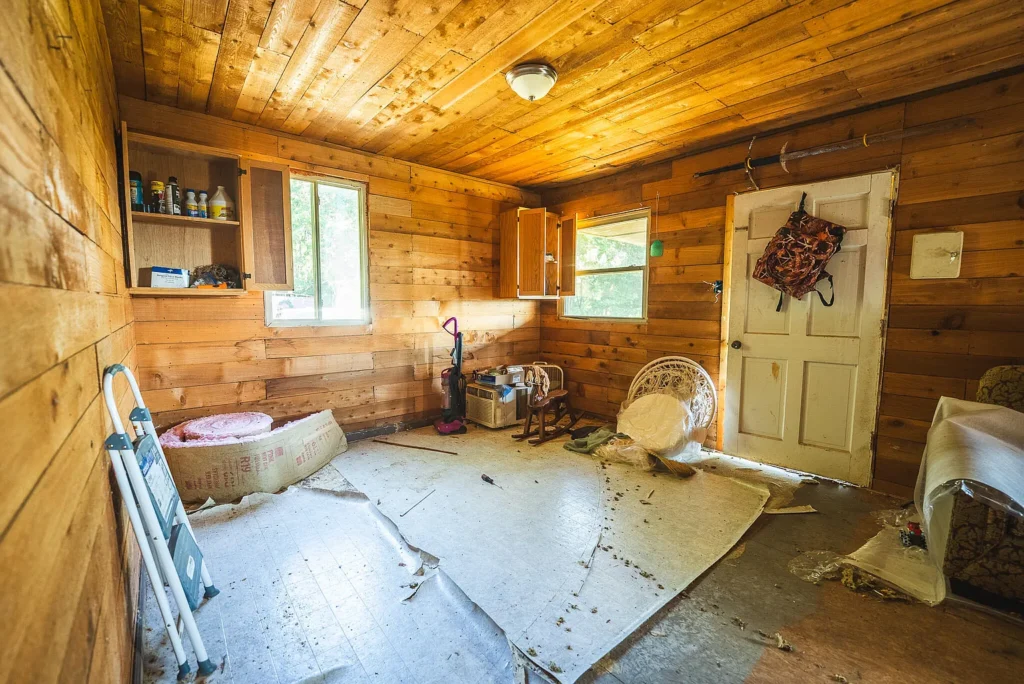
The primary cabin is described as a two-bedroom unfinished structure centered around a stone wood-burning fireplace. Its timber-framed interior remains incomplete, with insulation, interior wall finishes, electrical wiring, and plumbing still requiring attention.
The secondary structure is described as an unfinished one-bedroom cabin. Depending on its condition, local regulations, and the eventual completion work, it might serve as a guest space, recreational shelter, workshop, or storage area.
Having two structures already on the property could provide a starting point for someone who wants more than a single cabin. However, buyers should not assume that either structure is approved for residential occupancy or that both can be legally used as separate dwellings. Building records, permits, structural integrity, and applicable occupancy requirements should be reviewed before assigning value to either cabin.
The stone fireplace in the main cabin is another feature that may appeal to buyers who appreciate rustic mountain architecture. Its presence does not eliminate the need for a professional inspection of the masonry, chimney, clearances, and overall fire safety.
A Greenhouse and Outbuildings for a Homesteading Project
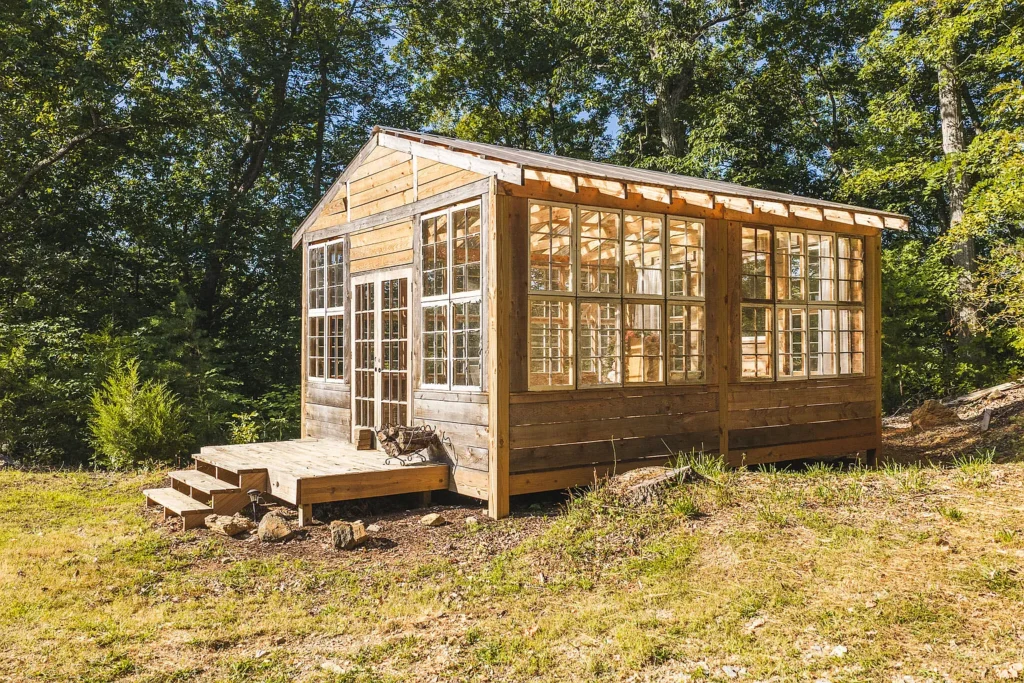
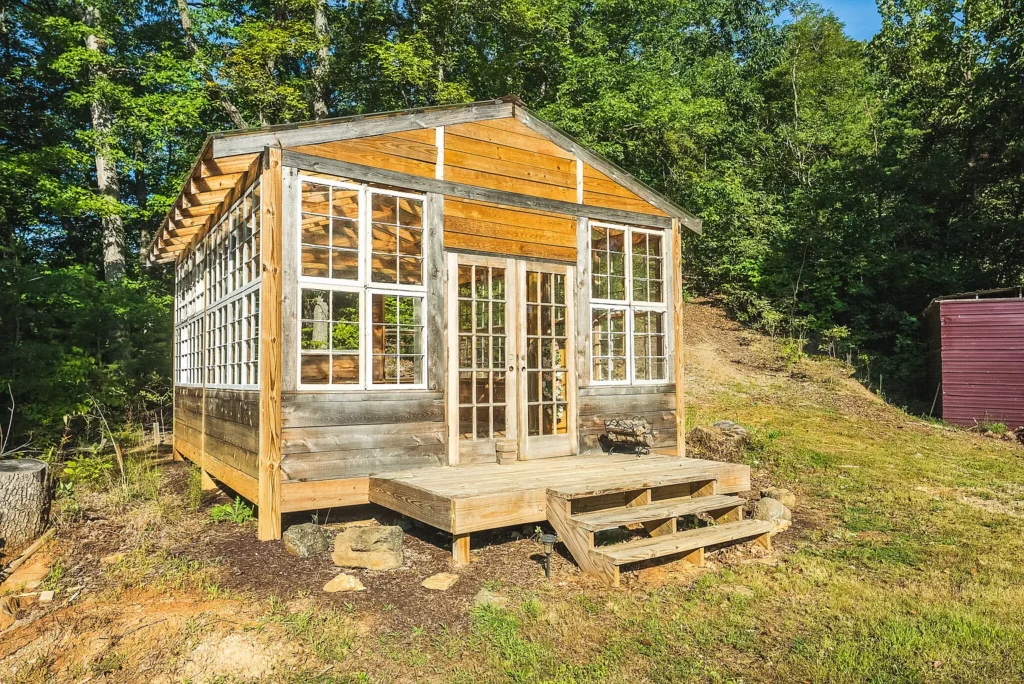
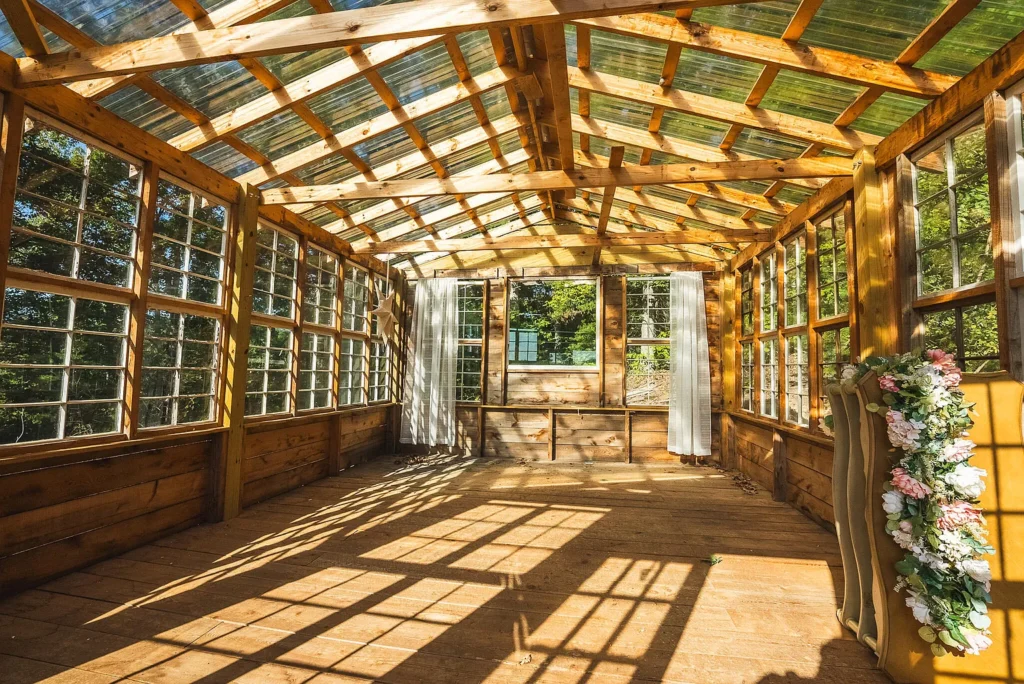
The property reportedly includes a newly built greenhouse, along with storage sheds. These additions may be useful to someone interested in gardening, starting seedlings, storing tools, or gradually developing a small homestead.
The greenhouse could provide a practical starting point for seasonal growing, provided its construction and condition are suitable for the intended use. Buyers should confirm whether it is fully assembled, securely anchored, and ready for operation.
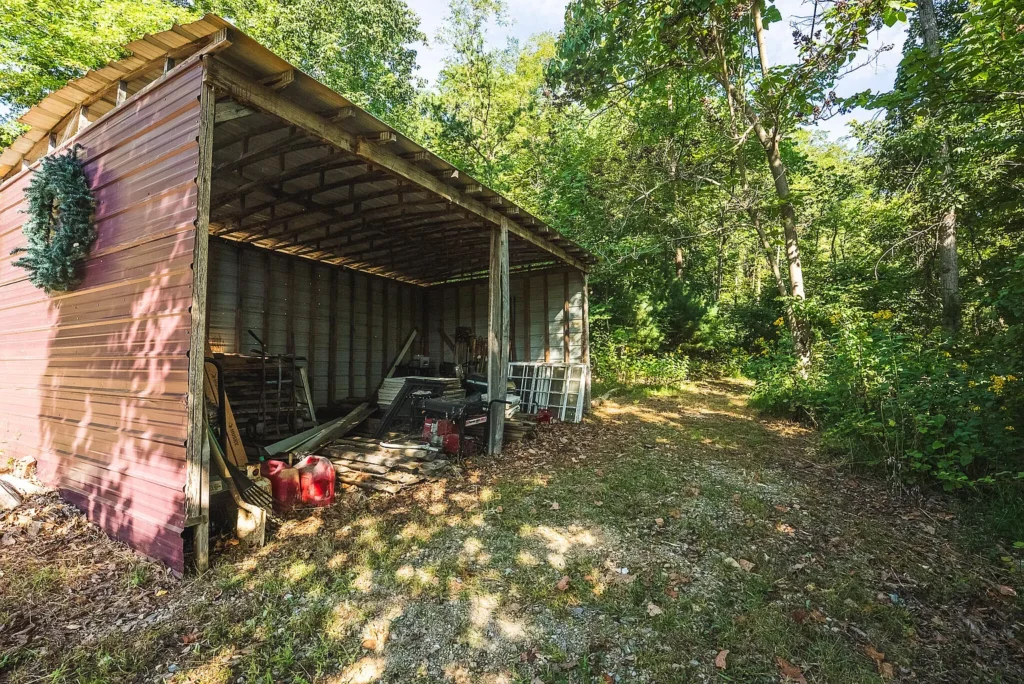
Storage sheds may also offer space for equipment and supplies during the construction process. Their actual usefulness will depend on their condition, accessibility, and capacity.
Together, these structures give the property a broader range of potential uses than an undeveloped wooded parcel. Nevertheless, their replacement or resale value should not be assumed without inspection and supporting evidence.
Off-Grid Water, Sanitation and Power Options
The current setup relies on rainwater collection tanks and an outdoor shower. This arrangement may support limited recreational use, but it is not equivalent to a complete residential water and wastewater system.
The listing information states that a drilled well and septic system are not installed. Anyone planning to occupy the cabins regularly would need to investigate a suitable water supply and an approved method of wastewater treatment.
Water supply
A private well may be one option, but its feasibility and cost depend on local geology, drilling depth, water yield, and permitting requirements. Rainwater collection could potentially remain part of an off-grid system, but buyers should determine what treatment, storage, and other safeguards would be required for their intended use.
Wastewater
The absence of a septic system is a major consideration. Buyers should consult the appropriate Virginia authorities and a qualified onsite soil evaluator to determine whether the land can support an approved wastewater system near the proposed building sites.
A successful soil evaluation should not be assumed, and a septic permit is not guaranteed simply because cabins already exist on the property.
Electricity
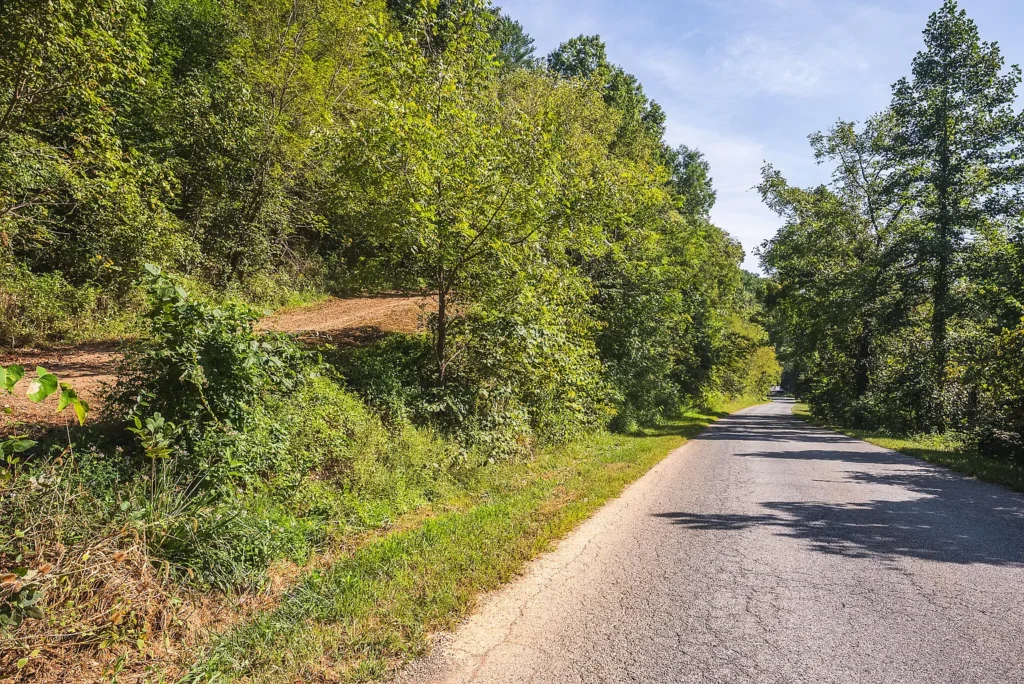
Electric service is reported to be available along Georges Run Road. Actual connection costs would depend on the utility’s requirements, the distance to the proposed service location, and any equipment or site work needed.
Solar power and battery storage could also be explored as alternatives. The feasibility of a solar installation would depend on sunlight exposure, shading, system size, and the electrical demands of the finished cabins.
The right approach will depend on whether the next owner wants a seasonal camp, a more self-sufficient retreat, or a fully serviced residential property.
Land, Mountain Setting and Regional Access
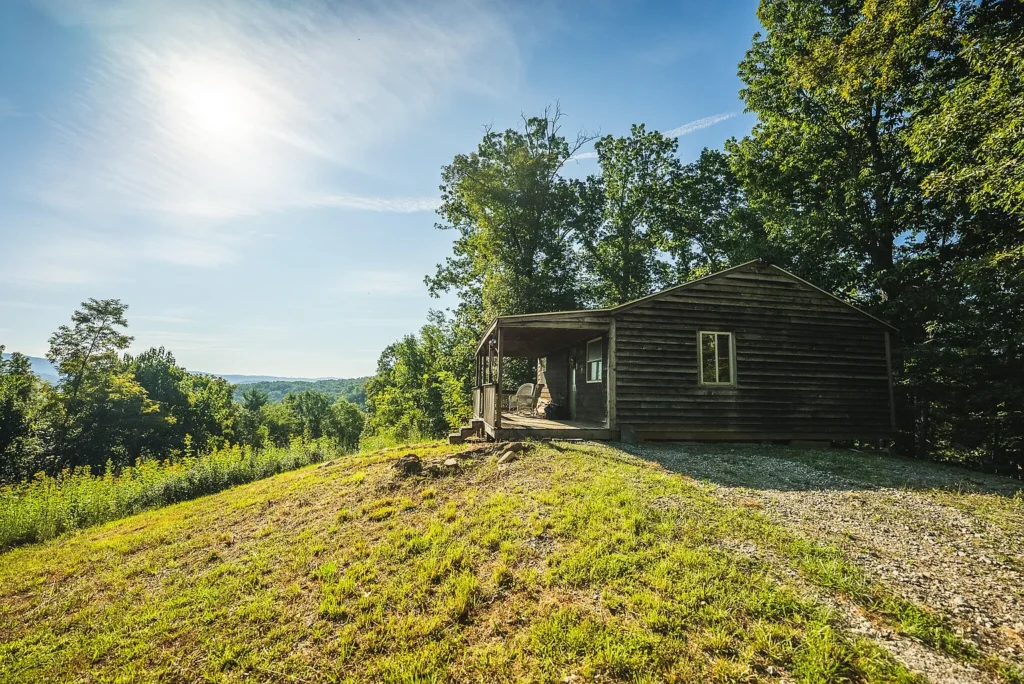
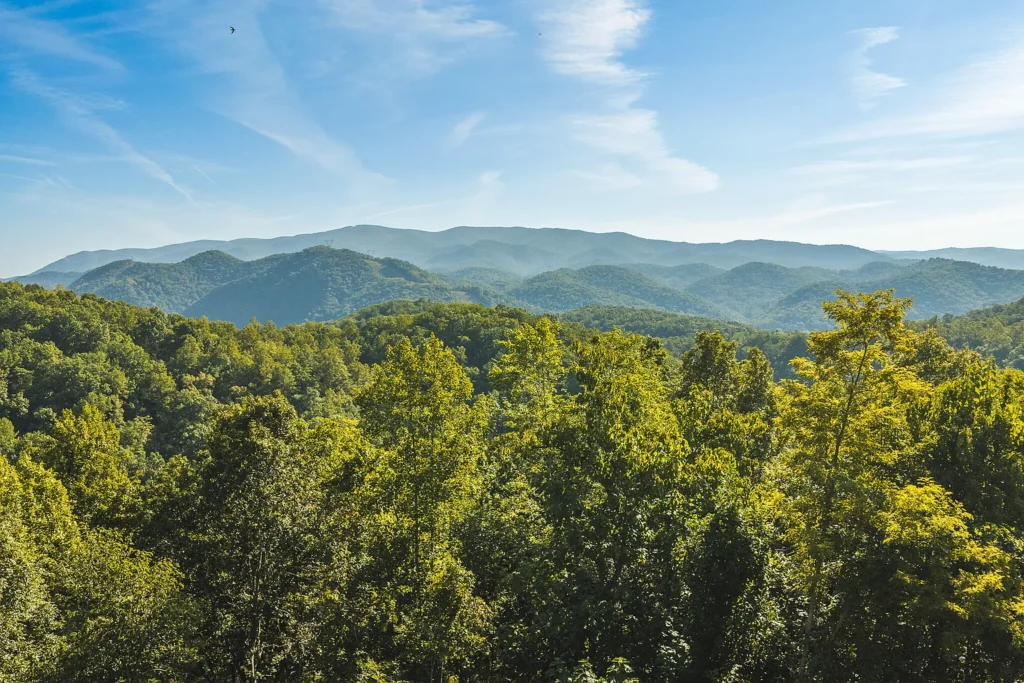
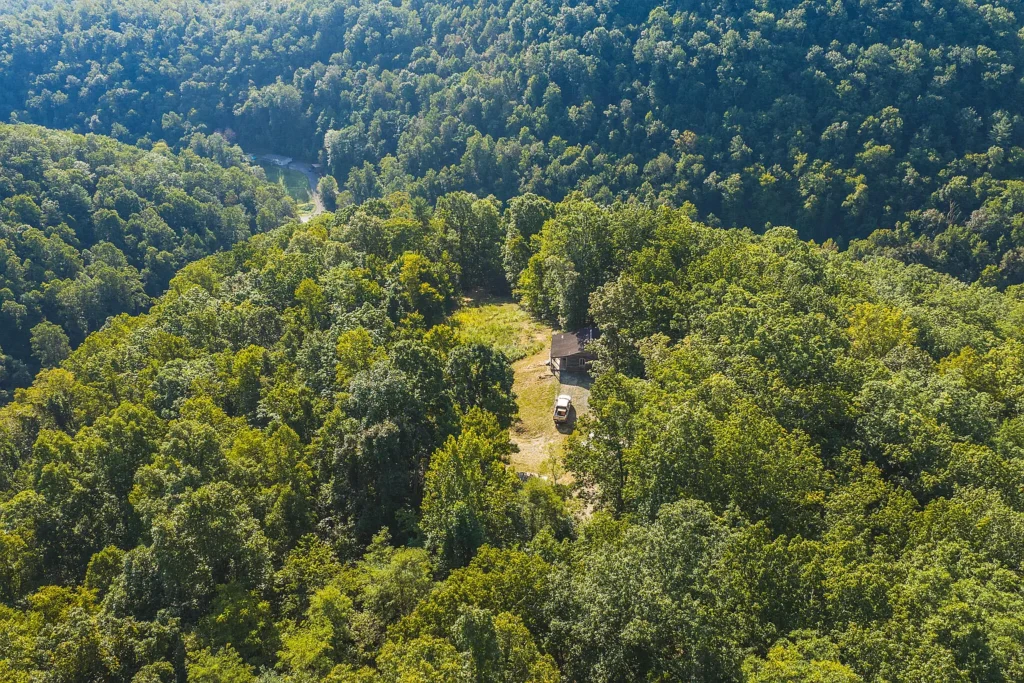
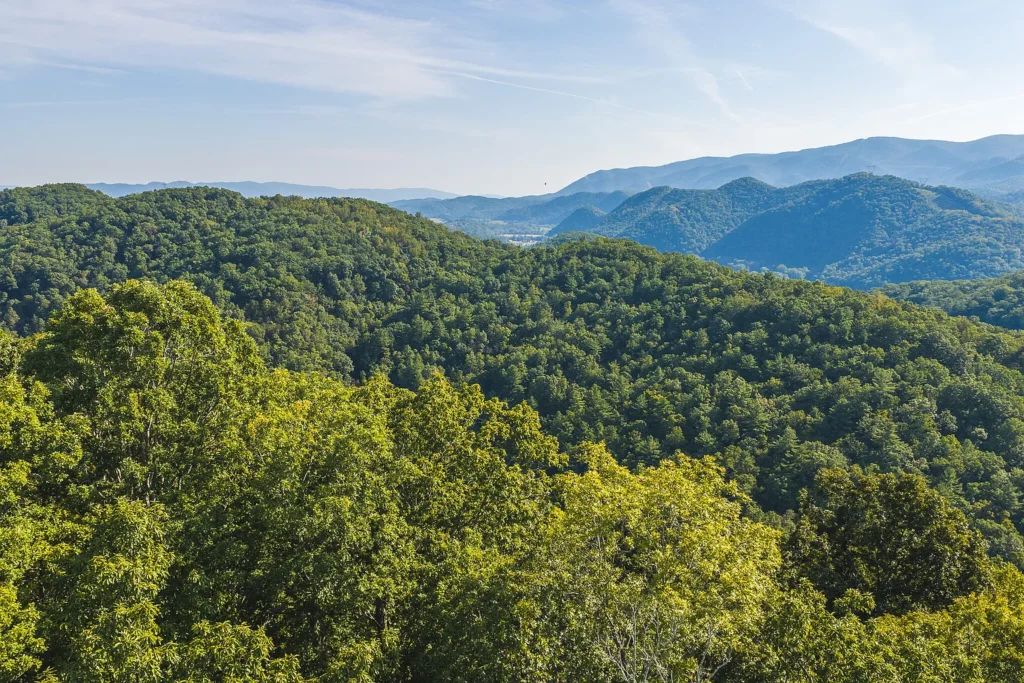
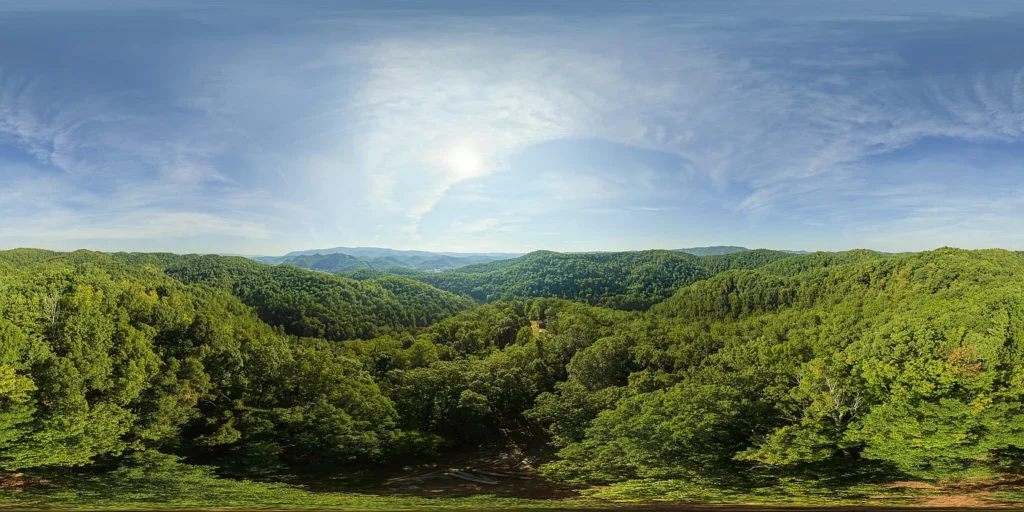
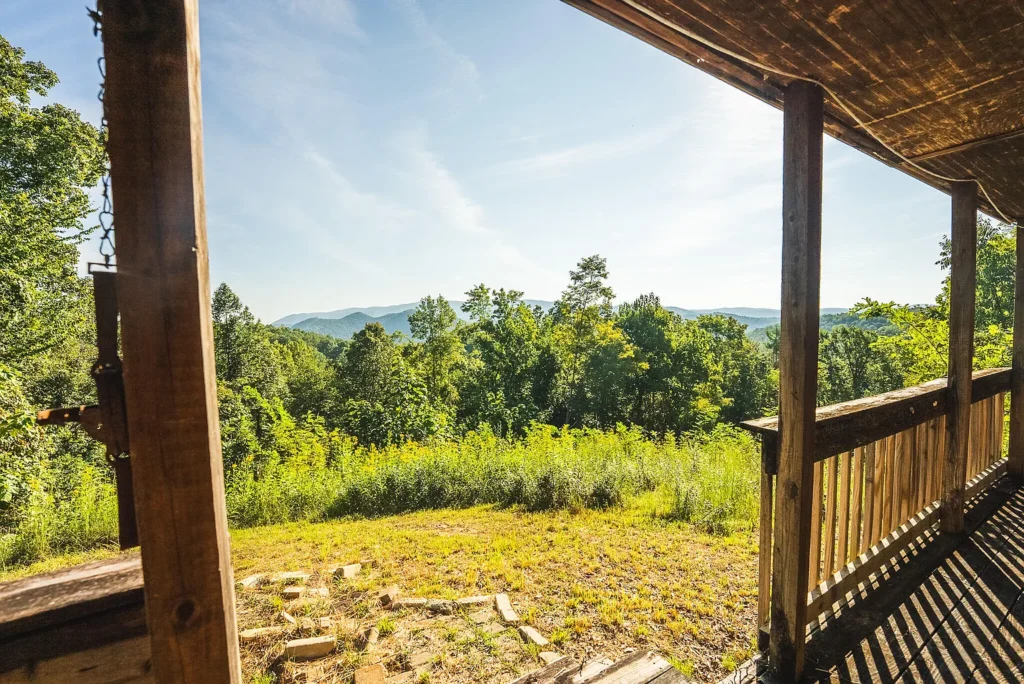
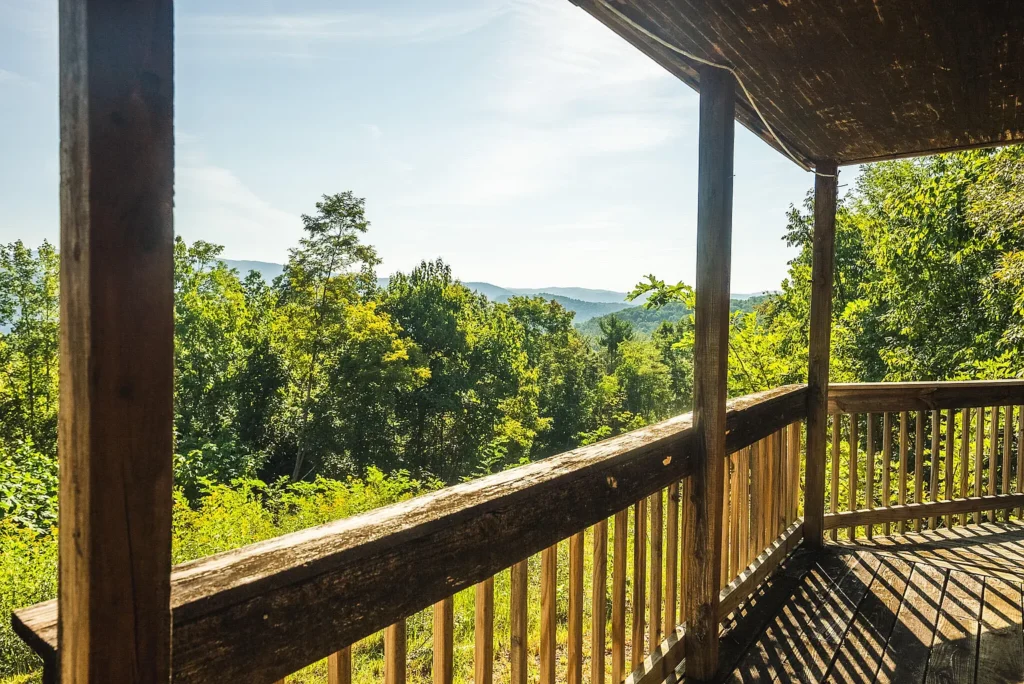
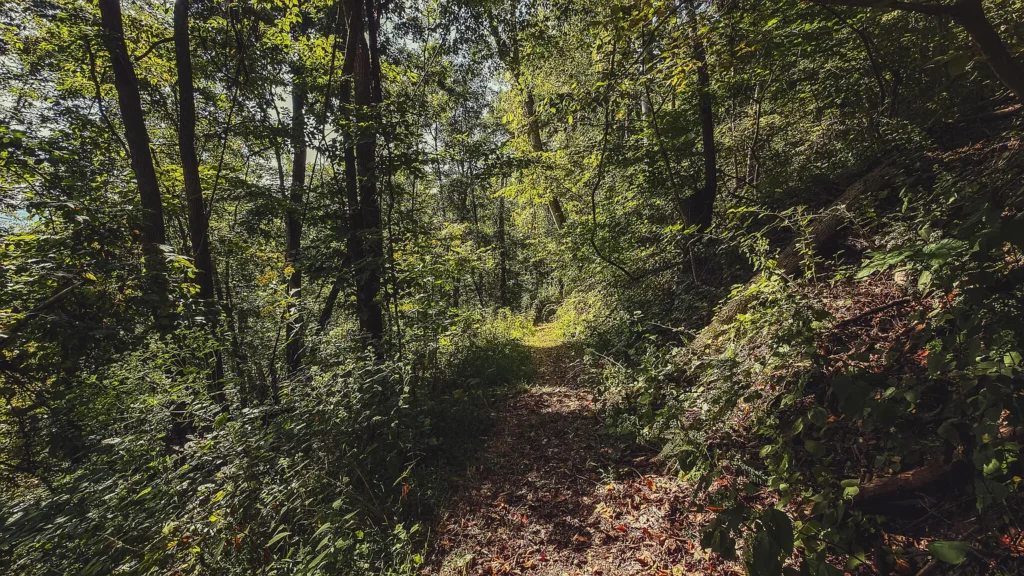
The 16.93-acre parcel offers space for outdoor recreation, gardening, trails, and other land-based activities, subject to terrain, access, and local restrictions.
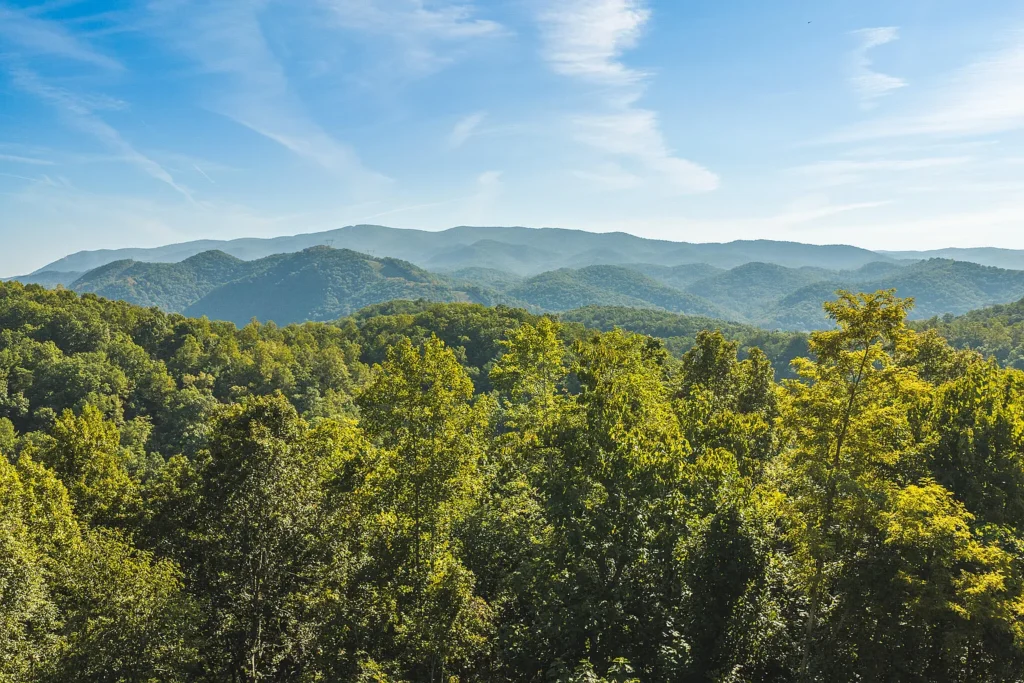
The property is situated in Montgomery County within Virginia’s New River Valley, an area associated with wooded mountain scenery and access to regional towns. According to the supplied description, Christiansburg is approximately 15 minutes away, while Blacksburg and Virginia Tech are around 25 minutes away.
That location may appeal to buyers who want a rural setting without being completely removed from shopping, services, and other amenities. Actual travel times will depend on the route, weather, and road conditions.
The land’s topography, boundaries, drainage, and usable areas should be inspected in person. Buyers should also verify the legal status of the driveway access and determine whether any easements, restrictions, or environmental considerations affect the property.
Understanding the $62,000 Opening Bid
The auction’s $62,000 opening bid translates to approximately $3,662 per acre across the entire parcel. The supplied analysis also estimates replacement costs for the land, cabin shells, driveway work, greenhouse, sheds, and rainwater setup.
Those estimates can provide a preliminary framework for thinking about the property’s components, but they should not be interpreted as an appraisal or a guaranteed replacement value. Construction costs vary, and unfinished structures may require substantial additional investment before they become usable.
The property’s previous listing history is also relevant. According to the supplied information, it was listed for $35,000 in January 2025, reduced to $29,500 in March, and subsequently reduced to $25,000 in February 2026. It reportedly went under contract in June 2026, but that contract was terminated. The property was then presented with a $62,000 opening auction bid in September 2026.
That change in pricing is substantial and deserves careful investigation. The supplied information attributes the repositioning partly to site improvements, including the greenhouse, driveway grading, and clearing. Buyers should independently confirm the listing history and determine which improvements were completed, their condition, and whether the higher opening bid is supported by relevant comparable sales.
An opening bid is not necessarily the seller’s reserve price or the eventual sale price. The final cost could also include an auction buyer’s premium, earnest money requirements, closing expenses, and any other charges specified in the auction documents.
Renovation and Utility Installation Costs
The supplied budget estimates that a do-it-yourself approach could require approximately $33,000 for well installation, septic work, power or solar, cabin interiors, and plumbing. A professional-contractor scenario estimates approximately $67,000 for comparable work.
If the property were acquired for $62,000, these preliminary estimates would produce a purchase-plus-improvement total of approximately $95,000 under the DIY scenario or $129,000 under the contractor scenario, before closing costs, auction fees, permits, contingencies, and ongoing ownership expenses.
These figures are planning estimates, not verified quotes. Actual expenses could be higher or lower depending on site conditions, labor, materials, utility availability, building requirements, and whether the existing structures need repairs beyond the work already identified.
The well and septic estimates deserve particular scrutiny because feasibility has not been established. Buyers should obtain site-specific opinions and written estimates before relying on a projected all-in cost.
Completing both cabins could also involve additional expenses for insulation, air sealing, windows, doors, electrical work, plumbing, heating, and interior finishes. A qualified building professional can help determine which tasks are necessary and whether the proposed construction meets applicable requirements.
Annual Taxes and Ongoing Ownership Costs
The reported annual property tax bill is $475, equivalent to approximately $39.58 per month. No homeowners association fees are reported.
Although the stated tax obligation is relatively modest, it represents only one component of ownership costs. Owners would also need to consider insurance, driveway maintenance, vegetation management, building upkeep, utilities, construction costs, and the eventual maintenance of any well and wastewater system.
A low annual tax bill does not necessarily mean that the property will be inexpensive to develop or maintain. The total budget should reflect both the current condition of the cabins and the intended level of service.
Who Might Consider This Property?
The property may be worth investigating for buyers who are comfortable with unfinished buildings and the uncertainty associated with developing a rural site.
- Off-grid enthusiasts: The rainwater collection system and remote-style cabin setup may provide a starting point for a self-sufficient retreat.
- Homesteaders and gardeners: The acreage, greenhouse, and storage sheds could support a gradual gardening or small-scale homesteading project.
- DIY builders: Buyers with relevant construction skills may be able to complete portions of the cabins and site improvements themselves.
- Outdoor recreation enthusiasts: The land and multiple cabin structures could be useful for a recreational base, subject to permitted use and the property’s condition.
The property is less likely to suit buyers who require a finished home, immediate full-time occupancy, or a conventional purchase with financing and inspection contingencies unless the auction terms explicitly permit those arrangements.
Essential Buyer Due Diligence
Before committing to a purchase, buyers should complete the following checks:
- Confirm the auction outcome and current availability. The advertised October 9, 2026, deadline has passed, so verify whether the property sold or remains available.
- Review the complete auction contract. Confirm any buyer’s premium, deposit requirements, closing deadline, default provisions, and restrictions on financing or contingencies.
- Investigate septic feasibility. Arrange a qualified soil evaluation and consult the appropriate local authorities about wastewater permitting.
- Estimate well installation costs. Obtain site-specific information from qualified well drillers about likely depth, yield, and installation requirements.
- Inspect both cabins. Review framing, foundations, roofing, floors, fireplace and chimney construction, and the work needed to complete the interiors.
- Verify electrical options. Ask the local utility about service availability and connection costs, and compare those costs with a properly designed solar system.
- Review access and boundaries. Confirm the survey, property pins, legal driveway access, and any recorded easements.
- Verify zoning and occupancy requirements. Determine whether the cabins can be completed and used for the intended purposes, including whether separate residential use is allowed.
These steps are particularly important because the property is unfinished and the advertised transaction uses auction terms rather than a typical residential sale process.
Final Thoughts
The Georges Run Road property in Shawsville, Virginia, combines 16.93 acres of mountain land with two unfinished cabin structures, a greenhouse, storage sheds, a gravel driveway, rainwater collection, and an outdoor shower. Its advertised $62,000 opening bid equates to approximately $3,662 per acre, while the reported annual property taxes are $475.
The property’s strongest appeal is the existing collection of structures and site improvements, which could provide a starting point for a recreational retreat or a longer-term homesteading project. Its biggest challenges are the unfinished interiors and the absence of a drilled well and septic system.
The increase from the previous reported $25,000 listing price to a $62,000 auction opening bid makes independent verification especially important. Buyers should not assume that the opening bid represents fair market value or that the estimated improvement costs are complete.
For someone with the appropriate budget, construction knowledge, and patience to navigate permits, the property may offer an interesting development opportunity. The decision should ultimately depend on the current auction status, the condition of both cabins, verified utility feasibility, and realistic estimates of the total investment.
This article is for informational purposes only. Property details, auction terms, permit requirements, costs, and valuation estimates should be independently verified. No future property value or investment return is guaranteed.
Listed on Zillow