He rose from the ashes of poverty and violence to become one of TV’s good looking men

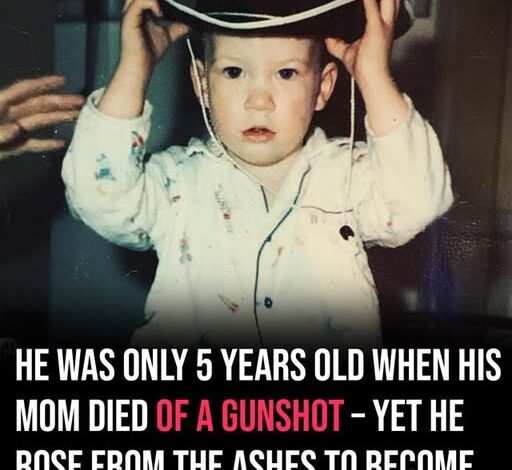
Every well-known actor has a story. Some begin with privilege, others with chance, and a select few rise from profound hardship. Dylan McDermott belongs firmly in the last category. His journey from a childhood marked by loss, instability, and unanswered questions to a celebrated Hollywood career is the kind of story that feels almost cinematic.
For decades, audiences have known him for his onscreen charisma, depth, and unmistakable presence. But behind the familiar face of the Golden Globe–winning actor lies a history far more complex—and far more inspiring—than most people realize.
To understand Dylan’s life is to understand how adversity can shape a person’s character without defining their future. His triumphs are not simply professional; they are deeply personal victories built from pain, willpower, and a determination to create meaning from loss.
EARLY LIFE: A BEGINNING MARKED BY CHALLENGES
Born Into Uncertainty
On October 26, 1961, in Waterbury, Connecticut, a baby boy named Mark Anthony McDermott entered the world. His arrival came at a time when his parents, Diane and Richard, were still teenagers themselves. Diane, only 15, was of Italian American heritage, while Richard, just 17, came from an Irish American background.
Their youth brought its own challenges. They were trying to build a life together while still growing up, and the complexities of raising a child at such a young age quickly took a toll on the relationship.
Within two years, Diane and Richard separated, leaving young Mark under the care of his mother. Few could have predicted that his childhood was about to take an even more tragic turn.
A Loss That Altered His Life Forever
When he was only five years old, Dylan lost his mother under circumstances that remained unclear for decades. Diane’s death was initially categorized as an accidental shooting, an explanation that left more questions than answers.
Though Dylan did not witness what happened, he was present moments before the tragedy, and the event would cast a long shadow over his life. The uncertainty, confusion, and trauma surrounding his mother’s death forced him to grow up faster than most children his age.
Years later, Dylan would admit that although he learned to carry the pain quietly, it shaped him both as a person and as an artist.
“I’m not happy that all this happened to me, but I learned from it,” he once said.
Living With His Grandmother
After their mother’s passing, Dylan and his younger sister moved in with their maternal grandmother, Avis. Their new home was in a working-class neighborhood in Waterbury, a place that taught Dylan about resilience, community, and identity.
In interviews, he later described the environment as tough and diverse. His family was one of the few white households in the area, an experience that helped broaden his understanding of culture and belonging from an early age.Family games
Despite the hardship, those years were foundational. Dylan learned responsibility, toughness, and self-reliance—traits that would serve him well in the unpredictable world ahead.
FINDING HIMSELF AS A TEENAGER
A Time of Awkwardness and Self-Discovery
Like many teenagers, Dylan went through stages of awkwardness and uncertainty. He once joked about his youthful “Dorothy Hamill haircut,” a reference to the Olympic figure skater known for her iconic hairstyle.
But beneath the humor was a young man struggling to find his identity. He felt out of place, unsure of where he belonged or who he wanted to become.
This insecurity led him to find comfort in the world of film. He began studying classic actors—Marlon Brando, Humphrey Bogart, and other Hollywood legends. He mimicked their mannerisms, watched their performances meticulously, and slowly began to imagine a future where he might belong in their world.
Reconnecting With His Father
While Dylan spent most of his early years with his grandmother, he visited his father frequently. Richard owned a bar in New York City—the West Fourth Street Saloon in Greenwich Village.
To Dylan, the bar was a universe of its own. It exposed him to the realities of adult life early on: the social dynamics, the late-night conversations, the music, the humor, the conflicts. By 13, he was working there—first clearing tables, later serving customers, and eventually learning the ropes behind the bar.
“I’ve been punched out many, many times,” he once admitted, reflecting on how chaotic and unpredictable bar life could be for a teenager.
Despite the unconventional setting, Dylan cherished the time with his father. The age difference between them—only 17 years—meant their relationship often felt more like friendship than parenthood. They were companions learning life together.
A Turning Point at Home
Yet as Dylan grew older, his father realized that the bar was no place for a young man to spend his future. He encouraged Dylan to explore other possibilities, gently nudging him toward discovering his own path.
Soon, fate would deliver the nudge he needed.
HIS STEPMOTHER’S INFLUENCE: A DOOR OPENS
Enter Eve Ensler
When Dylan was 15, his father married playwright Eve Ensler—a woman who would leave an immeasurable impact on his life. Eve saw something in Dylan that others had overlooked: a raw emotional presence, a quiet intensity, and a natural ability to perform.
To her, the path was obvious.
She encouraged him to consider acting seriously. And in that moment, something clicked for Dylan. The idea felt right. He had already absorbed years of inspiration from the actors who frequented the bar—John Belushi, William Hurt, Ray Sharkey, and others.
Suddenly, the world of theater and film felt tangible, not distant.
Choosing a New Direction
When Dylan told his father he wanted to pursue acting, Richard offered his full support. He didn’t question it, didn’t resist, didn’t judge.
“Go ahead and do it,” he told his son.
Dylan soon appeared in one of Eve’s Off-Broadway productions, marking the beginning of his journey as a performer.
Training and Early Breakthroughs
Supported financially by his family, Dylan attended Fordham University and later the esteemed Neighborhood Playhouse School of the Theatre. There, he refined his craft and performed in numerous stage productions, including one alongside Joanne Woodward.Family games
His performance in Neil Simon’s Biloxi Blues caught the attention of casting directors, eventually earning him a part in the Vietnam War film Hamburger Hill, which launched his professional career.
BECOMING “DYLAN”: THE STORY BEHIND THE NAME
Why He Couldn’t Keep His Birth Name
When Dylan began working professionally, he encountered a common challenge for actors entering the Screen Actors Guild: someone else was already registered with the name Mark McDermott.
He needed a distinctive stage name.
A Name With Deep Meaning
He chose the name “Dylan” for two reasons:
As a tribute to the Welsh poet Dylan Thomas, whose work he admired.
As a way to honor a child his father and stepmother had hoped to name Dylan—pregnancy that ended in a miscarriage.
The name carried emotional weight, representing both remembrance and rebirth. It became part of his artistic identity, symbolizing the new life he was creating for himself.
Since then, the world has known him as Dylan McDermott.
HOLLYWOOD SUCCESS
A Career of Versatility
Dylan’s acting career spans film, television, and stage. Some of his most notable credits include:
The Practice
American Horror Story
Olympus Has Fallen
Steel Magnolias
Law & Order: Organized Crime
His portrayal of attorney Bobby Donnell in The Practice earned him a Golden Globe Award in 1999 and widespread industry recognition.
Acclaim and Public Admiration
Throughout his career, Dylan received:
a Golden Globe win
multiple Emmy nominations
recognition as one of People magazine’s “Ten Sexiest Men on TV”
His appeal extended far beyond talent—audiences responded to his warmth, intensity, and authenticity.
A Personal Life Lived in the Spotlight
In 1995, Dylan married actress Shiva Rose after a chance encounter in a coffee shop. Their instant connection led to a partnership that brought two daughters into the world: Colette (1996) and Charlotte (2005).
The marriage eventually ended in 2008, but Dylan and Shiva remained committed to co-parenting their daughters thoughtfully and respectfully.
Later, Dylan entered a long-term relationship with his Stalker co-star Maggie Q. Though they were engaged for several years, they decided to part ways in 2019.
A Journey of Healing
Dylan has often spoken openly about his personal struggles, including battling alcoholism in his youth. He has been sober since 1984, and his recovery remains a cornerstone of his personal growth and stability.
THE TRUTH ABOUT HIS MOTHER’S DEATH
The Mystery Reopened
For decades, Dylan lived with unanswered questions about how his mother died. Then in 2011, during a visit to Waterbury, he brought those questions directly to local officials.
His inquiry led to a renewed investigation into the cold case.