I Was Driving a School Bus When I Found a 6-Year-Old Walking Alone at Night — 13 Years Later, I Had to Let Him Go

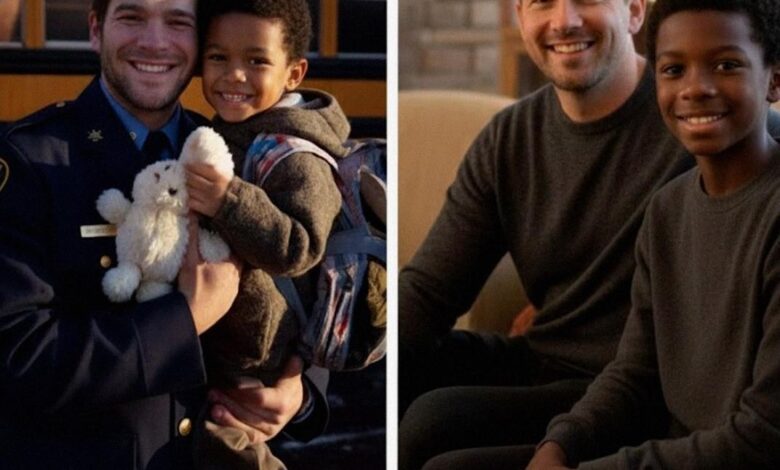
I was twenty-five and driving a school bus because it paid the bills. That was the whole plan. Get through the week, cover rent, keep moving. I never imagined that one winter night would quietly rewrite my entire life.
It was a few days before Christmas break. I’d dropped off the last student and was heading back to the depot, the bus empty except for the low rattle of the heater and the hum of the road. Snow hadn’t fallen yet, but the cold had settled in hard, turning the streets slick and silent.
That’s when I saw him.
A small shape under a flickering streetlight, walking too slowly, weighed down by a backpack that looked like it belonged to someone twice his size. I eased off the gas, my stomach tightening. Kids weren’t supposed to be out that late. Not alone. Not in that cold.
I stopped the bus and opened the door.
“Hey, buddy,” I said gently. “Are you okay?”
He looked up at me, eyes red but dry, like the tears had already run out.
“My mom died today,” he said.
The words landed like a blow. He didn’t sob. He didn’t shake. He just said it, flat and exhausted, clutching a worn stuffed bunny to his chest.
He told me people had tried to take him somewhere, but he’d run. He didn’t want to go with strangers.
I told him the bus was warm. That I could help him find someplace safe. He hesitated, glancing behind him like he expected someone to appear out of the dark. Then he nodded.
I sat him near the front and turned the heater up until the windows fogged. His name was Gabriel. He barely spoke after that. Just held the bunny tighter.
I called dispatch and followed instructions, staying put until they coordinated with social services. When I got back on the bus, Gabriel had curled in on himself, eyes open but distant, like he’d left the room without moving.
Dispatch told me to take him to the emergency foster intake center across town. Someone would be waiting.
By the time we arrived, he’d fallen asleep. I carried him inside.
The woman who rushed toward us smiled too brightly. “Gabriel! I was so worried!”
I stayed.
I stayed while paperwork was filled out and phone calls were made. While adults spoke in careful, low voices. While Gabriel leaned against my side, silent now, trembling but breathing.
That’s when I learned the truth.
His mother had collapsed at work from an aneurysm. No warning. No family left to take him. The woman had gone to bring him to emergency placement. He panicked and ran out the back door. He’d been walking for nearly two hours before I found him.
When it was time for me to leave, I knelt in front of him and promised I’d come back. He didn’t believe me.
But I did.
The next day, when he saw me walk in, he ran straight into my arms.
I told myself I was just checking in. But the truth was deeper. Gabriel reminded me of my twin brother. The way he watched people. The way he tried to be small so he wouldn’t be a burden.
I lost my brother when we were kids. A river that looked calm until it wasn’t. One second he was there. The next, gone. I’d spent years replaying that moment, wishing I could reach out sooner.
I couldn’t lose Gabriel too.
So before Christmas, I filed the papers.
The adoption went through faster than I expected. Quietly. Almost too easily.
Gabriel moved in and followed me around the apartment like a shadow. He barely spoke at first. He slept with his backpack by the bed like he might need to run at any moment.
I worked constantly. Bus driver by day. Side jobs by night. Every extra hour went toward keeping us afloat. I was exhausted, but he was safe, loved, and fed. That felt like enough.
What I didn’t see was how carefully he was protecting me.
Thirteen years passed.
I came home early one evening and found Gabriel sitting on the couch, crying. Beside him sat a woman in professional clothes, a folder in her lap.
“Dad,” he said, voice breaking. “I have to go. I love you.”
The floor dropped out from under me.
The woman introduced herself as his school counselor. She told me we’d been living with an unspoken truth for years.
Gabriel was brilliant. Top of his class. Teachers had begged him to apply to programs, competitions, scholarships. He’d turned them all down.
Because every time he thought about leaving, he pictured me alone.
He had learned, very young, how afraid I was of loss.
Then she told me the rest.
He’d been awarded a full scholarship. Everything covered. He was going to refuse it.
I looked at my son—the boy who had once clung to me in terror—and realized I’d raised someone who knew how to sacrifice himself too well.
I pulled him into my arms.
“You’re going,” I told him. “That’s not abandonment. That’s living.”
He cried harder than I’d ever seen him cry. Not from fear this time, but from relief.
“I’ll come home,” he said. “This will always be home.”
That night, I learned the hardest lesson of love.
Saving someone doesn’t mean holding on forever. Sometimes it means letting go—so they can finally become who they were meant to be.