That Purple Fence Is Not Decoration, It is a Legal Warning Most People Completely Miss –

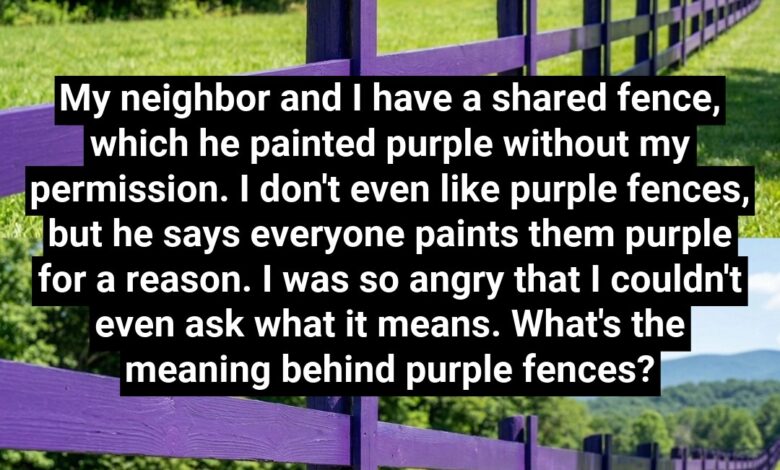
What “Purple Paint” Actually Means
Several states have adopted what are commonly called purple paint laws. These laws allow landowners to use purple paint marks as a legally recognized alternative to “No Trespassing” signs.
In other words, in places where the law applies, a purple mark can carry the same legal weight as a posted warning sign. If you cross a properly marked boundary, you may not be able to argue that you “didn’t know” you were entering private land.
Why Landowners Use Paint Instead of Signs
Traditional signage sounds simple until you own acreage.
- Signs fall down in storms and high wind.
- Metal and plastic fade under sun exposure.
- Posts rot, nails loosen, and repairs become constant.
- Some signs get removed, damaged, or ignored.
Purple paint is a low-maintenance, highly visible solution—especially for rural property, wooded boundaries, and long fence lines.
It’s Not Random Paint: There Are Rules
For purple paint to count as a legal notice, states that recognize it typically require specific placement and visibility. While the exact standards vary, the common requirements often include:
- Vertical paint marks (not horizontal)
- A mark placed at a clearly visible height (often around 3–5 feet from the ground)
- Repeated markings at set intervals along the boundary (commonly around every 100 feet, depending on the state)
The purpose is not to “trap” anyone. It’s to make the warning clear to a reasonable person approaching the property line.
Why Purple?
Purple isn’t used because it looks nice on a fence.
It’s used because it’s hard to confuse with nature. Purple stands out against trees, brush, and weathered wood. It’s uncommon in rural landscapes, so it signals that the mark is intentional—something you’re meant to notice.
And unlike a sign, paint doesn’t blow away, crack as easily, or require hardware to stay up.
The Important Catch: Not Every State Treats Purple Paint the Same
This is where people get into trouble.
Purple paint laws are state-specific. Some states fully recognize them. Some recognize them with extra conditions. Others don’t recognize them at all.
That inconsistency creates confusion for:
- Hikers and hunters who travel across state lines
- Outdoor photographers looking for “open” scenery
- ATV and off-road riders navigating rural trails
- Homebuyers and landowners trying to mark boundaries legally
If you spend time outdoors, it’s smart to check your state’s rules—or at minimum, treat purple marks as a serious boundary warning.
What Can Happen If You Ignore It
Where purple paint is legally recognized, crossing a marked boundary can be treated similarly to ignoring a posted “No Trespassing” notice. Depending on local laws and circumstances, that can lead to:
- Fines and citations
- Criminal trespass charges
- Uncomfortable confrontations with property owners
Even when someone doesn’t intend harm, walking onto private land can create safety risks—especially in remote areas where landowners may be protective of livestock, equipment, or family homes.
A Small Mark That Solves a Big Problem
In many rural areas, property lines aren’t obvious. Woods run into fields. Trails drift. Open land looks public when it isn’t.
Purple paint is a simple system that turns an invisible boundary into a visible one—without needing words, language, or a fresh sign every season.
So if you see a purple stripe on a fence post or a tree, don’t assume it’s decoration.
It may be the only warning you’re going to get.
Quick question: Have you ever seen purple paint markings where you live? Drop a comment with your state (or region), and share whether people there actually know what it means.