US Senate Passes Explosive Transparency Law as Pentagon Withholds Controversial Strike Video!

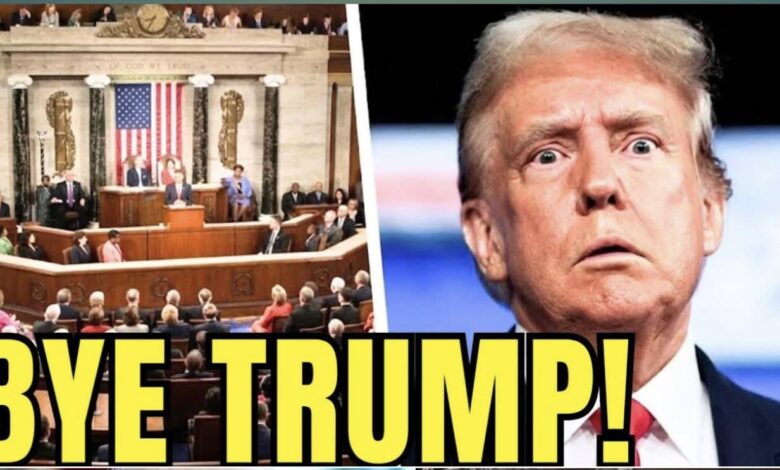
The U.S. Senate has taken an extraordinary step that few in Washington expected and even fewer inside the Pentagon welcomed. By passing a law that explicitly orders the release of a single, classified military video, lawmakers have forced a confrontation that goes far beyond routine oversight. This is not a request for a briefing, a redacted memo, or a carefully worded assurance. It is a demand for the raw record of a U.S. strike carried out on September 2nd—unedited, unfiltered, and resistant to narrative control.
The legislation represents a rare moment of bipartisan alignment driven not by ideology, but by suspicion. Senators from both parties have made clear that their concern is not merely what the administration says happened, but why it appears unwilling to show what it already possesses. In their view, a video that could be partially redacted for security reasons but remains fully withheld raises a more troubling question than classification alone ever could.
For the Pentagon, the law lands like a direct challenge to institutional authority. The Department of Defense has long maintained near-total control over what visual evidence of warfare reaches the public. Even when mistakes are acknowledged, the imagery is usually summarized, contextualized, or withheld entirely. Congress has now broken that pattern by legislating disclosure itself, effectively declaring that this particular incident can no longer be managed behind closed doors.
At the heart of the dispute is a video recorded after the initial strike disabled a vessel. According to lawmakers briefed on its existence, the footage captures what happened next—moments that could either confirm lawful conduct or expose actions that cross established military and humanitarian boundaries. The Senate is not alleging wrongdoing outright, but its insistence on seeing the footage suggests deep concern that official summaries may omit critical context.
What makes this confrontation unusual is how openly it challenges executive discretion. Traditionally, Congress pressures the military through hearings, funding threats, or classified briefings. This time, lawmakers chose statute. By passing a law that names a specific piece of classified evidence and orders its release, the Senate has publicly declared that trust alone is no longer sufficient.
Inside the Pentagon, resistance has been framed as prudence. Officials argue that releasing combat footage risks revealing tactics, intelligence capabilities, or decision-making processes that adversaries could exploit. But critics counter that this rationale has become a reflexive shield, used as often to protect reputations as to protect national security.
The refusal to release even a partially redacted version of the video has only sharpened those suspicions. To senators backing the law, the silence signals fear—not of foreign enemies, but of domestic accountability. In their reading, an administration confident in the legality of its actions would benefit from transparency rather than resist it.
The stakes of what happens next are difficult to overstate. If the administration complies with the law, the footage could serve one of two radically different purposes. It may confirm that the strike adhered to the laws of armed conflict, validating Pentagon assurances and quieting critics. Or it could reveal conduct that violates the Geneva Conventions, U.S. military doctrine, or both, triggering legal, political, and moral consequences that would extend far beyond a single incident.
If the administration refuses to comply, the country could find itself in a constitutional collision. The question would no longer be about a video, but about authority. Does the commander in chief retain absolute control over the evidentiary record of war, or can Congress compel disclosure when it determines the public interest outweighs secrecy? The courts would almost certainly be drawn in, turning a battlefield dispute into a separation-of-powers crisis.
Legal scholars are already divided. Some argue that Congress has clear authority to demand information necessary for oversight, even if classified. Others warn that forcing disclosure through legislation risks politicizing intelligence and undermining operational security. What both sides agree on is that this case is different. The specificity of the law, and the visibility of the conflict, make it a potential precedent-setter.
The timing also matters. The vote comes amid growing public skepticism about official narratives of modern warfare, especially drone and missile strikes conducted far from public view. Images, when they surface, often do more to shape opinion than pages of testimony. Lawmakers appear to understand that in an age of visual evidence, withholding footage can be as powerful—and as damaging—as releasing it.
For the administration, the decision is lose-lose. Compliance risks exposure; defiance risks escalation. Either path defines the presidency’s approach to transparency in war. A release that reveals misconduct could haunt the administration for years, reshaping debates about military oversight and accountability. A refusal could reinforce perceptions of secrecy and deepen mistrust between branches of government.
The broader implication is cultural as much as legal. For decades, the American public has been asked to accept assurances about distant conflicts without seeing their consequences. This law challenges that norm directly. It asserts that democratic consent requires more than classified briefings and carefully chosen words—that sometimes, the public has a right to see what is done in its name.
Whether that assertion holds will depend on what happens in the coming weeks. If the footage is released, it will be dissected frame by frame, not just by journalists and lawyers, but by a public increasingly unwilling to defer to authority without evidence. If it remains hidden, the absence itself will become part of the story, fueling speculation that may be more damaging than the truth.
What began as a strike on a vessel has evolved into a test of governance. It asks whether transparency is a principle applied selectively or a commitment enforced even when uncomfortable. In forcing this question into the open, the Senate has ensured that the outcome—whatever it may be—will shape not only the legacy of this administration, but the future balance between secrecy and accountability in American war-making.