Why That Little Arrow Next to Your Gas Gauge Matters!

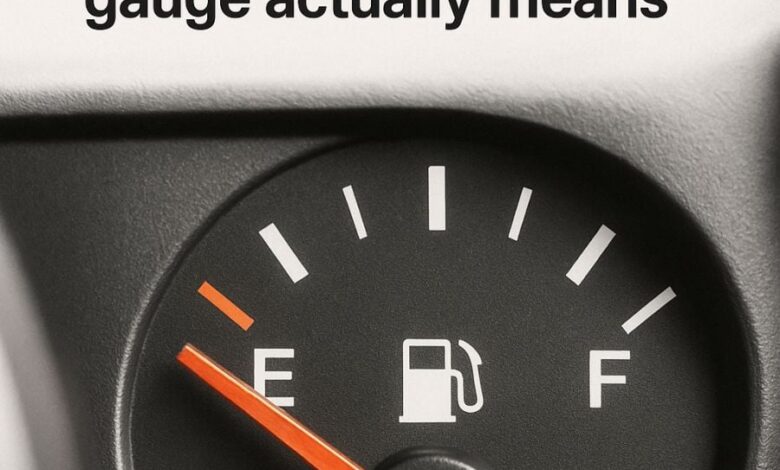
Most drivers have seen it countless times without really noticing it: a tiny arrow sitting quietly next to the gas pump icon on the dashboard. It doesn’t flash, beep, or demand attention. It simply exists, doing its job silently. Yet that small symbol solves one of the most common, low-grade annoyances in driving—figuring out which side of the car the fuel door is on.
The arrow points directly to the side of the vehicle where the gas cap is located. Left arrow means left side. Right arrow means right side. That’s it. No guessing, no circling the pump, no backing up in embarrassment while other drivers wait. In moments of stress or distraction, that tiny arrow becomes surprisingly valuable.
This feature didn’t appear by accident. As cars became more standardized internally but more varied externally, drivers began switching vehicles more often. Rentals, shared family cars, company fleets, and borrowed vehicles made muscle memory unreliable. What worked for one car failed in the next. Automakers responded with a design choice that required no manual, no training, and no language: a simple visual cue.
Its usefulness becomes obvious the moment you need it most. You’re low on fuel, tired, running late, or navigating an unfamiliar gas station. Instead of relying on memory or stepping out of the car to check, you glance down. Instantly, you know how to position the car. That single second of certainty removes friction from an already stressful moment.
The brilliance of the arrow lies in how unassuming it is. It doesn’t announce itself. It doesn’t interrupt. It trusts the driver to notice. And because it’s always there, once you learn what it means, it permanently rewires how you approach refueling. After that, the idea of not having it feels absurd.
What makes this small feature even more interesting is how it reflects a broader philosophy in car design. Modern dashboards are filled with subtle indicators that exist not to alarm, but to guide. Ice warnings appear quietly when temperatures drop. Eco-driving lights nudge smoother acceleration. Tire pressure alerts don’t shout until something truly matters. These symbols operate in the background, preventing problems before they escalate.
The gas arrow fits perfectly into that category. It doesn’t prevent a catastrophe, but it prevents friction. And friction, repeated daily, is exhausting. Small frustrations add up. Removing even one of them improves the driving experience more than most people realize.
Its value increases the farther you are from home. On road trips, in rental cars, or when driving someone else’s vehicle, familiarity disappears. That arrow becomes a universal constant. No matter the model, brand, or country, the symbol works the same way. It’s one of the rare pieces of automotive language that’s both global and intuitive.
There’s also something quietly comforting about knowing the car is helping you without demanding your attention. The arrow doesn’t judge. It doesn’t care if you forgot. It just points. That’s good design. It respects the driver’s mental load and steps in only where it’s genuinely helpful.
The irony is that many drivers don’t know the arrow exists at all. They’ve owned their cars for years and still pull up to pumps on instinct, occasionally getting it wrong. Once you know, you can’t unknow it. The symbol becomes obvious, almost loud in its silence.
This tiny arrow also serves as a reminder of how much information we overlook because it’s presented calmly instead of urgently. We’re trained to respond to alarms, lights, and warnings, but not to subtle guidance. The arrow works precisely because it doesn’t compete for attention. It waits.
In a world increasingly filled with notifications, alerts, and demands, that restraint is rare. The gas arrow doesn’t insist on being noticed. It simply rewards awareness. And in doing so, it quietly eliminates an entire category of everyday inconvenience.
Next time you’re behind the wheel, take a second to look at your dashboard. Not just for speed or fuel level, but for the quiet symbols designed to make your life easier. The little arrow next to the gas gauge is proof that sometimes the smartest solutions are the smallest—and that paying attention to them can save time, stress, and just a bit of dignity at the pump.