40.5 Acres in Termo, California, Listed for $39,900 With an A-Frame Cabin and Panoramic Views

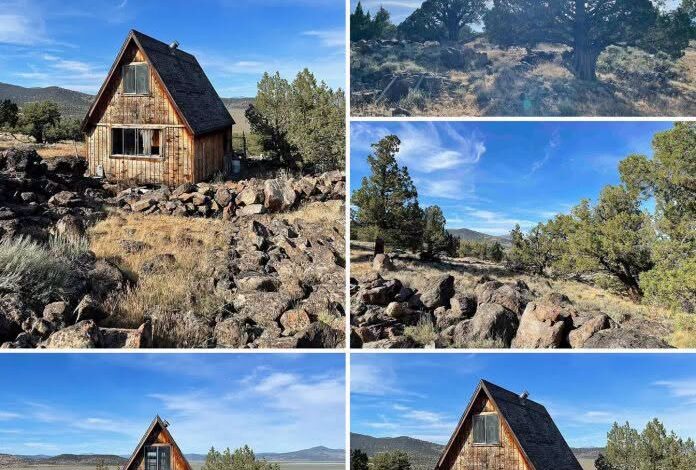
A 40.5-acre property in the high-desert region of Northern California is listed for $39,900, offering a combination of elevated terrain, mountain views, mature juniper trees, volcanic rock formations, and an existing rustic A-frame cabin. Located at 530-300 Possum Road in Termo, Lassen County, the property is being marketed as a remote off-grid land opportunity with two separate legal parcels included in the sale.
According to the supplied listing information, the property was listed on August 26, 2026. The asking price works out to approximately $985 per acre, making it a relatively low-priced acreage offering for buyers interested in remote recreational land or a potential future retreat.
The property also reportedly comes with an owner-financing option requiring a 50% down payment. However, the existing cabin needs substantial rehabilitation, and the land does not have an active well, septic system, or grid electricity connection according to the listing details.
For buyers considering this property, the combination of acreage, scenery, and seller financing may be appealing. Still, its practical value will depend heavily on legal access, parcel status, land-use restrictions, infrastructure costs, and the condition of the existing structure.
Property Overview: 40.5 Acres in Lassen County
The property is located at 530-300 Possum Road, Termo, CA 96132, in a remote part of Lassen County. The supplied information places the land at approximately 5,305 feet above sea level, with an elevated section reportedly rising around 500 feet above the surrounding valley floor.
The listing describes a mixture of open high-desert terrain, rolling ground, elevated benches, volcanic rock formations, and mature juniper trees.
Key property details include:
- Asking price: $39,900
- Total acreage: 40.5 acres
- Approximate price per acre: $985.19
- Location: Termo, Lassen County, California
- Parcel configuration: Two separate legal parcels offered together
- Reported elevation: Approximately 5,305 feet
- Terrain: Rolling high-desert ground, elevated benches, and level building areas
- Vegetation: Mature juniper trees and native sage
- Existing structure: Two-story rustic A-frame cabin with an elevated wooden deck
- Electricity: No grid connection reported
- Water: No active well reported
- Wastewater: No active septic system reported
- Seller financing: Reportedly available with 50% down
These details provide an overview of the offering, but buyers should independently confirm the acreage, parcel numbers, recorded boundaries, access rights, zoning, and infrastructure conditions before making an offer.
Two Separate Parcels Offered Together
One of the more notable features of this property is its reported configuration as two separate legal parcels being sold together. This could give a buyer flexibility in how the land is held and managed, although the legal and practical implications should be investigated before relying on that possibility.
Someone purchasing the full 40.5 acres might prefer to retain both parcels for additional privacy, recreational use, or future planning. Another buyer could investigate whether one parcel might eventually be sold separately.
The supplied listing information mentions a hypothetical possibility of selling an approximately 20-acre vacant parcel for $20,000 to $25,000. However, this is not a verified resale valuation or guaranteed opportunity. Actual resale proceeds would depend on market conditions, independent access, parcel configuration, land-use restrictions, and buyer demand.
Even when a parcel has separate legal status, that does not automatically mean it is independently buildable or suitable for every intended use. Buyers should obtain both parcel numbers, assessor maps, recorded deeds, and title information to establish exactly what is included.
It is also important to determine whether each parcel has legal road access and whether easements, deed restrictions, or other recorded conditions affect future ownership or development.
Elevated High-Desert Terrain With Mountain Views
The property’s setting is one of its main attractions. The land is described as occupying an elevated position overlooking the surrounding valley and distant mountain ranges.
At approximately 5,305 feet above sea level, the property offers a high-desert environment with a mixture of natural vegetation, open areas, and rocky terrain. Mature juniper trees and native sage reportedly cover portions of the acreage, while volcanic boulders and rock formations add character to the landscape.
The listing also describes several relatively level building areas and an elevated bench that provides expansive views. According to the supplied information, neighboring homes are not visible from the main building area, although buyers should visit the property to assess the actual views, surrounding land uses, and level of privacy.
The terrain may be attractive for recreational activities, seasonal visits, or someone looking for a more secluded setting. However, elevated and rocky ground can create additional construction challenges.
Before planning a cabin, driveway, or other improvements, buyers should investigate grading requirements, drainage, soil stability, foundation conditions, and potential excavation costs. A site that appears suitable for construction may require engineering work or additional preparation.
Winter conditions also deserve attention. Snowfall and changing road conditions at this elevation could affect access during certain parts of the year. Buyers should ask about road maintenance, seasonal accessibility, and whether the route is suitable for their intended vehicle.
Existing A-Frame Cabin Needs Substantial Rehabilitation
An existing two-story A-frame cabin with an elevated wooden deck is included with the property. Its steeply pitched roof and timber framing give it a rustic appearance that may appeal to buyers interested in restoring an older recreational structure.
However, the cabin is reportedly being sold as-is, with substantial work required. The listing assigns no value or warranty to the structure, meaning buyers should not assume that it is safe, habitable, or ready for immediate use.
Is Restoration a Practical Option?
The first step would be a professional inspection of the structure. A qualified contractor or building inspector should evaluate the foundation or support piers, framing, roof, floor joists, exterior connections, and elevated deck.
Particular attention should be given to possible water damage, wood rot, insect activity, structural movement, and deterioration caused by exposure to the elements.
If the main structure is sound, rehabilitation might be worth investigating. Depending on local regulations, the cabin could potentially be restored for recreational or seasonal use.
If the structure has significant damage, removal and replacement may be more practical. However, buyers should confirm whether demolition, rebuilding, or major alterations would require permits and whether the property meets current requirements for construction.
The cabin’s existing presence should not be considered proof that a replacement structure can automatically be approved. Its original construction date, permit history, legal status, and any previous approvals should be reviewed before budgeting for improvements.
Off-Grid Conditions Require Additional Planning
The property is reportedly without grid electricity, an active well, or an operating septic system. These conditions are important because they could make the land more expensive to develop than its $39,900 asking price initially suggests.
Anyone planning to use the property regularly should prepare a realistic budget for electricity, water, wastewater, access improvements, and ongoing maintenance.
Electricity and Solar Options
Because no active grid connection is reported, buyers may need to consider an independent power system.
Solar panels combined with battery storage could be one option for a remote cabin. The appropriate system would depend on the intended use and the amount of electricity required for lighting, refrigeration, water pumping, communication equipment, and other appliances.
A generator could provide supplementary power, although fuel storage, noise, maintenance, and operating costs should also be considered.
Before investing in equipment, buyers should evaluate the available installation areas, potential shading from trees and terrain, and whether the proposed system would provide enough capacity for their plans.
Water Supply and Well Feasibility
No active well is identified in the supplied listing details. This means buyers should investigate the feasibility and cost of establishing a reliable water source.
Nearby well records may provide useful information about drilling conditions and reported water production in the area. However, neighboring wells cannot guarantee that a new well will produce sufficient water or meet drinking-water standards.
A local well contractor may be able to provide an initial assessment of potential drilling costs and conditions.
Water hauling and storage tanks could be considered for certain recreational uses, depending on local requirements. Buyers planning a permanent residence should confirm the applicable water-supply standards and development requirements with Lassen County.
Septic System and Wastewater Requirements
The property reportedly has no active septic system. A buyer planning to construct or occupy a residence would need to determine whether an approved wastewater system can be installed.
Soil conditions, terrain, drainage, setbacks, and available installation areas can all influence septic feasibility.
Before purchasing, prospective buyers should contact Lassen County Environmental Health to ask about soil evaluations, septic permits, system requirements, and any limitations affecting the property.
These expenses should be included in the overall development budget rather than treated as minor additions after closing.
Seller Financing With a 50% Down Payment
The seller reportedly offers owner financing with a 50% down payment and a five-year term. This could provide an alternative for buyers who do not intend to use conventional bank financing.
Based on the $39,900 asking price, the basic figures would be:
| Financing detail | Amount |
|---|---|
| Asking price | $39,900 |
| Required down payment at 50% | $19,950 |
| Remaining balance | $19,950 |
| Reported financing term | 5 years |
| Number of monthly payments | 60 |
If the remaining $19,950 were divided into 60 equal monthly principal payments with no interest or additional fees, the amount would be approximately $332.50 per month.
This is only an illustrative calculation. The actual payment could be different depending on the interest rate, fees, payment schedule, and other conditions in the seller-financing agreement.
Buyers should request the complete written terms before making a commitment. Important questions include whether interest is charged, whether a balloon payment is required, when legal title transfers, who pays property taxes, and what happens in the event of missed payments or default.
An attorney or qualified real-estate professional should review the agreement before it is signed. Seller financing can make a transaction more accessible, but it does not eliminate the need for title research, inspections, and financial planning.
Reported Price History: Previous Sale at $17,000
The supplied property information reports a previous sale for $17,000 on July 24, 2026, followed by a new listing at $39,900 on August 26, 2026.
If those dates and figures are accurate and refer to the same property and parcel configuration, the difference between the reported sale price and current asking price is $22,900.
That represents an asking-price increase of approximately 134.7% compared with the reported previous transaction.
However, a new asking price does not establish an increase in market value. The previous transaction may have involved different terms, circumstances, or property conditions, and the current asking price is not evidence of what a buyer will ultimately pay.
The listing information does not establish what accounts for the difference. Buyers should review recorded transaction documents, confirm the parcel configuration, and investigate whether any improvements or changes occurred between the two dates.
The previous sale may provide useful negotiating context, but it should be considered alongside comparable land sales, access, cabin condition, infrastructure requirements, and the property’s actual development potential.
Potential Costs Beyond the Purchase Price
Although the asking price is $39,900, the total cost of owning and improving the property could be considerably higher.
For buyers considering a cabin restoration or future construction project, several expenses deserve attention:
- Cabin inspection and rehabilitation: Determine whether the A-frame can be safely restored or whether removal is necessary.
- Road access: Evaluate existing access, grading, drainage, erosion, and seasonal road conditions.
- Electricity: Budget for solar panels, batteries, a generator, or a possible utility connection if one is feasible.
- Water supply: Investigate well drilling, water storage, hauling, and any required treatment.
- Wastewater: Determine whether a septic system can be approved and estimate installation costs.
- Construction permits: Confirm local requirements for repairs, replacement structures, and future improvements.
- Land maintenance: Consider fire mitigation, vegetation management, road upkeep, property taxes, and periodic inspections.
The total development cost cannot be reliably estimated from the supplied listing information alone. Buyers should obtain local contractor estimates and confirm regulatory requirements before deciding how much they can afford to spend beyond the purchase price.
What Buyers Should Verify Before Purchasing
Given the remote location and lack of essential services, careful due diligence will be particularly important.
Confirm the two legal parcels. Obtain parcel numbers, assessor maps, recorded deeds, and title documents. Verify that both parcels are included in the sale and determine whether they can legally be transferred or sold separately.
Verify road access. Confirm recorded access rights along Possum Road, identify maintenance responsibilities, and investigate whether access is reliable during winter weather.
Check zoning and permitted uses. The supplied information references U-C-2 zoning, but buyers should confirm the official designation with Lassen County Planning. Ask about residential construction, recreational use, camping, RV occupancy, setbacks, and restrictions on each parcel.
Inspect the cabin. Establish its structural condition, permit history, and legal status. Do not assume that the structure can be occupied or replaced without additional approvals.
Investigate water and septic feasibility. Review nearby well records and consult local contractors. Contact county officials about water-supply standards, soil evaluations, and wastewater permits.
Review environmental and access conditions. Examine drainage, erosion, vegetation, fire exposure, and seasonal road conditions. Confirm whether any easements or other restrictions affect the property.
Read the financing agreement. Confirm the interest rate, payment schedule, fees, title-transfer process, default provisions, and whether a balloon payment applies.
Compare recent land sales. Look at comparable properties with similar acreage, access, terrain, infrastructure, and permitted uses. A low price per acre does not necessarily mean a low total cost of ownership.
Final Thoughts on 530-300 Possum Road
The 40.5-acre property at 530-300 Possum Road in Termo, California, is listed for $39,900 and offers a combination of elevated high-desert terrain, mountain and valley views, juniper trees, volcanic rock formations, and an existing A-frame cabin.
The reported two-parcel configuration and seller-financing option may attract buyers looking for a remote recreational property or a longer-term land investment. At approximately $985 per acre, the asking price may initially appear appealing to those seeking a substantial amount of acreage.
However, the property comes with important limitations. The cabin requires substantial work, there is no reported active well or septic system, and the land has no grid electricity connection. Buyers will also need to verify the legal status of both parcels, road access, zoning, and the actual cost of establishing essential services.
The reported previous sale at $17,000 is worth reviewing, but it should not be interpreted as proof of appreciation or a guaranteed resale opportunity. Similarly, the possibility of selling one parcel separately depends on legal access, independent usability, market demand, and other conditions that must be confirmed.
For buyers comfortable with remote land and the work involved in developing an off-grid property, this offering may be worth further investigation. Its suitability will ultimately depend on the cabin’s condition, the property’s legal and physical characteristics, infrastructure costs, and the complete terms of the seller-financing arrangement.
This article is for informational purposes only and is based on the property information supplied. Buyers should independently verify listing details, recorded sales, parcel boundaries, zoning, access rights, financing terms, and development requirements before making a purchase decision.


Listed on Zillow