THE BOY WHO FOUND HIS WAY BACK TO THE PATH BESIDE THE POND

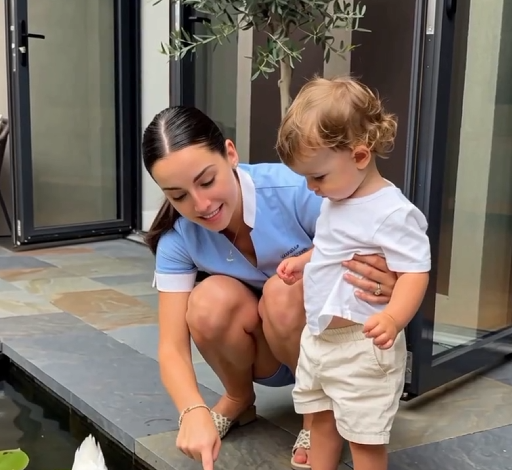
It was a direction.
Julián arrived when the silence of the house had already become unbearable.
He found Nico sitting in front of the door, the cloth bird in his hands.
Mara was beside him, not asking him to get up.
“Elena says the pond upsets him,” Julián said.
“Elena says a lot of things when she’s frightened,” Mara answered.
Julián looked at her.
“And you’re not frightened?”
Mara took a while to reply.
“Yes.”
“It doesn’t seem like it.”
“Because he already has enough fear for both of us.”
Julián had no answer.
Elena appeared behind him with a folder in her hand.
She had prepared a list of incidents, stains, delays, and objects out of place.
There was not a single line about Nico crossing the house following Mara.
Nothing either about his having stopped banging his forehead against the door.
The list only measured disorder.
“The family can’t live like this,” Elena said.
Julián looked at the boy.
Nico had his head bent over the cloth bird.
“The family wasn’t living before either,” he answered.
It was the first time Elena couldn’t find an immediate order to give.
Even so, the change could still disappear.
On the fifth day, the art teacher who had been visiting the house for months arrived with a box of crayons.
Her name was Inés, and she had stopped asking Nico to draw.
She just sat near him and left the crayons on the floor.
Mara was in the playroom, building a cardboard pond under the table.
She had covered the legs with a blue sheet.
Nico stayed inside the small structure.
Inés stopped in the doorway.
Mara didn’t invite her in.
Nico raised his head at the sound of her steps.
For an instant it seemed he was going to shrink away.
Mara picked up a paper duck and went out the other side of the table.
Nico followed her.
He crossed the rug, went down the hallway, and reached the garden window.
Inés didn’t move.
Julián was watching from the library.
Mara turned toward the boy.
Nico wasn’t fleeing from Inés.
He was following Mara’s path.
Inés set the box on the floor.
“You didn’t ask him to come,” she said.
“No.”
“You didn’t call him either.”
“No.”
Inés looked at Julián.
“That didn’t happen before.”
Julián felt the confirmation arriving from a scene he couldn’t control.
It wasn’t Mara’s opinion.
It wasn’t Elena’s excuse.
It was his son’s body crossing a room of his own will.
Even so, he didn’t allow himself to feel moved.
“It could be a good day,” he said.
Inés nodded.
“Then we’ll have to protect the good days until they’re stronger than the bad ones.”
Elena heard the sentence from the hallway.
“That sounds like letting him do whatever he wants.”
Inés picked up a blue crayon.
“It sounds like no longer preventing what he’s finally able to do.”
Elena closed the library door.
Two days later, the rain came.
It didn’t start hard.
First it struck the sitting room glass with small, separate drops.
Mara was beside the pond with a bag of bread in her hand.
Nico had followed the whole way without her turning around once.
The garden darkened.
The ducks gathered near the bank.
Mara crouched down and let Nico choose the first crumb.
The boy held it between two fingers.
A gust tore a dry branch from a tree.
The branch fell against the iron fence with a metallic clang.
Nico startled.
His body went rigid.
The crumb fell into the mud.
Elena ran from the porch.
“Nico!”
The boy didn’t look at her.
Julián came out of the garage at that moment, his coat open and his phone still in his hand.
He saw Mara kneeling in the rain.
He saw Nico turn his head toward her before anyone could touch him.
The boy stretched out both arms.
“Mara,” he said in a broken voice.
It was a single word.
But he didn’t say it to ask for bread.
He said it to find her.
Mara took him against her chest without lifting him all the way off the ground.
Nico clung to her neck.
Elena stopped three steps away.
Julián dropped his phone onto the gravel.
The boy trembled until Mara began tapping the edge of the bag softly with her fingers.
The rhythm was the same one she used for folding cardboard.
One, two, pause.
One, two, pause.
Nico breathed against her shoulder.
The rain soaked both their heads.
Mara didn’t run for the porch.
She stayed where Nico had chosen to find her.
When the trembling stopped, she set the cloth duck down on the ground.
Nico touched it.
Then he looked at a puddle that had formed between the stones.
Mara struck the water with the toe of her shoe.
The sound was small.
Nico watched her.
Mara did it again.
The boy lifted his foot and brought it down on the edge of the puddle.
The water splashed his trousers.
Nico opened his mouth.
First came a gasp.
Then a short laugh, surprised and almost forgotten.
Mara hit the puddle again.
Nico copied her.
The two of them ended up soaked and laughing in the rain.
Julián didn’t move from the garage entrance.
He couldn’t call that a coincidence.
Nor could he pretend the fear hadn’t happened.
He had seen his son seek out Mara before any adult.
He had seen that trust wasn’t an idea someone had explained to him.
It was a quick movement of the body toward the person who had stayed.
Elena covered her clothes with an umbrella.
“This is a disgrace,” she said.
Julián looked at her from the gravel.
“No.”
“He’s covered in mud.”
“Yes.”
“He’s laughing.”
Julián turned his eyes back to Nico.
“Yes.”
Elena seemed more disturbed by that answer than by the rain.
Mara carried Nico inside when the boy began to shiver.
She didn’t hand him to anyone.
She sat him on a towel and took off his wet shoes.
Julián knelt at a certain distance.
Nico didn’t hide.
The father didn’t try to touch him.
He only placed another towel on the floor.
Mara pushed it closer to Nico.
The boy took it and pressed it against his chest.
Julián looked at his own hands.
For months he had used those hands to sign contracts, close doors, and request reports.
He had never known where to put them when his son was crying.
“Can I stay?” he asked.
Mara didn’t answer for Nico.
She let the boy decide.
Nico looked at his father.
Then he looked at the cloth duck.
Finally he pushed the empty towel a few centimeters toward Julián.
Julián sat down on it.
It wasn’t a complete invitation.
But it was a first part of the road.
Elena went off to the dining room without saying anything.
Mara prepared a warm drink in the kitchen.
Nico followed her there.
Julián walked behind them both, keeping the distance Mara had taught everyone without ever making it a written rule.
The kitchen was so clean it looked as if it had never been used.
Mara set the cloth duck on the counter and began drying a spoon.
Nico leaned against her leg.
Julián opened a drawer.
He found a bag of flour, a length of string, and a folded apron.
The apron had small embroidered flowers on the pocket.
Mara recognized it instantly.
“It was his mother’s,” she said.
Julián didn’t remember having seen it since the funeral.
“They put it away in here.”
“It’s torn.”
“That’s why they put it away.”
Mara didn’t take it without permission.
Julián pulled it out of the drawer and left it on the table.
Nico reached a hand toward the fabric.
He didn’t smell it.
He didn’t squeeze it.
He only rested his fingers on the embroidered flowers.
Mara sat down across from him.
“We could fix part of it,” she said.
Nico looked at the loose thread.
Julián swallowed.
He didn’t want Mara to turn the apron into a substitution.
She seemed to understand that.
“It won’t be her,” she said. “It’ll just be a thing that can still stay.”
Julián nodded.
Mara sewed the edge while Nico watched.
The boy didn’t speak.
But he stayed in the chair until the thread held firm.
That night, he carried the cloth duck to the playroom.
He carried the mended apron too.
He placed it under the table, beside the blue sheet.
Mara made no comment.
Neither did Julián.
Elena did appear in the doorway.
“You can’t use his mother’s things to manufacture a fantasy.”
Julián stood up.
“They’re not manufacturing anything.”
“The house needs limits.”
“So does Nico.”
“And Mara can’t become the center of everything.”
Julián looked at his son.
Nico was arranging the apron inside the tent of sheets.
“She hasn’t become it,” Julián said. “She stayed where the rest of us left.”
Elena went still.
The sentence wasn’t an attack.
That made it harder to reject.
Over the following week, Julián changed one rule a day.
First he let the cardboard cutouts stay in the hallway until nightfall.
Then he asked that no one lock the side garden door.
Then he canceled the cleaning of the muddy footprints before Nico could see them.
He didn’t announce the changes.
He made them.
Mara went on taking the boy to the pond at the same hour.
Nico began walking ahead of her.
He would stop at the first stone and wait.
Mara arrived afterward.
The boy would hand her a crumb.
She would give it back to him.
Then he would feed the small duck.
The sequence would have seemed insignificant to anyone who hadn’t known the months before.
To Julián, it was a complete conversation.
Elena watched one of those mornings from the window.
Nico finished feeding the ducks and came back to the house following the marks of Mara’s shoes.
The aunt went out into the garden with a clean basket.
“You could take him along the stone path,” she said.
Mara looked at the muddy track.
“He chose this one.”
“You can’t always choose.”
Nico raised his head.
Mara didn’t answer.
Elena took a step toward the boy.
Nico turned and ran to Mara.
This time he didn’t cry.
He just placed himself behind her legs.
Elena stood in front of him, not knowing whether to insist or back away.
Julián appeared on the porch.
“Don’t force him,” he said.
Elena looked at him.
“I’m trying to help.”
“Then wait.”
Elena lowered the basket.
For the first time, she let the silence obey no one.
Nico peered out from behind Mara.
Elena didn’t advance.
The boy looked back at the pond.
Mara offered him her hand without closing her fingers around his.
Nico took it.
The two of them walked toward the water.
Elena stayed behind, holding a basket full of bread she no longer knew how to hand over.
The resistance didn’t vanish all at once.
It transformed into small decisions Elena tried to present as care.
She asked that Nico’s clothes not get stained.
She swapped the towels for embroidered ones.
She replaced the cardboard ducks with porcelain figurines.
Each time, Nico withdrew from the game.
Mara didn’t argue with the figurines.
She moved them aside and brought back the cardboard.
Julián began doing it before she arrived.
That was what wounded Elena most.
Not that Mara had influence, but that Julián was learning to use his own.
One afternoon, Elena asked to speak with him in the library.
The room smelled of waxed wood and closed documents.
“If you go on allowing this, the whole house will end up revolving around a girl hired by an agency,” she said.
Julián looked out at the gardens through the window.
Nico was sitting under the play table.
Mara was sewing another cloth duck.
“The house already revolved around someone,” he answered.
“Around your son.”
“No.”
Elena frowned.
“Around whom, then?”
Julián took a while to answer.
“Around his mother’s absence.”
Elena looked away.
She too had kept the rooms untouched, the schedules, the fresh flowers, the short visits.
She had called it respect, moving nothing.
Mara had moved a bag of bread and a piece of cardboard.
Nico was beginning to come back.
Elena didn’t know how to defend herself against that evidence.
Julián’s decision came the next day.
It wasn’t a ceremony.
He asked that the pond stay open, that Mara be able to go out with Nico without asking permission, and that no one remove the objects from the game.
He also said that he would be present for part of the routine.
Elena asked whether that meant the house would live under a nanny’s rules.
“It means the rules will have to serve the child,” Julián said.
Mara listened from the corridor.
She didn’t smile.
She didn’t thank him.
She just went on fixing the strap of a small basket.
Julián began going with them to the pond.
At first he walked too fast.
Nico would stop every time he came too close.
Mara didn’t correct the father.
She simply slowed her own pace.
Julián ended up learning to walk behind.
One day, Nico turned around and offered him a crumb.
Julián took it carefully.
The boy pointed at the small duck.
Julián let the bread fall.
The duck came closer.
Nico looked at his father.
Julián didn’t applaud.
He didn’t say he had done very well either.
He just took another crumb and waited.
Nico sat down beside him.
Mara stayed a little farther off.
Trust wasn’t disappearing from her.
It was beginning to have more than one place to rest.
The change had setbacks.
One morning, Nico refused to come out of the tent of sheets.
Another afternoon, he refused the bread and threw the cloth duck against the wall.
Julián picked up the toy but didn’t try to give it back.
Mara sat on the floor and waited.
Nico cried for several minutes.
No one said he was better now.
No one made him prove it.
When the crying ended, the boy took the duck from Julián’s hands.
Then he set it down between the two adults.
It was a small way of asking them both to stay there.
Inés came back to the house two weeks later.
She found Nico following Mara from the playroom out to the garden.
The boy stopped in the doorway and looked at Julián.
The father was standing by a table covered in cardboard, cloth, and flour.
“Can I come too?” he asked.
Nico didn’t answer.
Mara raised a hand and pointed down the path.
The boy went ahead.
Julián waited three seconds before following him.
Inés watched the scene without intervening.
“Now he follows two paths,” she said.
Julián looked at her.
“Is that enough?”
“For today, yes.”
Elena was standing by the kitchen door.
She had seen how Nico walked without being carried.
She had also seen that the boy no longer hid when she stayed still.
She didn’t come closer.
She went to the cupboard and took out a blanket with no embroidery.
She left it on a garden chair.
Mara looked at it.
Elena didn’t explain the gesture.
Nico took the blanket and carried it to the tent of sheets.
That was the first time Elena helped without imposing a form.
Her position didn’t disappear.
But it stopped being the only voice deciding what the family should look like.
Autumn went on with more rain.
The house stayed large, silent, and too polished.
But it was no longer untouched.
There were footprints by the garden door.
There was flour in a corner of the kitchen.
There were three cardboard ducks on the dining room table.
Julián stopped ordering them cleared away before bed.
Mara began teaching Nico to fold paper.
She didn’t ask him to copy a shape.
She offered him a sheet and waited.
The boy would press the center, fold a corner, and leave the result on the floor.
Sometimes it looked like an animal.
Sometimes it looked like nothing.
Mara kept them all.
One Monday, Nico crossed the playroom alone while Mara stayed seated by the window.
He reached Julián and rested his forehead against his father’s knee.
The father went still.
Mara didn’t look up.
Julián put a hand on the edge of the table, not on the boy.
Nico stayed there.
Then he took his father’s index finger and led it toward the cardboard.
Julián understood that he didn’t want a hug.
He wanted help building a pond.
He sat down on the floor.
Nico set the first piece in place.
Mara placed the second.
Julián added a third, crooked and too big.
Nico left it where it was.
Elena passed through the hallway and saw the three profiles bent over the cardboard.
She didn’t correct the shape.
She kept walking.
That afternoon, she left a bowl of crumbs by the garden door.
She didn’t say who it was for.
Nico found it the next day.
The rain came back a week later.
This time the thunder arrived before the drops.
Nico startled in the playroom.
Mara crouched beside him.
Julián was in the doorway.
The boy looked at them both.
He didn’t run right away.
First he took Mara’s hand.
Then he stretched the other one toward his father.
Julián crossed the room slowly.
Elena watched from the back.
When he reached them, Nico didn’t pull away.
Mara kept one hand open on the blanket.
Julián sat down on the other side.
The boy was between the two of them.
Outside, the ducks beat the water with their wings.
Nico looked toward the window.
Mara picked up the cloth duck.
Julián took the bread basket.
No one told the boy he had to go out.
Nico stood up.
He walked toward Mara first.
Then he turned and waited for Julián.
The three of them went out to the garden.
Mud covered the edge of the path.
Julián looked at his clean shoes.
Then he looked at his son.
He stepped into the mud.
Nico followed him.
Mara walked behind them both.
The boy threw the first crumb.
The small duck came closer.
Julián dropped the second.
Mara put the third into Nico’s hand.
The boy offered it to the water.
A gust lifted the hair of all three of them.
Nico laughed before the rain began.
The rain fell on his face.
Mara crouched to splash the puddle.
Nico copied her.
Julián tried to shield himself with his coat.
Nico took hold of the edge of the fabric and pulled it down.
The father ended up soaked.
Mara started laughing.
Nico laughed with her.
Julián took a moment, but he laughed too.
From the porch, Elena watched the scene without calling anyone to stop it.
The boy and the nanny were drenched and laughing in the rain.
The father had left his coat on the gravel.
The pond reflected a gray sky that no longer looked like a threat.
When Nico got tired, he didn’t ask to go back inside.
He stayed sitting in the mud with the cloth duck on his knees.
Mara dried his hands.
Julián picked up the fallen basket.
Elena brought down two towels from the porch.
She didn’t come any closer than necessary.
Nico looked at her.
Elena set the towels on the ground and stepped back.
The boy took one and handed it to Mara.
Then he carried the other to his father.
Julián accepted it.
Elena stayed under the porch with empty hands.
She didn’t look defeated.
She looked like someone learning which part of the house she could still keep without closing it up again.
Later, in the kitchen, Nico set the cloth duck on a chair.
Mara warmed milk.
Julián cut the bread into uneven pieces.
Elena put four plates on the table.
No one asked for any of it to match.
Nico sat between Mara and his father.
He didn’t eat much.
He took a piece, held it, left it on the plate, and then picked it up again.
Julián didn’t rush him.
Mara went on folding a napkin.
The boy left the bread in his father’s palm.
Julián waited.
Nico pointed at the bowl.
The father broke off another piece and offered it to him.
The boy ate from his hand.
Mara lowered her eyes so no one would mistake the moment for a victory.
It wasn’t a victory.
It was a new habit trying to be born.
The next day, the path to the pond was muddy again.
The house still needed cleaning.
Elena still wanted things to look controlled.
Julián was still learning not to step in too soon.
Mara still carried her canvas backpack and her crooked ducks.
Nico still had days when the world moved away from him.
But now there was an open door.
There was a voice that waited.
There was a father who could sit on the floor without demanding an answer.
And every afternoon, when Mara walked toward the garden, Nico raised his head and followed her.
Sometimes Julián came behind.
Sometimes he walked beside him.
The work wasn’t finished.
The mansion hadn’t turned into a different house either.
But beside the pond, among mud, cardboard, and rain, the path no longer ended where the boy used to stop.