Northern California Homestead on 74.16 Acres Lists for $175,000 After Wildfire Destroys Main Cabin

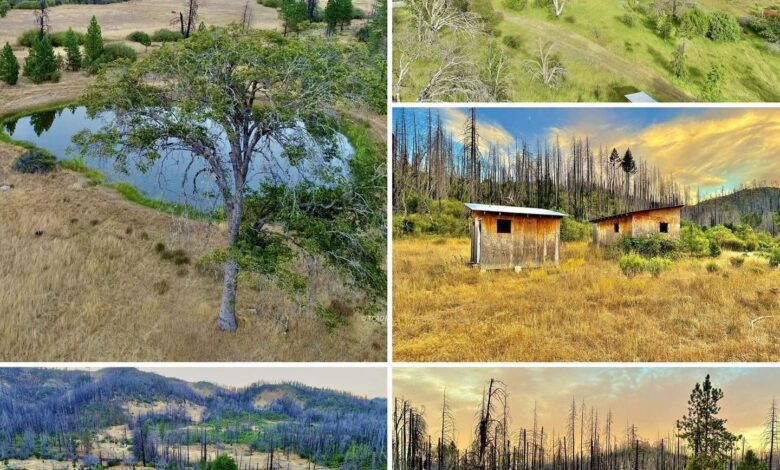
74.16 Acres in Zenia, California, Lists for $175,000 With a Spring-Fed Pond and Surviving Homestead Infrastructure
Finding a large rural property with established water features, agricultural improvements, and substantial usable land can be challenging, particularly in the mountainous areas of Northern California. A property at 660 Hoaglin Road in Zenia, California, offers a combination of these features across approximately 74.16 acres. Listed for $175,000, the former off-grid homestead includes a spring-fed pond, an established orchard, garden infrastructure, and several structures that reportedly survived a wildfire that destroyed the main cabin.
The property presents a different proposition from purchasing an undeveloped parcel. Although the primary residence is gone, the remaining improvements could provide a starting point for someone planning a rural retreat, agricultural project, or replacement homestead. However, the extent to which those features can be reused will depend on inspections, local requirements, and the condition of the surviving systems.
According to the supplied listing information, the property was placed on the market on September 2, 2026. Its asking price, acreage, water features, and post-fire condition make it worth examining carefully, especially for buyers prepared to take on the work associated with rebuilding in a remote location.
Property Overview: 74.16 Acres in Zenia, California
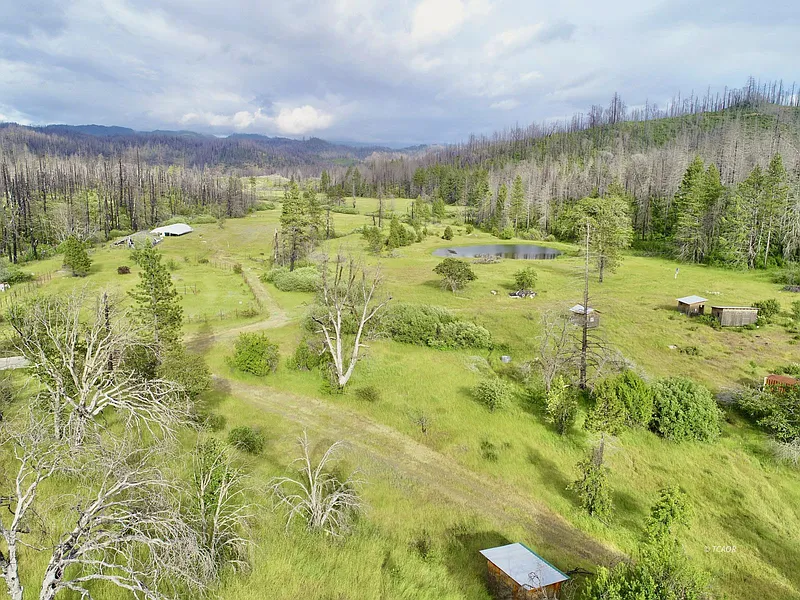
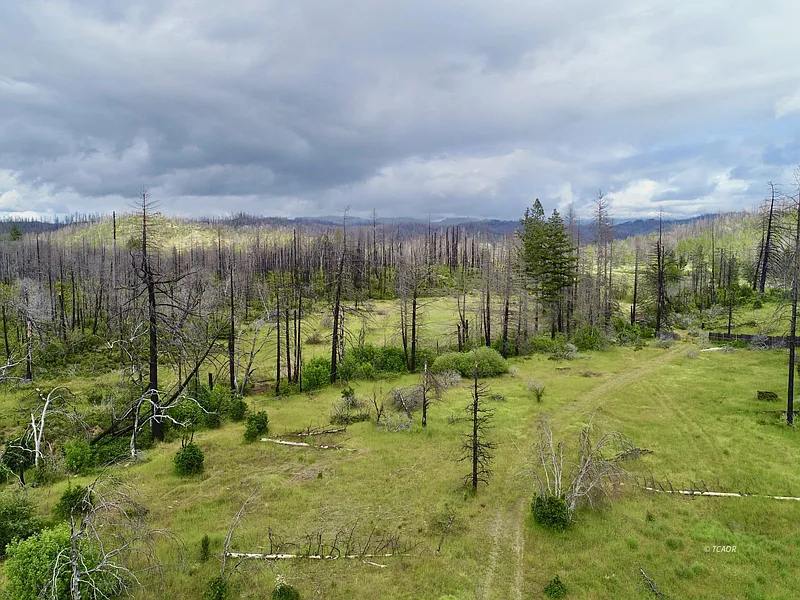
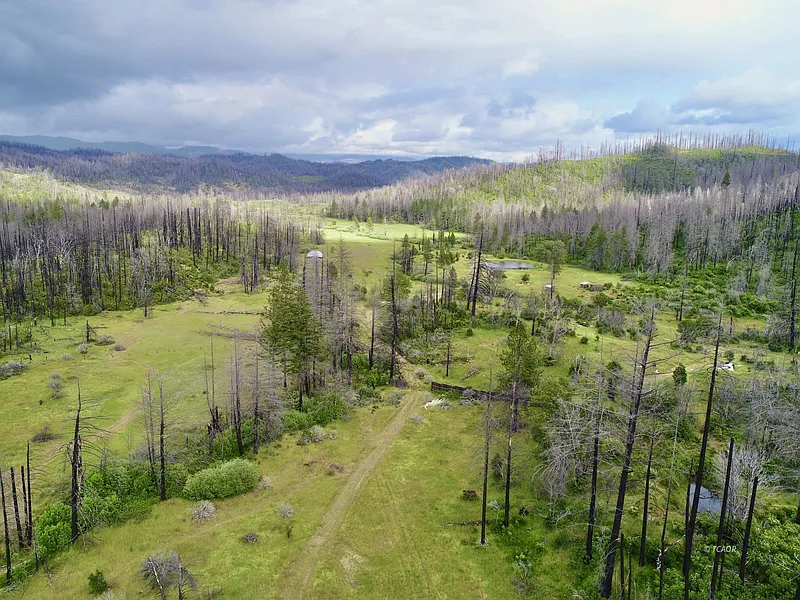
The property is located at 660 Hoaglin Road, Zenia, CA 95595, in Northern California’s Trinity and Southern Humboldt region. The supplied details describe a mix of flat homestead areas, rolling valleys, and mountain slopes, offering several different types of terrain across the parcel.
Key property details include:
- Asking price: $175,000
- Land area: 74.16 acres
- Reported price per acre: Approximately $2,360
- Reported assessed value: $210,000
- Reported annual property taxes: $2,219
- Parcel number: 022090030000
- Zoning designation: U, described in the listing information as unclassified
- Water features: A spring-fed pond and the headwaters of Hoaglin Creek
- Remaining improvements: A concrete slab foundation, bathhouse, storage sheds, two cold-frame greenhouses, solar components, and a propane tank system
- Agricultural features: Mature fruit and nut trees, grape vines, and fenced garden areas
These figures and descriptions are based on the supplied property information and should be confirmed with the listing agent and relevant county offices. The reported price per acre is a simple calculation using the asking price and acreage, not an independent appraisal of the land.
A Former Off-Grid Homestead With Significant Fire Damage
The most important factor in evaluating this property is the wildfire that destroyed the main cabin. Buyers should approach it as a damaged homestead with potentially useful remaining improvements rather than as a completed residence.
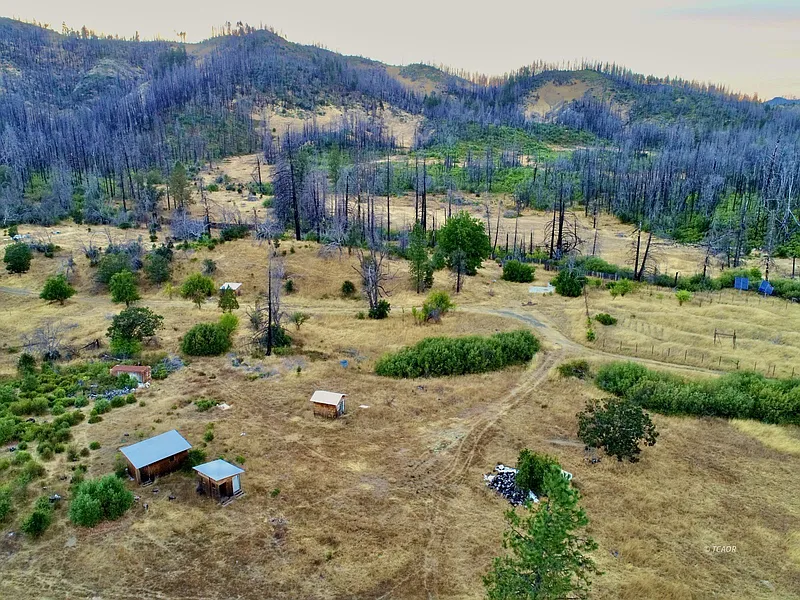
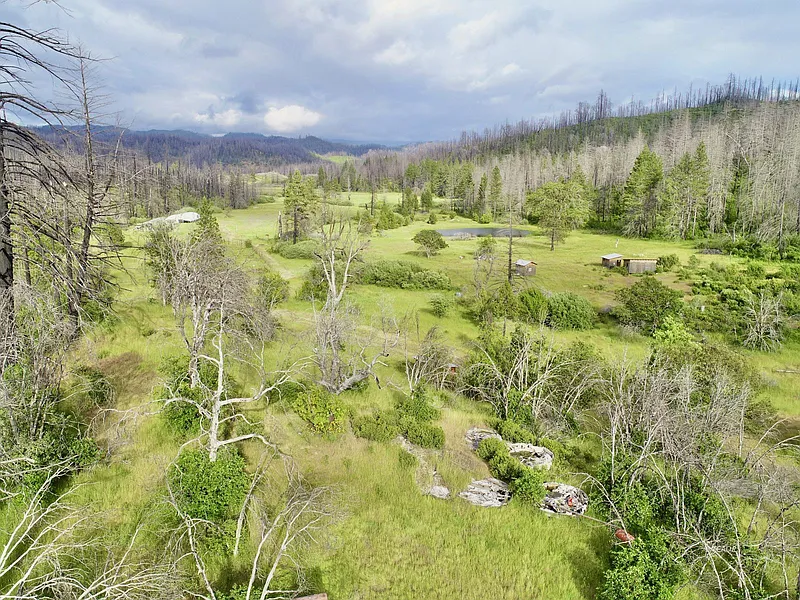
The listing information indicates that the concrete slab foundation remains in place, along with a bathhouse, storage structures, greenhouses, solar equipment, and propane infrastructure. These features could reduce some of the work involved in establishing a replacement homestead, but their actual usefulness cannot be determined from a description alone.
Existing Concrete Foundation
The surviving concrete slab could be one of the property’s more practical features. If it is structurally sound, appropriately sized, and legally usable for a replacement building, it may offer a starting point for future construction.
However, buyers should not assume that the original foundation automatically qualifies for a new residence. A qualified professional should inspect it for cracking, heat damage, settlement, and other problems. The local building department should also confirm whether the original building permits or approvals remain relevant and what would be required to construct a replacement cabin.
Any potential savings from reusing the slab will depend on these findings, the planned building design, and current code requirements.
Bathhouse and Storage Buildings
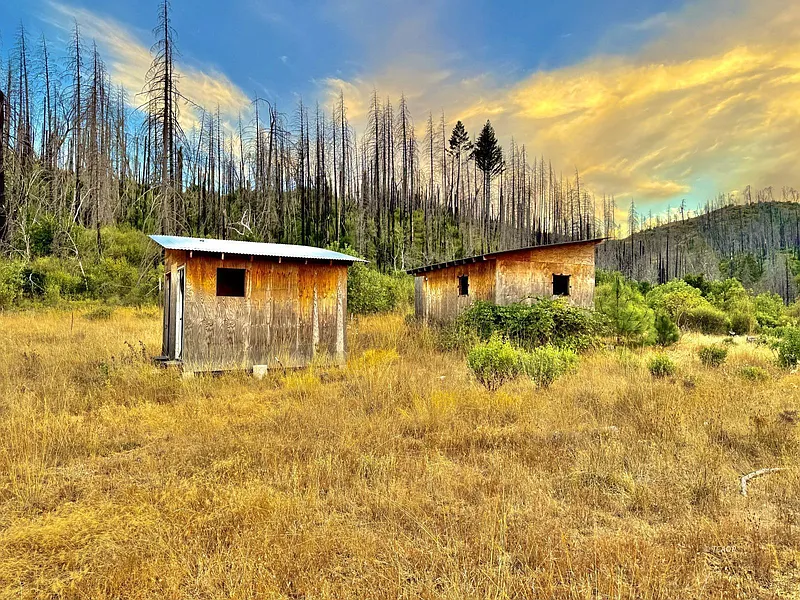
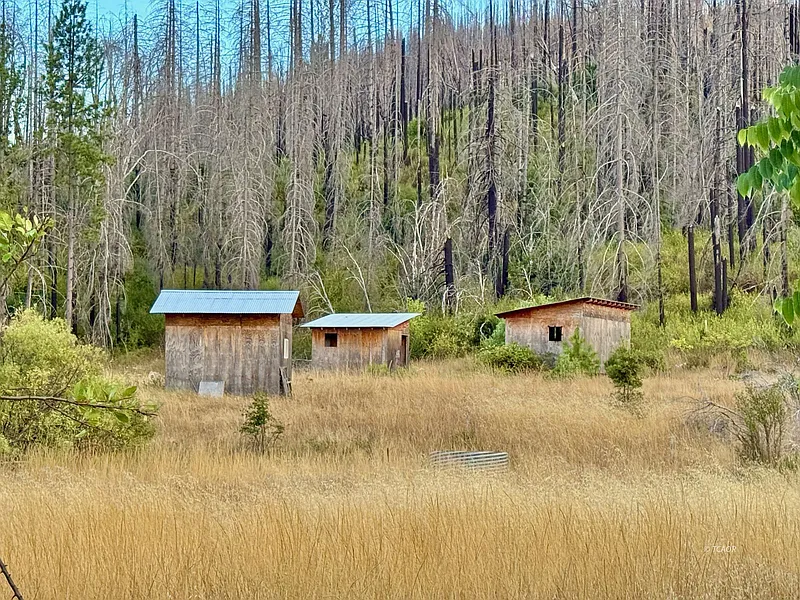
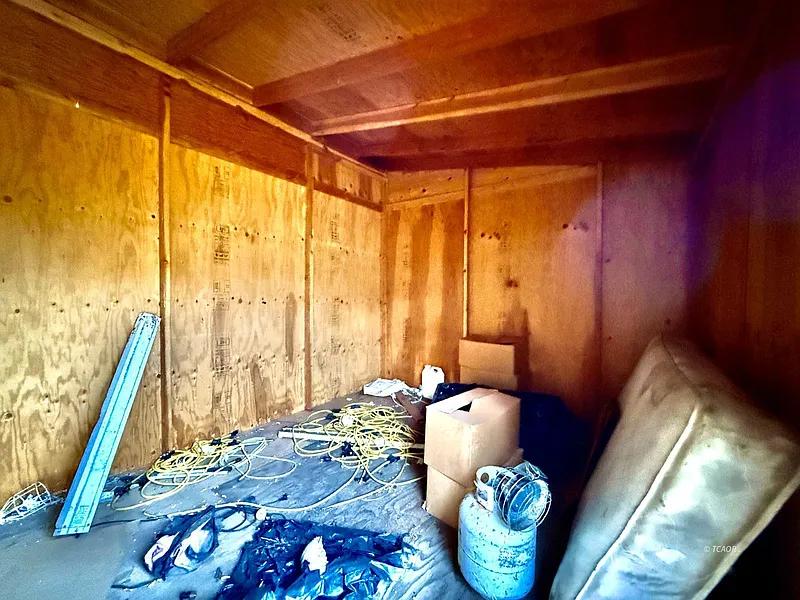
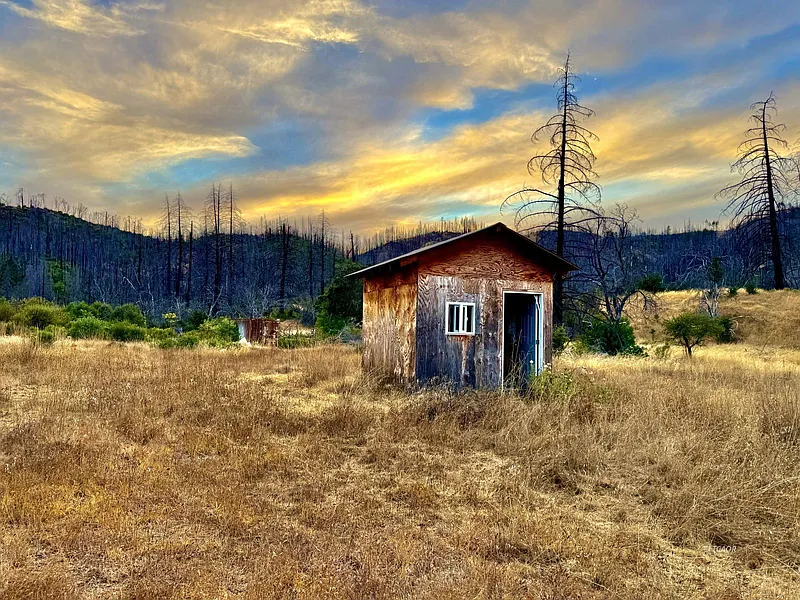
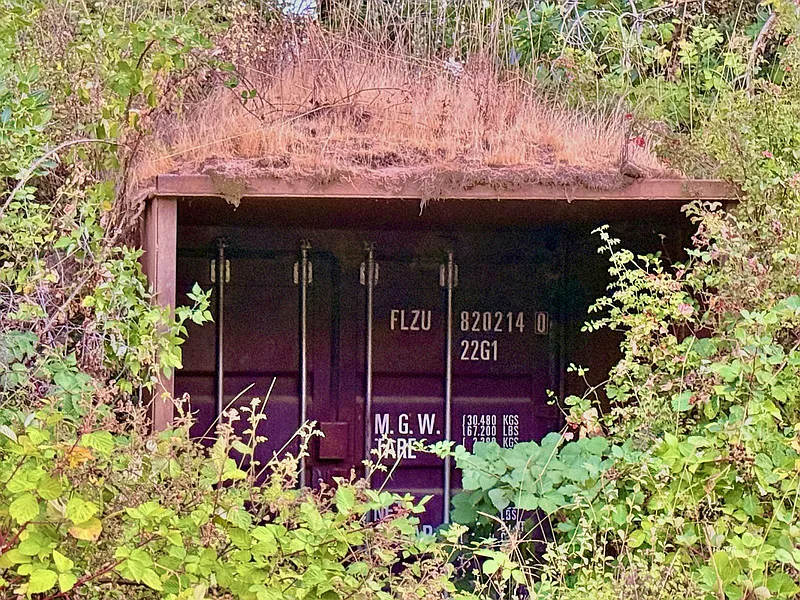
The property reportedly includes a bathhouse or bathroom outbuilding and multiple storage sheds that survived the fire. If these structures remain safe and usable, they could provide space for equipment, tools, and construction materials during a rebuilding project.
The bathhouse deserves particular attention. Its usefulness will depend on the condition of its plumbing, wastewater arrangements, water supply, ventilation, and electrical systems, if applicable. Buyers should establish whether it can legally and safely be used before a replacement residence is completed.
Storage buildings should also be inspected for heat damage, weakened framing, damaged roofing, and potential contamination from the fire.
Greenhouses and Solar Equipment
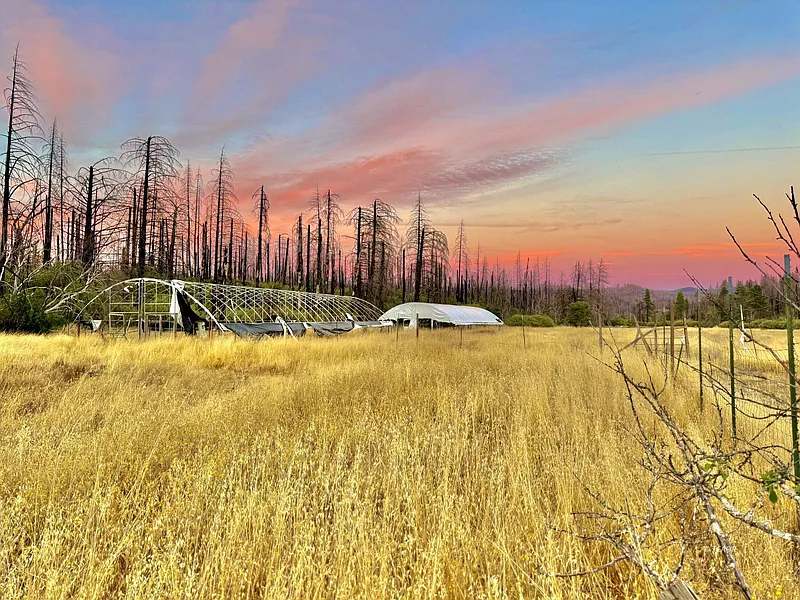
Two cold-frame greenhouses and fenced growing areas reportedly remain on the property. These improvements could support gardening and small-scale food production after cleanup and any necessary repairs.
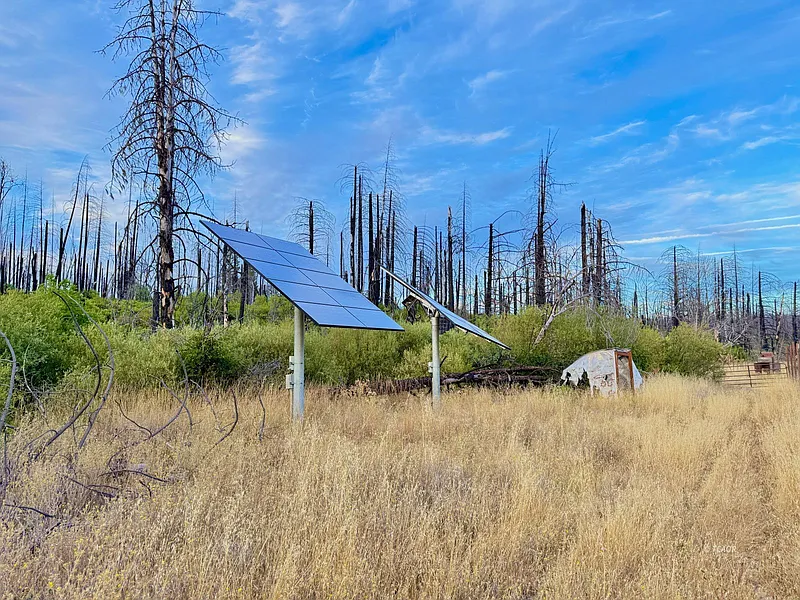
The listing also describes surviving solar panels and associated off-grid infrastructure. Their presence does not establish that the original solar system is operational. Panels, wiring, charge controllers, batteries, and inverters should be inspected by a qualified solar professional before a buyer assigns them a usable value.
The same caution applies to the propane tank and hookups. The tank, lines, regulators, and connections should be inspected and tested by an appropriate professional before reuse.
Water Features: A Spring-Fed Pond and Hoaglin Creek
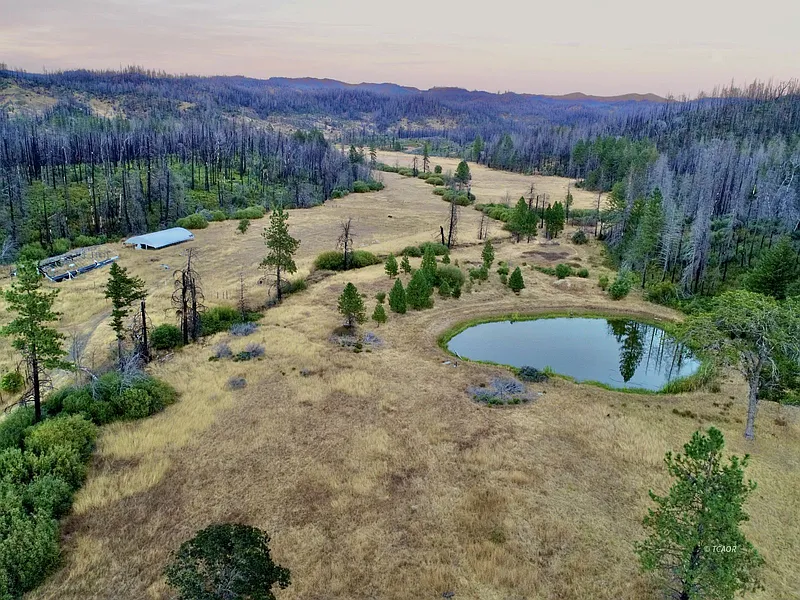
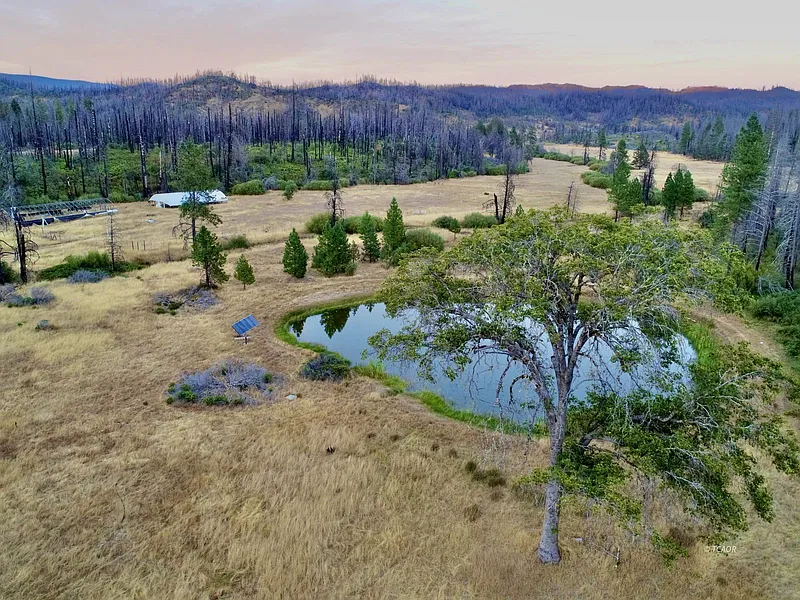
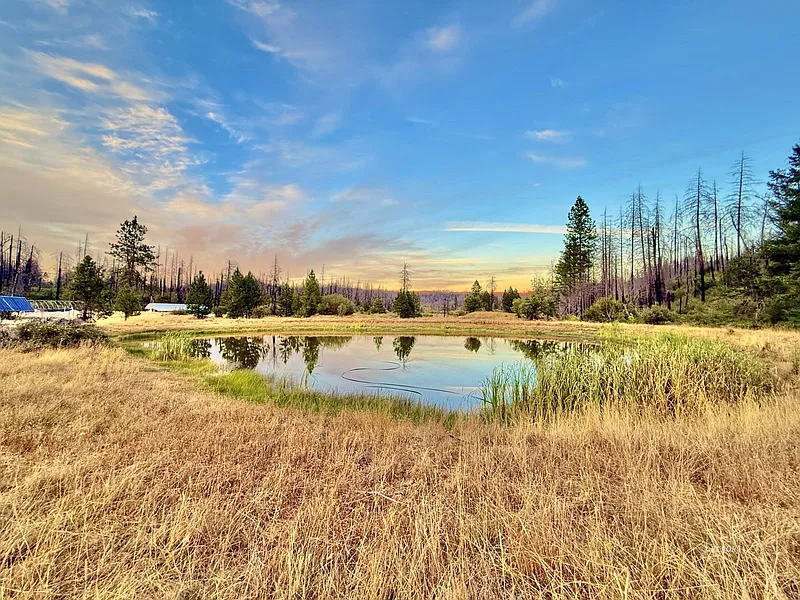
Water is an important consideration for rural land, particularly in a remote location where municipal services may not be available. According to the supplied listing details, this property includes a large pond fed by a natural spring and the headwaters of Hoaglin Creek.
These features could contribute to the property’s appeal for gardening, wildlife observation, and general enjoyment of the landscape. However, their presence should not be confused with a guaranteed domestic water supply or an unrestricted right to use water for every purpose.
The Spring-Fed Pond
The pond is described as a functional, spring-fed water feature near the former homestead area. Depending on its seasonal flow, storage capacity, and legal status, it could potentially support certain irrigation or land-management activities.
Before relying on it, buyers should investigate how consistently the spring flows throughout the year, how the pond performs during dry periods, and whether water quality or sediment issues require attention. A pond that appears substantial during one season may behave differently during prolonged drought.
The pond’s possible use for firefighting also requires careful qualification. Although a water body can be a useful resource in a wildfire-prone region, its actual suitability for fire suppression depends on access, available water volume, pumping arrangements, equipment, and local fire-service requirements. It should not be treated as a guarantee of fire protection.
Hoaglin Creek Headwaters
The supplied information states that the headwaters of Hoaglin Creek run through the property and create pools during parts of the year. A creek can contribute to the natural character of a parcel and may support local wildlife and vegetation.
Nevertheless, seasonal flow, flooding, erosion, and stream-protection requirements should be investigated. Buyers should also confirm the property’s boundaries and determine exactly where the creek runs in relation to the parcel.
Water rights and permitted uses are especially important to verify in California. The existence of a spring, pond, or creek does not automatically establish unrestricted rights to divert, store, or use water. Any intended domestic, agricultural, or other use should be checked with the appropriate authorities.
Orchard, Garden Areas, and Agricultural Potential
The property reportedly includes mature fruit and nut trees, grape vines along perimeter fencing, and fenced garden areas. These established features distinguish it from a parcel consisting entirely of undeveloped woodland.
Mature trees may provide an opportunity to continue an existing garden or orchard, but their condition and productivity should be assessed in person. Buyers should examine tree health, irrigation access, soil conditions, maintenance requirements, and the effects of the wildfire on the growing areas.
The fenced garden could also provide a starting point for growing vegetables, herbs, or other crops, subject to the condition of the fencing and soil. Where a wildfire has occurred, buyers may wish to investigate whether ash, damaged materials, or other residues require testing or remediation before growing food.
The two reported cold-frame greenhouses could offer additional growing space if their frames, coverings, and surrounding structures remain serviceable.
These features may be useful for a private homestead or small agricultural project. However, any commercial farming plan would require a separate assessment of production capacity, water availability, access, labor, and operating costs.
Topography and the Reported Unclassified Zoning
The listing describes extensive flat areas near the former homestead, along with rolling terrain and mountain slopes. Relatively level ground can be useful when planning access routes, gardens, outbuildings, and potential construction sites.
Even so, the amount of land that can actually be developed or cultivated is not necessarily the same as the total acreage. Drainage, soil conditions, slopes, wildfire-related damage, access, environmental restrictions, and required setbacks can all affect how individual areas may be used.
The property is reportedly designated as zoning U, or an unclassified district. That description alone is not sufficient to establish which activities are permitted. Buyers should obtain the official zoning designation and written guidance from the relevant county planning department.
In particular, anyone considering rebuilding a residence, keeping livestock, installing additional structures, or operating an agricultural business should confirm the applicable rules before making an offer. A prior residence or existing outbuilding does not automatically establish approval for a new structure or a particular use.
Asking Price, Assessed Value, and Annual Costs
At an asking price of $175,000 for 74.16 acres, the property works out to approximately $2,360 per acre. This figure is useful for describing the asking price relative to the parcel’s size, but it does not establish whether the property is underpriced compared with similar land.
The supplied information also reports a tax-assessed value of $210,000 and annual property taxes of $2,219.
The difference between the reported assessment and asking price is $35,000. However, this gap should not be interpreted as guaranteed equity or evidence that the property is worth more than the asking price. A tax assessment is not the same as a current market appraisal, and the condition of the property following the wildfire may materially affect its value.
A meaningful valuation would require comparable sales involving similar acreage, terrain, water features, access, infrastructure, and wildfire history. It would also need to account for the cost of cleanup, repairs, permitting, and any new construction.
The annual tax figure should be verified with the county tax collector, including whether it reflects the current assessment and whether any changes in ownership or assessment could affect future bills. Buyers should also budget for expenses that may not be obvious from the listing, including insurance where available, road maintenance, equipment, fire mitigation, utilities, and ongoing land management.
Potential Uses for the Property
The combination of acreage, natural water features, surviving improvements, and agricultural elements may appeal to several types of buyers. The best fit will depend on the parcel’s verified legal uses, physical condition, access, and rebuilding requirements.
An off-grid homestead: Buyers interested in remote living may appreciate the existing slab, reported bathhouse, solar components, propane infrastructure, and storage structures. The main challenge will be determining what can be reused and what must be replaced.
A private rural retreat: The acreage, pond, creek, and varied terrain may appeal to someone seeking a secluded place to spend time outdoors. Road access, seasonal conditions, and the availability of essential services should be evaluated before committing.
A gardening or orchard project: The mature trees, grape vines, fenced garden, and greenhouses could provide a foundation for continued cultivation. Soil quality, water rights, seasonal water availability, and the condition of the plants would influence the project’s feasibility.
A long-term land holding: Some buyers may be interested in owning a large rural parcel while undertaking improvements gradually. Any investment decision should be based on verified comparable sales, carrying costs, permitted uses, and realistic estimates of future work rather than the tax-assessed value alone.
None of these uses should be assumed to be permitted or financially viable until the necessary inspections and local checks have been completed.
Important Considerations Before Buying
The wildfire history makes thorough due diligence especially important. Before purchasing, prospective buyers should consider the following checks:
- Fire damage and cleanup: Establish whether debris, damaged materials, or other hazards remain and determine the cost of removing them.
- Foundation and surviving structures: Obtain professional inspections to establish whether the slab, bathhouse, sheds, and greenhouses can safely remain in use.
- Rebuilding requirements: Confirm whether a replacement residence can be built, whether prior permits remain relevant, and what new approvals would be required.
- Water supply and rights: Verify spring reliability, pond conditions, creek boundaries, and the legal uses of each water source.
- Solar and propane systems: Have surviving equipment and connections inspected before assigning them a value or relying on them.
- Access and road conditions: Confirm legal access, maintenance responsibilities, and whether the road remains passable during winter or severe weather.
- Zoning and land-use rules: Obtain confirmation of the official zoning designation and the permitted uses of the parcel.
- Wildfire exposure and insurance: Review local fire risks, defensible-space requirements, and the availability and cost of suitable insurance.
- Taxes and ongoing expenses: Verify the reported assessment and annual taxes, and calculate the cost of maintaining nearly 75 acres.
- Boundaries and title: Review a current parcel map, confirm acreage and access easements, and investigate any recorded restrictions or other title matters.
Because the property is in a remote part of Northern California, buyers should also consider their distance from supplies, contractors, medical services, and other essential facilities. Remote ownership can require additional planning, especially during adverse weather or periods of heightened wildfire risk.
Final Thoughts on 660 Hoaglin Road
Listed for $175,000, the 74.16-acre property at 660 Hoaglin Road in Zenia offers a combination of land, water features, agricultural improvements, and surviving off-grid infrastructure. The reported spring-fed pond, Hoaglin Creek headwaters, mature orchard, fenced garden, concrete slab, bathhouse, and remaining utility components could make the parcel worth investigating for buyers interested in rebuilding a rural homestead.
The central question is not simply how much infrastructure remains, but how much of it can be safely, legally, and economically reused. The destroyed cabin, uncertain condition of the surviving systems, potential cleanup costs, water-rights questions, and requirements for rebuilding could significantly affect the total cost of ownership.
The reported $210,000 tax assessment is useful background information, but it does not prove that the property has $35,000 in immediate equity. A buyer would need independent valuation evidence and a realistic estimate of post-fire work to determine whether the asking price makes financial sense.
For someone prepared to conduct thorough inspections and navigate the rebuilding process, this California parcel may offer an interesting starting point for a long-term rural project. Its appeal will ultimately depend on verified access, water rights, land-use permissions, infrastructure condition, and the full cost of restoring the homestead.
This article is for informational purposes only and is based on the property details supplied. Buyers should independently verify listing information, acreage, zoning, permits, water rights, taxes, structural conditions, access, and all costs before making a purchasing decision.
Listed on Zillow