West Virginia Fixer-Upper for $140,000: Historic Farmhouse, 67 Acres and Stone Cellar

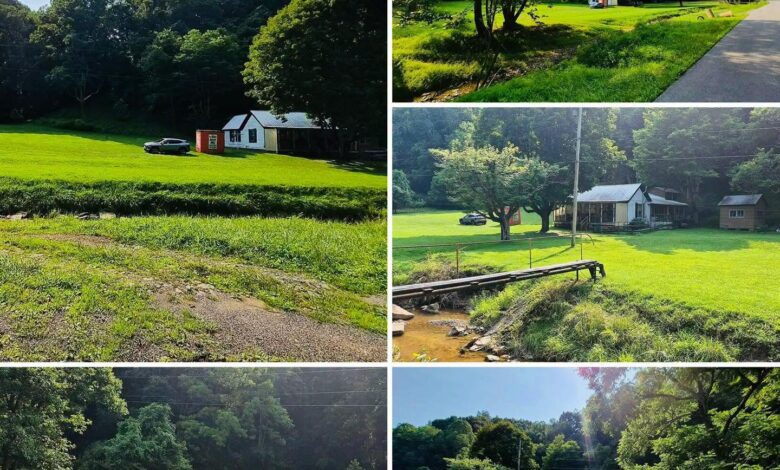
1900 Farmhouse on 67 Acres in West Virginia Listed for $140,000 With Creek Frontage
Finding a substantial acreage property with an existing farmhouse for less than $150,000 can attract buyers looking for privacy, outdoor recreation, or a long-term homestead project. In Gilmer County, West Virginia, a property at 390 Lower Level Run Road, Cedarville, WV 26611, is listed for $140,000 and includes 67 acres of wooded mountain land, an older farmhouse, several outbuildings, and a creek along the front yard.
According to the supplied listing details, the property centers on an approximately 1,100-square-foot farmhouse built in 1900. The three-bedroom, one-bathroom home has traditional wood-frame construction, wood siding, and a metal roof. Additional features include an attached hand-cut stone cellar, a separate wash house, an older garage or workshop, a private well, and a septic system.
The property also includes an older gas well described as non-operational. Its presence may be of interest to some buyers, but its practical or financial value cannot be determined without examining the deed, ownership rights, well records, and applicable regulations.
For buyers interested in a rural retreat, hunting property, or historic farmhouse restoration, the acreage and existing structures offer several possibilities. However, the age and condition of the house, the sloping terrain, and the status of the existing utilities deserve careful investigation before making an offer.
Property Overview
| Feature | Details |
|---|---|
| Asking price | $140,000 |
| Location | 390 Lower Level Run Road, Cedarville, West Virginia 26611 |
| County | Gilmer County |
| Land area | 67 acres |
| House size | Approximately 1,100 square feet |
| Bedrooms | 3 |
| Bathrooms | 1 full bathroom |
| Year built | 1900 |
| Construction | Wood-frame farmhouse with wood siding |
| Roof | Metal |
| Water | Private well, according to the supplied details |
| Wastewater | Private septic system, according to the supplied details |
| Additional structures | Stone cellar and cellar house, wash house, older garage or workshop |
| Other feature | Older non-operational gas well reportedly conveys |
| Reported annual property taxes | $717 |
| Reported listing date | July 15, 2026 |
These details are based on the supplied property description. Buyers should confirm the current listing status, measurements, tax figures, utility arrangements, and legal property details with the listing agent and appropriate local records.
A Historic Farmhouse With Appalachian Character
Built in 1900, the farmhouse is more than a century old and provides a starting point for someone interested in restoring an older rural home. Its approximately 1,100 square feet of living space and three-bedroom layout may appeal to buyers seeking a modest residence, seasonal retreat, or base for outdoor activities.
The house is being presented as a fixer-upper rather than a move-in-ready property. That distinction is important because the cost of renovating an older home depends heavily on its current structural condition and the state of its electrical, plumbing, roofing, and heating systems.
Before committing to the purchase, prospective buyers should arrange a thorough inspection. Particular attention should be given to the foundation, floor framing, roof structure, signs of moisture, wood decay, and any previous repairs. Electrical wiring, plumbing, heating equipment, and the home’s overall safety should also be evaluated by qualified professionals.
The metal roof may be a useful feature, but its age and condition are not established by the supplied information. Likewise, the home’s historic character should not be mistaken for evidence that its major systems remain serviceable.
For someone willing to undertake a substantial renovation, the farmhouse could become the centerpiece of a rural property. The final result, however, would depend on the building’s condition, the renovation budget, and any permits or requirements that apply.
A Hand-Cut Stone Cellar and Several Outbuildings
One of the property’s distinctive features is the hand-cut stone cellar and cellar house attached to the farmhouse. Stone cellars are associated with older rural properties and may provide useful storage space when they remain structurally sound and sufficiently dry.
The cellar’s actual condition should be checked for deteriorating mortar, water intrusion, poor drainage, and structural movement. Although traditional stone construction can be durable, age alone does not establish that a cellar is suitable for food storage or other uses without repairs.
The property also reportedly includes a separate wash house and an older garage or workshop. Depending on their condition, these buildings could provide storage for tools, outdoor equipment, building materials, or hunting supplies.
Buyers should inspect each structure independently. Older outbuildings can require roof repairs, foundation work, or other maintenance, and their presence should not automatically be counted as additional market value.
Even with those qualifications, the combination of the farmhouse, stone cellar, and supporting structures gives the property a traditional homestead layout that may appeal to buyers who value older buildings and rural history.
67 Acres of Wooded Mountain Land
The 67-acre parcel is a major part of the property’s appeal. At the asking price of $140,000, the simple asking-price calculation comes to approximately $2,090 per acre.
That figure is useful for an initial comparison, but it is not a verified appraisal of the land. The asking price includes the house, outbuildings, and reported utility infrastructure, while the property’s topography, access, timber, usable acreage, and legal restrictions could substantially affect its value.
The description characterizes much of the land as wooded hillside. Such terrain may be attractive for buyers who prioritize privacy, hiking, wildlife observation, and recreational use. It may also provide opportunities for hunting, subject to applicable seasons, licensing, and other regulations.
However, steep or heavily wooded land is not equivalent to open pasture or productive cropland. Buyers planning to keep livestock, establish gardens on a large scale, or construct additional buildings should identify the usable portions of the parcel before purchasing.
A survey or review of existing boundary records can help establish the property’s actual dimensions and access arrangements. Buyers should also investigate any easements, rights-of-way, timber agreements, or other recorded interests that could affect use of the land.
The creek along the front yard adds another natural feature to the setting. Its appearance and practical usefulness will depend on seasonal flow, water quality, drainage, and the precise location of the property boundaries. Flood risk and any restrictions affecting construction near the creek should be checked with the relevant authorities.
Private Well, Septic System, and the Older Gas Well
The supplied description identifies a private well and septic system as existing features. Having these systems already on the property could be helpful compared with starting from undeveloped land, but their presence does not establish that they are functional, compliant, or suitable for a buyer’s intended use.
A well inspection should assess water quantity, water quality, equipment condition, and the reliability of the supply. Buyers should arrange appropriate laboratory testing of the water before relying on it for drinking or household use.
The septic system also needs professional evaluation. Its age, permitted capacity, location, and condition are not established by the supplied information. An inspection should determine whether it is functioning properly and whether its capacity is appropriate for the house and any planned improvements.
The property reportedly includes an older gas well that is no longer operational. This is a detail that warrants additional due diligence rather than an assumption of added value.
Before assigning any financial or practical benefit to the well, buyers should determine exactly what rights convey with the deed. They should investigate ownership of the well and associated mineral interests, any existing leases or royalty arrangements, abandonment records, environmental obligations, and applicable state requirements. A non-operational well should not be assumed to provide usable fuel or a future utility connection.
These checks can help establish whether the existing infrastructure is an advantage, a maintenance obligation, or a potential source of additional expense.
Price Analysis: What Does $140,000 Buy?
At the asking price, the property offers a combination of land and existing structures rather than simply a house or an undeveloped parcel.
| Financial metric | Calculation or reported figure |
|---|---|
| Asking price | $140,000 |
| Land area | 67 acres |
| Asking price per acre | Approximately $2,090 |
| House area | Approximately 1,100 square feet |
| Asking price divided by house area | Approximately $127 per square foot |
| Reported annual property taxes | $717 |
| Reported 2025 tax assessment | $38,580 |
The approximately $127-per-square-foot figure is the total asking price divided by the reported house size. It is not the market value of the house alone, because the asking price also includes 67 acres and the additional structures.
Similarly, the reported tax assessment is not necessarily an indicator of current market value. Tax assessments and market prices are calculated for different purposes and should not be treated as interchangeable.
The supplied description also compares the asking price per acre with a claimed regional range for timberland. That range has not been independently verified here. A meaningful comparison would require recent sales of similar parcels in Gilmer County and nearby areas, with adjustments for road access, slope, timber, utilities, usable acreage, and improvements.
The property’s financial appeal will ultimately depend on how much of the land is usable, whether the buildings can be repaired economically, and whether the existing systems function as expected.
Renovation Costs and Financing Considerations
Because the farmhouse dates to 1900 and is described as needing substantial work, renovation expenses could be a major part of the total investment.
Potential projects include structural repairs, replacement or repair of electrical and plumbing systems, improvements to heating, insulation and interior finishes, and work on the roof or foundation if inspections reveal problems. Repairs to the cellar and outbuildings may add further costs.
It would be premature to assign a reliable renovation budget without an inspection and contractor estimates. Buyers should obtain quotes for the essential repairs first, then add an appropriate contingency for concealed problems that may emerge after work begins.
Financing is another consideration. Some lenders may be reluctant to finance a property with significant deferred maintenance, especially when the house is older and the land represents a large share of the purchase. Other financing options may be available depending on the property’s condition, the buyer’s qualifications, and the intended use.
Prospective buyers should speak with lenders before making an offer rather than assuming a standard mortgage, a renovation loan, or a land loan will be available. The specific eligibility requirements of any program must be confirmed directly with the lender.
Who Might Find This Property Appealing?
This property may suit several types of buyers, provided they understand the work and responsibilities involved.
Hunters and outdoor enthusiasts may value the 67 acres of wooded terrain, the rural setting, and the possibility of using the farmhouse as a base for recreational activities. Actual hunting suitability will depend on wildlife patterns, access, local rules, and the characteristics of the land.
Homesteaders may appreciate the combination of acreage, an existing house, outbuildings, and reported well and septic infrastructure. Before planning gardens, livestock areas, or additional buildings, they should determine how much land is practical to use and verify all relevant utility and permitting requirements.
Historic-home enthusiasts may be drawn to the farmhouse’s age and stone cellar. Restoring an older property can preserve distinctive architectural character, but it also requires realistic expectations about maintenance, repair costs, and the condition of original materials.
Buyers seeking a private rural retreat may see potential in the property’s size and natural features. However, access conditions, emergency services, road maintenance, broadband availability, and travel distances should be checked rather than assumed.
The property is less likely to suit someone seeking a fully renovated home, extensive flat pastureland, or a low-maintenance residence that can be occupied immediately without substantial work.
Questions to Answer Before Making an Offer
Before proceeding, buyers should investigate the following:
- House condition: What repairs are necessary to make the farmhouse safe and habitable?
- Well and septic: Are both systems functional, inspected, and suitable for the intended occupancy?
- Gas well: What rights and obligations convey, and are there records confirming its status?
- Land boundaries: Are the acreage, access rights, and any easements documented?
- Creek and drainage: Are there flood risks, setbacks, or other restrictions affecting the property?
- Outbuildings: Which structures are sound, and which need repair or removal?
- Taxes and records: Do the reported annual taxes and assessment match current county records?
- Financing: Will the lender finance the property in its present condition?
- Renovation budget: Have contractors provided estimates for essential work and possible hidden defects?
- Current listing details: Is the property still available at $140,000, and have any terms changed?
Answers to these questions will provide a stronger basis for deciding whether the asking price represents good value for a particular buyer.
Final Verdict: Is This 67-Acre West Virginia Property Worth Considering?
Listed for $140,000, this Gilmer County property combines 67 acres of wooded Appalachian land with a farmhouse built in 1900, an attached stone cellar, additional outbuildings, a creek, and reported private well and septic systems. That combination could appeal to buyers looking for a rural retreat, a hunting base, or a long-term restoration project.
The strongest selling points are the size of the parcel and the variety of existing structures. The biggest uncertainties are the farmhouse’s repair requirements, the condition of the well and septic system, the practical value of the older gas well, and how much of the sloping land can be used for a buyer’s plans.
The property may be worth investigating, but it should not be treated as a guaranteed bargain or an automatic equity opportunity. The asking price per acre is a useful starting calculation, not proof that the land is priced below market value. Likewise, the potential cost of replacing or renovating the structures cannot be reliably estimated without inspections and contractor quotes.
For an experienced buyer who has the budget and patience to handle an older rural property, this 67-acre holding could offer an interesting combination of land and historic character. For anyone considering an offer, the best next step is to verify the listing details, inspect the house and supporting systems, review the deed and gas-well records, and compare the property with recent local land sales before settling on a purchase price.


Listed on Zillow