Seventeen Years After Walking Away, a Father Came Back Seeking Forgiveness. –

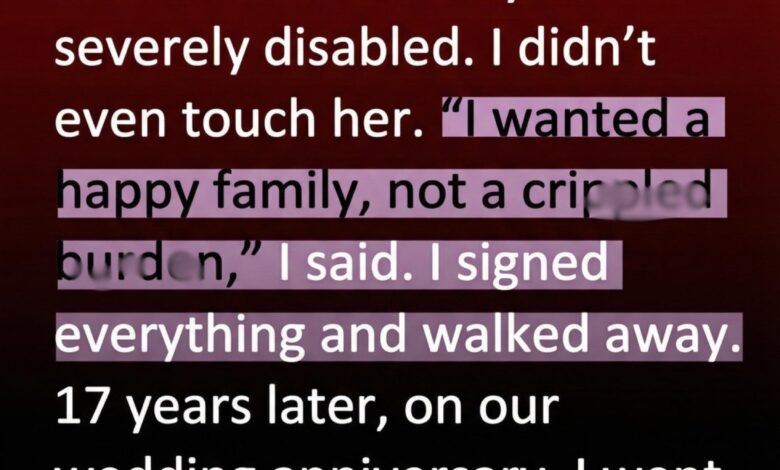
In one afternoon, I lost the woman I loved and inherited a future I didn’t understand.
And instead of stepping forward, I stepped away.
When Grief Turns Into Avoidance
People talk about grief like it’s only sadness. Sometimes it’s not. Sometimes it’s panic dressed up as “logic.” Sometimes it’s fear pretending to be responsibility.
Papers were placed in front of me—guardianship forms, legal arrangements, decisions that shouldn’t be made on autopilot. I signed too quickly, barely reading, convincing myself I was doing what was “best.”
But the truth was simpler and uglier: I was running.
I told myself my daughter would be better off without a broken man hovering around her life. I told myself she deserved stability, not someone who couldn’t even hold it together.
So I built a new routine and called it survival.
I buried myself in work. I stayed busy on purpose. I filled my days with meetings, deadlines, noise—anything loud enough to drown out the image of a little girl growing up without her father.
On anniversaries, I made sure I was “too booked.” It was easier to be productive than present. Easier to look successful than to admit I was ashamed.
The Anniversary That Finally Broke Me
Seventeen years passed like that—fast on the calendar, heavy in the chest.
Then, on what would have been our wedding anniversary, I found myself standing in a cemetery I’d avoided for far too long.
The headstone hadn’t changed. Her name was still carved into the same cold surface, permanent and unforgiving.
“I’m sorry,” I whispered.
I meant it for my wife. I meant it for the life we never got to live. And I meant it for the father I refused to become.
That’s when another truth settled in, one I couldn’t outwork or outthink:
You don’t get a door that takes you back to the hospital hallway. There’s no reset button. No alternate version where you suddenly make the brave choice.
There is only what you do next.
Learning Who My Daughter Became Without Me
For the first time in nearly two decades, I asked about her—my daughter, the baby I never held long enough to memorize.
What I heard didn’t make my guilt smaller. It made it sharper.
She was bright. Determined. Funny in a way that didn’t ask for permission. She’d been through surgeries and therapy. She’d sat in classrooms where people assumed less of her before she ever spoke.
And she still rose.
Other people stepped in where I disappeared—relatives, teachers, mentors, good-hearted strangers who saw potential where I saw only fear. They helped her build a life, piece by piece, without the one person who should’ve been first in line to protect her.
And the hardest part wasn’t hearing how much she’d endured.
The hardest part was realizing she didn’t need a perfect father.
She needed a present one.
What Forgiveness Really Costs
I don’t know if I deserve forgiveness.
I don’t know if seventeen years can be bridged with a phone call, a letter, or even a lifetime of trying.
I only know this: redemption doesn’t start with a dramatic speech. It starts with honesty. It starts with showing up, even when you’re ashamed. It starts with accepting that you can’t undo the damage—you can only stop adding to it.
Second chances don’t erase what came before.
But sometimes they begin the moment you finally choose to face it.
Closing CTA
If this story moved you, share your thoughts in the comments: do you believe forgiveness is earned over time—or given in a single moment? And if you know someone carrying regret in silence, send this to them. It might be the push they need to show up before it’s too late.