Historic Two-Story Condo in Rochester, NY for $184,900 – Built in 1903


Historic Two-Story Condo for Sale in Rochester, New York – $184,900 for a Unique Home at 947 East Avenue
A Historic Rochester Condo Filled With Character
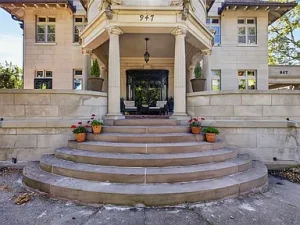
Some homes stand out because of their size, while others capture attention through their history and architectural details. This two-story condominium at 947 East Avenue in Rochester, New York, offers a little of both, with distinctive features rarely found in a conventional one-bedroom apartment.
Listed for $184,900, the residence includes one bedroom, one full bathroom, and approximately 860 square feet of living space. It is located inside the historic Bishops House, a building constructed in 1903, and combines traditional craftsmanship with several modern conveniences.
The interior features soaring ceilings, herringbone hardwood floors, natural woodwork, tall windows, a decorative mantel, and a spiral staircase connecting the two levels. Upstairs, the bedroom offers multiple closets and access to a smaller private balcony.
One of the standout features is a spacious private deck overlooking East Avenue, with views toward the George Eastman Museum. The condominium also includes an updated kitchen with brand-new appliances, two assigned outdoor parking spaces, dedicated basement storage, and access to shared laundry facilities.
However, there is more to consider than the property’s architectural appeal. The monthly condominium association fee is $600, and the reported annual property taxes are $4,505. Buyers should carefully evaluate these ongoing costs alongside the building’s maintenance requirements before making a decision.
Property Overview: 947 East Avenue, Rochester, NY
This property is a two-level condominium located within the Bishops House Condo development. Its unusual layout separates the main living and kitchen areas from the upstairs bedroom and bathroom.
Key property details:
- Asking price: $184,900
- Address: 947 East Avenue, Apartment 4, Rochester, NY 14607
- Property type: Condominium
- Building: Bishops House
- Year built: 1903
- Bedrooms: 1
- Bathrooms: 1 full bathroom
- Interior living area: Approximately 860 square feet
- Interior levels: 2
- Exterior: Stone and stucco
- Roof: Slate and tile
- Heating: Gas radiators
- Windows: Leaded glass
- Kitchen: Eat-in, galley-style layout
- Laundry: Shared basement facilities
- Parking: 2 assigned outdoor spaces
- Storage: Dedicated locked basement closet
- Outdoor areas: Private deck and balcony
- Monthly HOA fee: $600
- Reported annual property taxes: $4,505
- Reported assessed value: $134,800
- MLS number: R1719969
The listing reports several flooring materials, including hardwood, tile, and vinyl. Buyers should verify the condition and extent of each material during an inspection.
The Story Behind the Historic Bishops House
One of the most interesting aspects of this property is the history associated with its building.
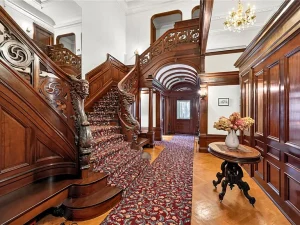
According to the listing, the Bishops House was constructed in 1903 and designed by architect Leon Stern for Frank Ritter. Ritter was associated with the dental equipment industry and founded Ritter Dental Manufacturing Company.
The listing states that Ritter built the residence for his daughters. It also describes likenesses of his daughters incorporated into the staircase in the building’s grand foyer.
These details give the property a distinctive story beyond its physical features. For buyers who enjoy historic architecture, owning a home connected to Rochester’s past may be an appealing prospect.
The historical details should be independently verified through local historical resources or architectural records if they are important to a purchase decision.
Because the building is more than a century old, its age also deserves careful consideration. Historic materials can require specialized maintenance, and the condition of shared building systems can have a direct effect on condominium owners.
A Two-Story Layout With a Spiral Staircase
Unlike many modern one-bedroom condominiums, this residence has two interior levels.
The lower floor contains the main living room and kitchen, while the upstairs level includes the bedroom and bathroom. A spiral staircase connects the two floors, creating a distinctive visual feature while separating the living and sleeping areas.
The listing also states that the upper level can be accessed through the building’s grand foyer staircase. Buyers should confirm how this alternative entrance works, whether it is permanently available to the unit, and what rules apply to its use.
The spiral staircase adds character, but it may not suit everyone’s needs. Buyers should assess its width, steepness, handrails, lighting, and general safety. Moving large furniture between floors may also require additional planning.
For someone who appreciates unusual historic layouts, the arrangement may be part of the property’s appeal. For anyone who prefers single-level living, it deserves particular attention.
Soaring Ceilings and a Distinctive Living Room
The living room features high ceilings, natural woodwork, large windows, and a stately mantel. These details help create the traditional atmosphere associated with older residences.
High ceilings can make a relatively compact interior feel more open, while decorative trim and woodwork add visual interest. The tall windows may also help bring natural light into the living space.
One important detail is that the listing’s structured property information indicates the condominium does not have a fireplace. Buyers should therefore view the mantel as a decorative architectural feature rather than assume there is a working fireplace.
The room’s actual dimensions should be checked during a visit to determine how comfortably furniture can be arranged. Even so, the combination of height, woodwork, and historic detailing gives this space a character that may be difficult to reproduce in a newer apartment.
Herringbone Hardwood Floors and Original Woodwork
The herringbone hardwood flooring is another notable feature. This traditional pattern uses individual wood pieces arranged in alternating angled directions, creating a distinctive design across the floor.
The listing highlights original woodwork throughout the residence as well. Depending on the areas involved, historic wood details may include trim, moldings, doors, and staircase components.
These features can be especially attractive to buyers who value craftsmanship and traditional interiors. However, the listing does not confirm that every section of flooring or every piece of woodwork is original to 1903.
A careful inspection should look for worn finishes, loose boards, moisture damage, previous repairs, or damaged decorative details. Depending on their condition, hardwood floors may benefit from refinishing, while historic woodwork may require careful cleaning or restoration.
Preserving these materials can help maintain the property’s distinctive appearance, but any significant work should be evaluated before purchase.
Tall Windows and Leaded-Glass Details
Tall windows and leaded glass contribute to the condominium’s historic character. Leaded-glass windows can provide decorative detail that differs from the appearance of standard modern window units.
Their condition is worth checking closely. Buyers should inspect the glass, frames, seals, and surrounding walls for damage, drafts, or signs of moisture.
Energy performance is another consideration. Historic windows may not provide the same insulation as modern products, although their performance depends on their construction and condition.
Before planning repairs or replacements, buyers should check the condominium’s rules and any applicable historic-district requirements. Exterior window work may require approval from the association or other relevant authorities.
Updated Eat-In Kitchen With Brand-New Appliances
The kitchen is described as an eat-in space with a galley-style layout. According to the listing, it has updated flooring and brand-new appliances.
The advertised appliances include a dishwasher, electric oven, electric range, microwave, and refrigerator. The property details also identify a gas water heater.
A galley kitchen can make efficient use of a smaller space by keeping cooking and preparation areas close together. The eat-in designation suggests there may be room for a dining arrangement, although buyers should verify the available dimensions before planning furniture placement.
During an inspection, it is worth checking the cabinets, countertops, plumbing, electrical connections, ventilation, and general condition of the kitchen. Buyers should also confirm which appliances are included in the sale and whether any warranties apply.
The updated kitchen offers a practical contrast to the building’s older architectural details, combining contemporary convenience with traditional surroundings.
A Large Upstairs Bedroom With Multiple Closets
The condominium’s bedroom is located on the upper level and is described in the listing as spacious. Multiple closets provide additional storage, an important consideration in a home with approximately 860 square feet of interior living space.
The exact bedroom dimensions are not provided, so buyers should assess the usable floor area and potential furniture arrangements in person.
The upper-level location may provide a greater sense of separation from the living room and kitchen. Buyers should also check the windows, natural light, ventilation, and overall condition of the room.
One of the closets is described as providing access to a small private balcony, an unusual feature that adds another distinctive element to the layout.
An Upstairs Bathroom With Historic Details
The single full bathroom is located on the upper level. The listing describes original tile and fixtures, along with distinctive arched detailing around the shower.
These elements may appeal to buyers who prefer traditional bathroom design. However, older tile and plumbing fixtures should be inspected carefully before purchase.
Buyers should look for damaged grout, leaks, poor drainage, inadequate ventilation, and signs of moisture behind or around the fixtures. Repairs to historic bathrooms can sometimes require specialized materials or workmanship if original details are to be preserved.
Any planned renovations should also be checked against the condominium association’s rules.
Two Private Outdoor Spaces
One feature that distinguishes this property from many one-bedroom condominiums is its combination of a smaller balcony and a larger deck.
The smaller balcony overlooks the rear of the building and is accessed from one of the upstairs closets, according to the listing. Although its dimensions are not specified, it may provide a small outdoor space for fresh air.
The balcony should be inspected for sound flooring, secure railings, adequate drainage, and signs of deterioration. Buyers should also confirm whether it is classified as a limited common element and who is responsible for its maintenance.
The larger deck is described as being for the exclusive use of Unit 4. It overlooks East Avenue and offers views toward the George Eastman Museum.
The deck may provide room for outdoor seating or a place to enjoy a morning coffee during warmer months. Before purchasing, however, buyers should establish whether the deck is owned by the unit or simply assigned for its exclusive use. The condominium documents should clarify responsibility for structural repairs, maintenance, insurance, and replacement.
Views Toward the George Eastman Museum
The listing specifically highlights views toward the George Eastman Museum, a cultural landmark associated with the history of photography and motion pictures.
For buyers who appreciate Rochester’s historic architecture and cultural surroundings, the location may be an attractive part of the property.
The exact view from the condominium and deck should be confirmed during an in-person visit. Visibility can vary with vegetation, the season, and nearby structures.
It is also sensible to visit at different times of day to evaluate street activity, parking, and noise levels around East Avenue.
Two Assigned Parking Spaces
The property includes two assigned outdoor parking spaces, a practical feature for residents who own more than one vehicle or regularly have visitors.
The listing does not identify a garage or covered parking, so buyers should verify the location of both spaces and the rights associated with them.
The condominium’s governing documents should explain whether the spaces are permanently assigned to Unit 4 and whether any restrictions apply to vehicle size, guests, or other parking arrangements.
Buyers may also want to determine how snow removal and parking-area maintenance are handled during winter.
Shared Laundry and Dedicated Basement Storage
Laundry facilities are located in the basement and are described in the listing as free to use. This arrangement may be convenient for buyers who do not require an in-unit washer and dryer.
However, the current laundry arrangements, equipment condition, and any applicable rules should be verified. Shared facilities may require coordination with other residents, and personal preferences will determine whether this setup is suitable.
The unit also includes a dedicated locked basement storage closet. This extra space may be useful for seasonal belongings, household equipment, and items that are not needed every day.
Buyers should confirm the storage area’s dimensions, legal allocation, and maintenance responsibilities. The listing identifies a full basement in the building, but that does not mean the entire basement belongs to the individual condominium owner.
The association’s governing documents should establish the precise storage rights attached to the unit.
Understanding the $600 Monthly HOA Fee
The condominium association fee is $600 per month, or $7,200 annually, according to the listing.
The fee reportedly includes common-area maintenance, common-area insurance, heating, reserve-fund contributions, sewer service, snow removal, trash collection, and water.
Having several services included may simplify monthly budgeting. However, the fee is a significant recurring expense that buyers should consider alongside the purchase price, property taxes, insurance, utilities, and any mortgage payment.
Common-area insurance does not necessarily eliminate the need for an individual condominium insurance policy. Electricity, internet service, and other personal expenses may also be separate.
Before making an offer, buyers should request the current association budget, financial statements, reserve information, insurance details, and recent meeting minutes. They should also ask about planned special assessments and possible future increases in monthly dues.
A Self-Managed Condominium Association
The listing identifies the Bishops House association as self-managed. This generally means that owners or elected representatives handle association responsibilities rather than relying entirely on a separate professional management company.
A self-managed association may give residents a direct role in decisions about the building. However, buyers should evaluate how effectively the association handles finances, maintenance, insurance, and long-term planning.
This is particularly important in a building constructed in 1903.
The slate and tile roof, stone and stucco exterior, windows, and shared mechanical systems may require specialized care. Buyers should ask about recent repairs, upcoming projects, reserve-fund contributions, and any known building deficiencies.
Insufficient reserves or major upcoming repairs can lead to higher monthly fees or special assessments. Reviewing the association’s records can help buyers understand these potential obligations before committing to the purchase.
Reported Annual Property Taxes of $4,505
The listing reports annual property taxes of approximately $4,505. Divided across twelve months, that works out to about $375.42 per month.
The reported tax-assessed value is $134,800. This figure should not be treated as the property’s current market value or a guaranteed appraisal.
Property taxes may change because of reassessments, exemptions, ownership changes, or local tax rates. Buyers should obtain updated figures from the relevant local authorities and include the likely tax obligation in their ownership budget.
What Could Monthly Ownership Costs Look Like?
The asking price is only one part of the financial picture. The reported association fee and property taxes together amount to approximately $975.42 per month, before considering a mortgage or other personal expenses.
Based on the figures supplied in the listing, the recurring costs include:
- Monthly HOA fee: $600
- Monthly equivalent of reported property taxes: Approximately $375.42
- Combined HOA fee and taxes: Approximately $975.42
- Condominium insurance: Requires an individual quote
- Electricity: Depends on usage
- Internet and other personal utilities: Depends on services selected
- Mortgage payment: Depends on the buyer’s financing terms
The listing also displays an estimated monthly payment of $2,059. That estimate depends on assumptions that may not match a particular buyer’s down payment, interest rate, loan terms, taxes, or insurance costs.
Prospective buyers should calculate their own monthly expenses using current, verified figures. This can help determine whether the property fits their budget over the long term.
Financing Options and Buyer Eligibility
The listing identifies cash, conventional, FHA, and VA financing among the potential purchase options.
However, a financing option appearing in a listing does not guarantee that the individual unit or the condominium association qualifies for every loan program. Some mortgage programs have requirements involving condominium project approval, insurance coverage, occupancy, and the association’s financial condition.
Buyers should speak with qualified lenders to establish which options may be available. Lenders may request association documents during underwriting, and approval will also depend on the buyer’s financial circumstances and loan qualifications.
Obtaining current financing information before submitting an offer can help avoid unexpected complications later.
Long-Term Rental Potential
The listing states that long-term rentals are permitted, which may interest buyers considering the property as an investment.
A one-bedroom condominium in a historic building could appeal to tenants who value architectural character and the surrounding neighborhood. Nevertheless, the potential for rental income should be evaluated carefully rather than assumed.
Buyers should verify the association’s current rental rules, including any minimum lease terms, approval requirements, or other restrictions. They should also research comparable rents and local rental demand.
The $600 monthly association fee and reported annual property taxes will have a significant effect on operating costs. Investors should account for vacancies, repairs, insurance, management expenses, and other ownership obligations.
The supplied listing does not provide verified rental history or income figures, so potential returns cannot be established from the available information alone.
Could It Work as an Artist’s Studio?
The seller suggests that the property could appeal to someone interested in an artist studio. The tall windows, natural light, high ceilings, and historic interior may be attractive to a creative professional.
However, buyers should distinguish between using a room for personal creative activities and operating a business from a condominium.
The listing does not establish that unrestricted commercial use is allowed. Condominium rules and applicable zoning requirements may restrict business activity, customer visits, signage, noise, or certain equipment.
Anyone planning to use the residence for professional purposes should verify the permitted uses before purchasing.
Living on East Avenue in Rochester
East Avenue is associated with Rochester’s historic architecture and cultural surroundings. For buyers who enjoy established neighborhoods and older buildings, the location may be an important part of the appeal.
The listing identifies the property as being within a historic district and near public transportation. Prospective buyers should investigate the exact transit routes, nearby services, and travel times to places they regularly visit.
Groceries, healthcare, restaurants, employment access, and other everyday conveniences are worth considering when evaluating the location.
Visiting the neighborhood at different times can also help buyers understand street activity, parking availability, and noise levels.
Historic District Rules and Renovation Considerations
The listing identifies the property as being in a historic district. Depending on the applicable designation and local regulations, certain exterior changes may require review or approval.
This could be relevant to work involving windows, exterior surfaces, balconies, the deck, or other visible features. Condominium association rules may impose additional requirements, and some interior alterations may also need approval.
Buyers who anticipate renovating should confirm which permissions apply before planning projects or estimating costs.
Understanding these restrictions in advance can help prevent delays and protect the building’s historic character.
Important Questions to Ask Before Buying
Before making an offer on 947 East Avenue, Apartment 4, buyers should seek clear answers to several important questions:
- What is the condominium association’s current financial condition?
- Are any special assessments planned, pending, or under discussion?
- How much money is available in the reserve fund?
- Who is responsible for maintaining and repairing the private deck and balcony?
- What rules apply to long-term rentals?
- Which interior and exterior renovations require approval?
- What is the condition of the slate and tile roof?
- Are the heating system and shared building utilities properly maintained?
- Are both assigned parking spaces permanently allocated to Unit 4?
- What insurance coverage must the individual owner obtain?
Buyers should also review the condominium declaration, bylaws, financial statements, insurance information, maintenance records, and recent association meeting minutes.
A professional inspection and a careful review of the association’s documents can provide a clearer picture of both the unit and the shared building responsibilities.
Who Might Appreciate This Historic Rochester Condo?
This property may appeal to buyers who prefer architectural character over the uniform appearance of a newly built apartment.
Historic-home enthusiasts may appreciate the herringbone hardwood floors, leaded-glass windows, natural woodwork, high ceilings, and distinctive spiral staircase. Buyers seeking a one-bedroom residence with outdoor space may also be drawn to the private deck and balcony.
The location and historic atmosphere could interest creative professionals, subject to applicable use restrictions. Investors may wish to investigate the long-term rental potential, provided the association’s rules and financial figures support their plans.
At the same time, the property may not suit everyone. The $600 monthly HOA fee, property taxes, potential historic-building maintenance expenses, and spiral staircase are all important considerations.
Ultimately, its suitability depends on a buyer’s lifestyle, budget, mobility needs, and comfort with condominium ownership.
Final Thoughts on This $184,900 Historic Rochester Condo
Listed for $184,900, this two-story condominium at 947 East Avenue offers a distinctive opportunity to own a residence inside Rochester’s historic Bishops House.
Built in 1903, the building provides a setting for architectural details that include high ceilings, herringbone hardwood flooring, natural woodwork, leaded-glass windows, and a spiral staircase. The unit has one bedroom, one full bathroom, and approximately 860 square feet of interior living space.
The updated kitchen, multiple closets, dedicated basement storage, two assigned parking spaces, and shared laundry facilities add practical features. The private deck overlooking East Avenue and views toward the George Eastman Museum are additional highlights.
Still, the financial side deserves careful attention. The monthly HOA fee is $600, and the listing reports annual property taxes of $4,505. Buyers should investigate the association’s reserves, insurance, maintenance plans, and possible special assessments, particularly given the building’s age and historic materials.
For someone who values unusual architecture and wants a home with a story, this condominium may be worth a closer look. The best decision will come from balancing its historic charm with the total cost of ownership and a clear understanding of the association’s rules and responsibilities.
Listing Information and Real Estate Contact
Property address: 947 East Avenue, Apartment 4, Rochester, NY 14607
Advertised asking price: $184,900
Property type: Condominium
Building: Bishops House Condo
Bedrooms: 1
Bathrooms: 1 full bathroom
Interior living area: Approximately 860 square feet
Interior levels: 2
Year built: 1903
Exterior materials: Stone and stucco
Roof: Slate and tile
Heating: Gas radiators
Flooring: Hardwood, tile, vinyl, and other materials
Kitchen: Eat-in, galley-style layout
Listed appliances: Dishwasher, electric oven, electric range, microwave, and refrigerator
Laundry: Shared basement facilities
Parking: Two assigned outdoor spaces
Storage: Dedicated locked basement closet
Outdoor features: Private deck and balcony
Monthly HOA fee: $600
Reported annual property taxes: $4,505
Reported tax-assessed value: $134,800
Listing brokerage: Tru Agent Real Estate
Brokerage phone: 585-362-6810
Listing agent: Kelsey Delmotte
Agent phone: 585-613-5318
MLS number: R1719969
Original listing date: October 7, 2026
Last reported listing update: October 8, 2026
Advertised negotiation deadline: October 13, 2026, at noon. Buyers should verify the current status because this date has passed.
All property information is based on the supplied real estate listing and is provided for general informational purposes. Asking price, availability, property condition, HOA fees, taxes, rental permissions, and other details may change. Buyers should independently verify all material information, obtain professional inspections, review condominium association documents, and seek appropriate real estate, legal, or financial advice before purchasing.
For more information, additional photos, pricing details, or to arrange a viewing, please contact the listing agent through the Zillow link below the photos.

Listed on Zillow