He Saw the Pasta and Slapped the Table With Both Hands

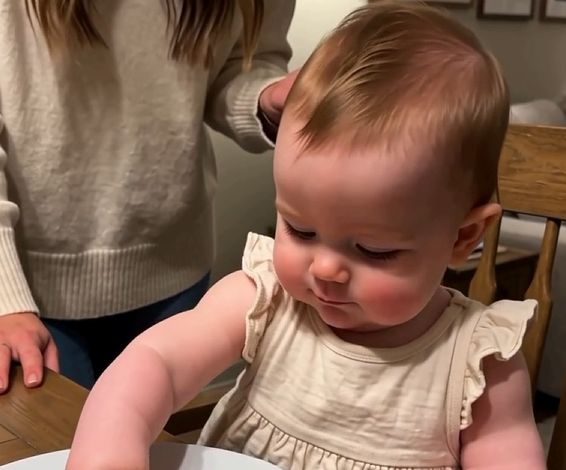
Ninety-one days.
That was how long he’d been fed through a tube — nasogastric first, the thin one taped to the cheek, and then a button in his stomach once it became clear this wasn’t a two-week situation.
It started as reflux, which is what it always starts as. Then it was severe reflux. Then it was a feeding aversion, which is a phrase that sounds mild and means something that will take a family apart.
The way it works, when it goes wrong, is this: a baby associates eating with pain enough times, and then stops. Not refuses — stops. The body learns that food is the thing that hurts, and after that you can put the most beautiful food in the world in front of them and they will turn their head away, and no amount of encouragement, bribery, aeroplane noises, or crying in the pantry afterward will change it.
He went from the fortieth centile to below the second in ten weeks.
They put the tube in on a Thursday in March, and his mother signed the form, and then went down to the hospital car park and sat in the car for forty minutes because she had failed at the single most basic job there is.
That’s not fair and she knows it’s not fair. She still says it that way.
The tube saved him. That part is not in dispute in that house and she will correct anybody who tries to be poetic about it.
It also made everything else harder, because once a child is getting all their calories through a tube, there is no hunger, and without hunger there is no reason on earth to ever try the terrifying thing again.
So they went to a feeding clinic. Eleven weeks of it.
And the whole method — the entire thing, which she found almost unbearable for the first month — was based on a rule that no parent wants to hear:
Nobody puts food in his mouth. Ever. Including him, if he doesn’t want to.
No spoons. No encouragement. No “one more bite.” No clapping when he tried something, because clapping is pressure in a party hat. No sitting there radiating hope at him, because a one-year-old can read a face across a room and will feel every single thing you’re feeling about that plate.
Just: food goes on the table. Food stays on the table. He can touch it, throw it, ignore it, smear it in his hair, or leave the room entirely.
“You’re not teaching him to eat,” the therapist said in week one. “You’re teaching him that food is boring and safe. Eating comes later and it comes on its own.”
His mother said, “How much later?”
And the therapist said, honestly, which is the thing she came to respect her for: “I don’t know. Some of them it’s weeks. Some of them it’s a year.”
For five weeks he didn’t touch anything.
Food went down, food came up, nobody said a word about it. They ate their own meals next to him and talked about other things and it was the most unnatural performance of her life.
Week six he put a finger in some yoghurt and wiped it on the table.
She left the room and cried in the hall and came back with a completely neutral face, because the one thing you cannot do is let them see that it mattered.
Week nine he licked a chip.
Week twelve he ate four peas over the course of a Sunday, and the tube feeds got reduced for the first time since March.
The video is from week fourteen.
What’s in those forty seconds — the head snap, the eyes, the grin, the two palms slapping the table — is not a child eating. He doesn’t eat a thing in the clip.
It’s a child seeing a plate of food and being pleased about it.
That’s what put his mother on the kitchen floor. Ninety-one days of tube and fourteen weeks of pretending not to care, and her son looked at a plate of pasta the way other children look at a dog.
He ate about a third of it. It took forty minutes and most of it ended up on the floor and nobody said a single encouraging word the entire time, which by then had got easy.
The button came out in September.
He’s four now. He eats like a horse and has strong opinions about pesto and no memory of any of it, and there’s a small round scar on his stomach that he refers to as his “second belly button” and shows to absolutely everybody, including once to a plumber.
His mother still can’t watch the video all the way through.
Not the slapping part — she’s fine with that bit. It’s the two seconds before, where she’s sliding the plate across the wood with both hands, and you can see, if you know her, that she’s holding her breath.