We Bought Six Toys He Wanted the Packaging.

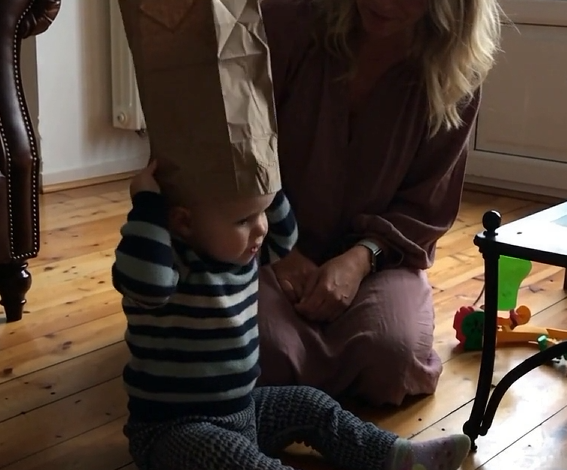
He was reacting to the sound.
They worked this out over the following three days, by which point it had become a problem.
Because on the fifteenth, his mother brought the shopping in, and he did the same thing — head snap, mouth open, bounce, step — at a Sainsbury’s bag containing nothing but potatoes and washing powder.
On the sixteenth he did it at a cereal box being opened.
On the seventeenth his father, who is a scientist and could not help himself, sat on the floor and conducted an experiment with four different kinds of packaging while his wife filmed it and laughed at him.
Conclusive result: paper, yes. Plastic bag, mildly. Cardboard, yes, very. Tissue paper, absolute hysteria.
The toys were irrelevant. The toys could have been anything. The toys could have been, as it turned out on Christmas Day, a large empty box that the wooden garage came in, which he played with for five weeks and which had to be eventually and tearfully removed when it collapsed.
Everyone tells you this. Every parent who has gone before tells you, at the baby shower, in the hospital, in the aisle at the shop: they’ll like the box more than the thing.
And every single person hears it as a joke, and buys the thing anyway.
What nobody explains is why, and the why is actually quite a lot more interesting than the joke.
A fourteen-month-old has no concept of a present. None. The entire architecture — anticipation, reveal, gratitude, the idea that an object has been chosen for you by a person — is years away. You cannot be delighted by a gift until you understand that gifts exist.
What he had instead was a sound he’d never heard before, made by a thing that turned out to be openable, in a room where he already felt safe, with both his parents on the floor.
That’s the whole event. That’s what the bounce was.
His mother had spent £140 on the contents and the reaction was free.
They did not learn the lesson, obviously. Nobody does.
The following Christmas they spent about the same. The one after that, more. There is a loft in that house containing a quantity of plastic that both of them feel bad about.
But something did shift, slowly, over about four years, and it came out of that fourteen seconds of paper crinkling.
They got better at noticing what he was actually responding to.
Not the aquarium — the automatic doors on the way in. Not the farm — the gravel in the car park. Not the beach, at two, which was a disaster; but a puddle in the car park on the way back to the car, for fifty minutes, in his good coat.
And they stopped being disappointed by it. That was the real change. The first few times, there’s a horrible little sting in it — you’ve planned a day and spent money and done the drive and he’s looking at a drain. You feel, stupidly, rejected.
Then at some point you work out that he’s not rejecting your day. He just doesn’t know it’s a day. He’s got no idea anything was planned. He’s fourteen months old and the world is approximately nine feet wide and a paper bag is a genuinely astonishing object.
He’s six.
He knows what presents are now, completely and ruthlessly, and he writes a list, and he is capable of being disappointed, which is its own small grief.
But last Christmas, for reasons nobody asked about, he took all the wrapping paper off the living room floor and spent forty minutes stuffing it into a single large bag and then taking it all out again.
His mother watched him do it from the sofa with a cup of tea.
She didn’t say anything. She’s learned not to.