The Envelope That Stopped the Courtroom

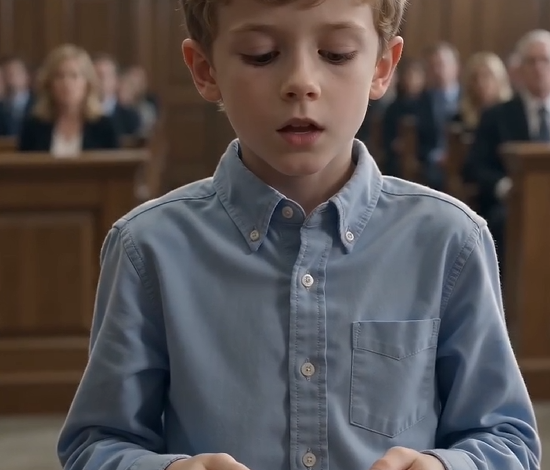
The camera drifted upward, following the boy’s line of sight. The judge leaned forward over the high bench, elbows on the wood, face pulled into a questioning frown. The judge’s mouth moved. A short reply. A question. The kind that expected a simple answer.
The phone dropped back down to the boy.
He took one small step forward, then another, until he was close enough to reach up toward the bench. Both arms stretched. The envelope stayed level in his hands, offered like an offering or a surrender. For a second nobody moved. Then the judge’s hand came down and took it.
The judge turned the envelope over once, then tore it open with a practiced thumb. A single folded sheet of paper slid out. The judge unfolded it slowly, eyes already scanning the first lines.
And then the expression changed.
It wasn’t gradual. One second the judge was reading with professional calm. The next, the eyes went wide. The mouth parted. The shoulders pushed back hard against the tall leather chair like something physical had just hit. The paper stayed open in both hands, but the hands had gone still.
The courtroom followed.
No coughs. No shifting of papers. No quiet whispers from the gallery. Even the court reporter’s fingers stopped moving. The only sound left was the soft, uneven breath of the person holding the phone and the faint electronic whir of the recording still running.
Whatever was written on that single sheet of paper had just rewritten the entire room.
The boy remained standing where he was, arms now empty at his sides, still looking straight ahead. He didn’t smile. He didn’t look relieved. He just waited, the same way he’d been waiting when the camera first found him.
And the judge kept staring at the paper as if the words might rearrange themselves into something less impossible if given enough time.